
The geographical center of gravity for the American biopharmaceutical industry has begun a noticeable shift away from traditional coastal strongholds toward the industrial heartland of the United States. National Resilience, Inc. recently signaled a monumental change in its corporate identity by finalizing the relocation of its global headquarters from the tech-heavy corridors of San Diego, California, to the suburban landscape of Blue Ash, Ohio. This decision was not merely a cost-cutting measure or a symbolic gesture; it represented a fundamental realignment of the company’s executive leadership with its most critical manufacturing operations. By placing its C-suite in the same regional ecosystem as its massive production facilities, the organization effectively eliminated the logistical and cultural barriers that often exist between administrative oversight and floor-level innovation. This move established a formidable “million-square-foot hub” designed to streamline the production of sterile injectables and advanced therapeutic packaging.
Integrated Manufacturing and Executive Consolidation
The Dual-Site Network: Blue Ash and West Chester
The operational heart of this transition relied on a sophisticated dual-site strategy that integrated two distinct but complementary facilities located within the Greater Cincinnati area. The primary headquarters in Blue Ash occupied a sprawling 450,000-square-foot space dedicated to secondary manufacturing processes, including high-precision visual inspection and automated device assembly. This facility functioned as a critical node for advanced labeling and cold-chain logistics, ensuring that temperature-sensitive biologics remained stable throughout the distribution process. Meanwhile, the administrative offices shared this footprint, allowing executive teams to maintain a direct pulse on the complexities of pharmaceutical packaging and distribution. By consolidating these functions, the company achieved a level of operational agility that was previously impossible when management was separated by two time zones. This proximity allowed for rapid troubleshooting and more efficient decision-making cycles during the high-stakes phases of product commercialization.
Specialized Production: Advanced Injectable Capabilities
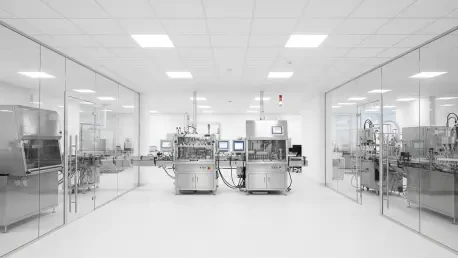
Building upon the secondary manufacturing foundation in Blue Ash, the company expanded its core drug production capabilities at a 580,000-square-foot facility in nearby West Chester. This site underwent a massive technical upgrade to accommodate a new multi-purpose injectable fill/finish line, a critical asset for global biopharmaceutical partners requiring high-volume sterile production. The West Chester plant focused on the intricate process of aseptic filling, where complex medicines were prepared for clinical and commercial use under the most stringent regulatory environments. By connecting this primary production site with the secondary packaging hub in Blue Ash, the organization created a seamless pharmaceutical pipeline covering more than one million square feet of integrated space. This regional concentration allowed for the management of the entire drug lifecycle, from initial formulation to final distribution, within a single geographic radius. Such a concentrated infrastructure minimized the risks associated with long-distance transport and various multi-state regulatory discrepancies.
Economic Impact and the National Industrial Shift
Workforce Development: Creating a Talent Pipeline
A move of this magnitude required more than just physical infrastructure; it demanded a robust and highly specialized workforce capable of operating in a Good Manufacturing Practice environment. The relocation brought approximately 200 high-skill executive and technical positions to Southwest Ohio, raising the regional employee count to nearly 1,000 professionals. To ensure a steady supply of qualified labor, the organization initiated strategic collaborations with local educational institutions, including Butler Tech and the Ohio Life Sciences association. These partnerships focused on developing specialized curriculum tailored to the specific needs of modern biomanufacturing, such as sterile technique and high-tech equipment maintenance. By investing in local workforce training, the company fostered a sustainable ecosystem that benefited both the local economy and its own long-term operational stability. This commitment to human capital demonstrated that the success of advanced manufacturing is as much about the people on the ground as it is about the technology in the cleanrooms.
Industrial Evolution: The Rise of the Ohio Discovery Corridor
The strategic relocation of a major biopharmaceutical player like Resilience served as a clear validation of the “Ohio Discovery Corridor” as a premier destination for industrial innovation. For years, the Midwest has been rebranding itself as the “Silicon Heartland,” leveraging lower operating costs, favorable tax environments, and a central location to attract companies looking to bolster domestic supply chains. Ohio’s robust infrastructure and historical manufacturing expertise provided a fertile ground for Resilience to scale its operations without the extreme overhead costs associated with California’s coastal markets. Local and state officials viewed the move as a significant victory for regional economic development, signaling that the state is prepared to lead the next generation of life sciences production. By moving corporate leadership into the heart of the manufacturing zone, the company set a precedent for other industry leaders to reconsider the traditional separation of their office and factory floors. This shift reflected a broader national trend toward domestic manufacturing resilience and supply chain security.
Operational Next Steps: Enhancing the Biomanufacturing Blueprint
The transition of headquarters to Southwest Ohio successfully integrated corporate strategy with large-scale production, providing a clear roadmap for future domestic pharmaceutical expansion. Industry leaders took note of how the proximity between executive decision-makers and manufacturing teams accelerated the development of sterile injectable lines. To maintain this momentum, the company prioritized the further expansion of its cold-chain logistics network and strengthened its ties with regional biotechnology research centers. Stakeholders moved to implement similar localized manufacturing clusters, recognizing that reducing geographic distance between departments was essential for operational efficiency. The relocation proved that moving toward the industrial core of the nation was an effective strategy for mitigating global supply chain vulnerabilities. Looking forward, the organization focused on scaling its high-speed fill/finish capabilities to meet the rising demand for complex biologics. These steps ensured that the regional hub remained at the forefront of the global biomanufacturing landscape while providing a blueprint for other tech firms.