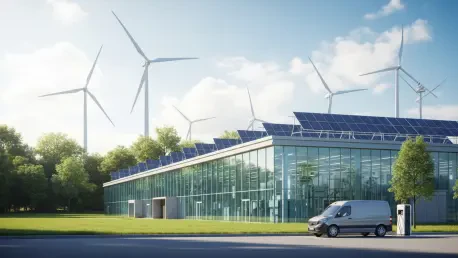

The pharmaceutical industry has long faced the daunting challenge of reconciling aggressive commercial expansion with the urgent need for environmental stewardship. AstraZeneca has demonstrated that these seemingly conflicting goals can coexist by achieving a sixty-eight percent reduction in absolute Greenhouse Gas emissions while simultaneously doubling its total revenue. This decoupling of financial success from carbon intensity serves as a powerful case study for global corporations seeking to navigate the complexities of a low-carbon economy. By prioritizing deep decarbonization across its entire operational footprint, the company has proven that sustainability is not a cost center but a catalyst for innovation and resilience. This transition required a fundamental reimagining of how medicines are developed, manufactured, and distributed to patients worldwide. The success of this strategy highlights the potential for the private sector to lead the way in addressing the climate crisis while maintaining a competitive edge.
Strategy: Implementation of Clean Energy and Circular Practices
Central to this achievement is the rapid adoption of renewable energy sources and the integration of circular economy principles into the core manufacturing processes. AstraZeneca transitioned its global operations to rely almost exclusively on certified renewable electricity, lowering the carbon footprint of its high-energy laboratory and production facilities. Beyond power procurement, the company invested in green hydrogen technology and heat recovery systems to decarbonize industrial processes that traditionally relied on fossil fuels. These technological upgrades were complemented by a shift toward sustainable product design, where the environmental impact of a medicine is considered from the earliest stages of synthesis. By optimizing chemical reactions and reducing solvent waste, the organization minimized the resource intensity of its treatments. This systematic approach ensures that every dollar of revenue carries a fraction of the environmental burden it did previously, setting a new benchmark for efficiency.
Logistics and site management also underwent a radical transformation to support these sustainability targets without compromising the speed of the global supply chain. The company replaced its extensive internal combustion engine vehicle fleet with electric and hybrid alternatives, while also installing widespread charging infrastructure at its major corporate hubs. Furthermore, the implementation of “zero waste to landfill” programs across primary manufacturing sites has diverted thousands of tons of material back into productive use or recycling streams. These efforts extend to the construction of new facilities, which are now designed to meet the highest international standards for green building certification, utilizing low-carbon materials and passive cooling techniques. Such investments in physical infrastructure not only reduce direct emissions but also lower long-term operational costs by insulating the business from volatile energy markets. Digital twin technology allows for real-time monitoring of energy use.
Future: Decarbonizing the Value Chain and Next Steps
While direct operational emissions have been curtailed, the focus has now shifted toward the more complex challenge of addressing Scope 3 emissions within the broader supply chain. AstraZeneca has established rigorous sustainability criteria for its thousands of suppliers, requiring transparency in carbon reporting and the adoption of science-based targets for emission reductions. This collaborative model fosters a ripple effect throughout the pharmaceutical ecosystem, as raw material providers and logistics partners are incentivized to modernize their own operations to maintain their preferred supplier status. The transition to low-carbon inhalers and sustainable packaging represents a critical frontier in this effort, as these components often contribute significantly to the lifecycle carbon footprint of common medications. By partnering with innovative firms to utilize bio-based plastics, the company is effectively closing the loop on waste. These partnerships are essential for achieving long-term goals by addressing the systemic nature of pollution.
To ensure continued progress from 2026 through 2030, the industry focused on scaling these proven solutions across emerging markets and diverse product portfolios. Decision-makers prioritized the deployment of advanced carbon capture technologies at legacy manufacturing sites to mitigate remaining hard-to-abate emissions. Moreover, the integration of biodiversity conservation into corporate land-use policies provided a nature-positive buffer that complemented technical decarbonization efforts. Financial leaders within the sector recognized that transparent ESG reporting and robust carbon pricing mechanisms were essential tools for attracting long-term investment and mitigating climate-related risks. The successful alignment of profitability with environmental impact showed that systemic change was possible when research-driven innovation met disciplined operational execution. Future considerations emphasized the need for cross-industry standardization of carbon metrics to facilitate better accountability and a future where growth was no longer tied to degradation.