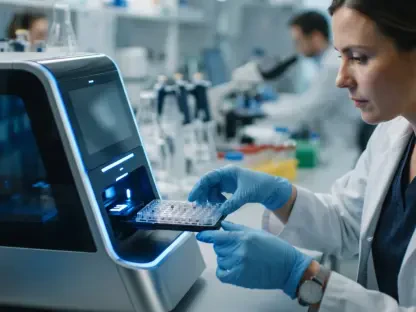

The realization of a functional cellular system assembled entirely from nonliving chemical constituents marks a definitive boundary crossing for modern science, signaling that life is no longer an inherited mystery but a programmable technology. This breakthrough centers on a project known as SpudCell, which emerged from the laboratories of the University of Minnesota under the guidance of Professor Kate Adamala. Unlike previous bioengineering efforts that focused on stripping down existing bacteria to find a minimal genome, this initiative built a system from the ground up using purified, nonliving components. The resulting entity can metabolize energy, grow in size, and eventually divide, mirroring the essential behaviors of biological life without possessing a single ancestor from the natural world. This “clean slate” methodology provides a level of transparency that was previously impossible, as every protein and lipid is accounted for within the synthetic structure, effectively removing the evolutionary baggage that often complicates traditional research in the field of synthetic biology.
The Technical Foundation: Designing the Minimalist Chassis
The structural foundation of the SpudCell prototype is defined by its extreme simplicity, which stands in stark contrast to the overwhelming complexity found in even the most primitive natural organisms. While a typical bacterial cell contains thousands of different types of proteins and millions of interacting molecules, this synthetic version operates with a lean inventory of only 150 to 200 specific molecules. By limiting the components to the bare essentials required for basic function, the research team created a “chassis” that allows for the observation of fundamental biological mechanics without the interference of unknown variables. This level of reductionism is the key to achieving absolute control over the system, turning a biological entity into a predictable piece of hardware. Every reaction that occurs within the synthetic membrane is the result of a deliberate choice by the designers, which ensures that the cell remains a transparent tool for scientific inquiry rather than a black box of inherited genetics.
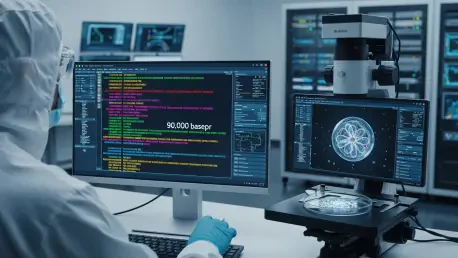
Furthermore, the genomic structure of the SpudCell is remarkably streamlined, consisting of approximately 90,000 base pairs, which is a mere fraction of the genetic material found in common bacteria like Escherichia coli. In the natural world, even the simplest organisms carry millions of base pairs that regulate complex metabolic pathways and adaptive responses to varying environments. The synthetic cell, however, discards these secondary functions to focus entirely on the core tasks of protein synthesis and replication. This stripped-down genome serves as a blueprint that researchers can modify with surgical precision, adding or removing instructions to see exactly how they affect the cell’s phenotype. This approach effectively removes the unpredictable genetic interactions often encountered when working with modified natural cells, where legacy DNA can lead to unintended consequences. Consequently, the synthetic cell acts as a reliable baseline for developing new biological functions that are not constrained by nature.
Biological Performance: The Mechanics of Growth and Division
While the synthetic cell succeeds in mimicking the basic life cycle, its biological performance highlights the significant gap that still exists between engineered systems and the products of billions of years of evolution. For instance, the replication process for SpudCell is notably sluggish, requiring approximately 12 hours to complete a single division cycle, whereas a healthy E. coli cell can divide in as little as 30 minutes. This discrepancy is largely due to the absence of complex internal scaffolding and specialized division machinery found in natural cells. Instead of utilizing an intricate cytoskeletal network to pinch the membrane shut, the synthetic cell relies on a much cruder physical mechanism. As proteins accumulate within the cell, the internal pressure increases until it overcomes the structural integrity of the lipid bilayer, forcing the unit to split. This method is functional but lacks the speed and efficiency developed by natural selection over eons.
Another critical limitation in the current iteration of the technology is its lack of full self-sufficiency, particularly regarding the production of essential metabolic hardware. Natural cells are capable of building their own ribosomes, the complex molecular machines that translate genetic code into proteins, which allows them to sustain themselves in a wide range of environments. SpudCell, in its current state, lacks the genetic instructions to synthesize its own ribosomes and must therefore be “fed” these components by researchers to remain active. This dependency creates a strictly controlled environment where the cell can only function as long as it is provided with a specific set of laboratory-grade nutrients and machinery. While this may seem like a drawback, it actually serves as a vital proof of concept for building highly specialized systems that do not need to survive independently. It demonstrates that life-like behavior can be maintained through a curated supply chain of chemical inputs.
Strategic Shifts: Moving Beyond Traditional Bioengineering
The creation of this synthetic system marks a pivotal shift in the broader field of biotechnology, moving away from traditional genetic modification toward a philosophy of true synthetic design. For several decades, the primary focus of bioengineering was the “reprogramming” of existing life forms, such as inserting human genes into bacteria to facilitate the production of insulin or other medical compounds. While effective, this top-down approach is always limited by the inherent constraints and survival needs of the host organism, which may reject or interfere with the new instructions. Synthetic biology seeks to bypass these biological hurdles by adopting a bottom-up methodology, where systems are built using only the parts necessary for a specific objective. This allows for the design of biological tools that can perform tasks natural cells were never meant to handle, such as surviving in toxic environments or producing exotic materials that do not exist in the biosphere.
Moreover, the flexibility offered by starting with a nonliving “clean slate” allows scientists to explore entirely new chemical pathways that are not found in the natural world. Traditional research into stem cells or CRISPR-based modifications still relies on the fundamental chemistry of carbon-based life as it evolved on Earth. In contrast, by assembling cells from discrete chemical parts, researchers can experiment with alternative molecular structures that might prove more efficient for industrial or medical applications. This degree of customization means that synthetic cells do not have to look or act like their natural counterparts to be considered successful tools. They can be engineered to be highly specialized sensors, drug delivery vehicles, or microscopic factories that operate under specific constraints. This shift represents the transition of biology from a descriptive science of the natural world to a constructive science that builds new functional realities from the ground up.
Ethical Considerations: Definitions and Safety Protocols
The successful animation of SpudCell has reignited a deep philosophical and scientific debate regarding the true definition of life and whether these lab-created systems deserve the label. Some researchers argue that because the system can grow, respond to its environment, and replicate, it meets the basic criteria for a living entity, even if it was born in a test tube. Others suggest that the reliance on external “feeding” of complex machinery like ribosomes means it is more of a sophisticated chemical robot than a truly living organism. This distinction may seem academic, but it has profound implications for how these technologies are regulated and perceived by the public. Much like engineers can utilize the laws of physics to build stable bridges without having a complete unified theory of gravity, scientists are now beginning to utilize the laws of biology to create functional tools. Whether or not these tools are “alive” in the traditional sense, they are undeniably effective.
Security and environmental safety remain at the forefront of the discussion, and the fragile nature of SpudCell actually provides a built-in safeguard against accidental contamination. Because the synthetic cell is so “wimpy” and lacks the adaptive genes necessary to survive outside a highly controlled laboratory environment, it poses virtually no risk to the ecosystem. It is entirely dependent on a very specific diet of chemical components that do not exist in the wild, ensuring that any cell escaping the lab would immediately cease to function and decompose. This controlled design allows researchers to experiment with powerful genetic code and novel biological functions without the fear of creating a “superbug” or an invasive species. This inherent safety feature is a major advantage over traditional genetic engineering, where modified organisms might still possess the resilience to survive and reproduce in natural settings. It allows for the development of fail-safes directly within the genome.
Future Considerations: Establishing a Standardized Bioeconomy
Establishing a standardized framework for engineering biology was a primary objective for the teams involved in this research, as they looked to create a scalable bioeconomy. By documenting and sharing every chemical interaction and genomic sequence, they provided a roadmap that allowed other laboratories to replicate and build upon their findings. This move toward open-source biological components was essential for accelerating the development of new treatments and environmental solutions. Scientists across the globe began to view these synthetic cells as universal platforms that could be customized for specific local challenges, such as carbon capture or the localized production of rare pharmaceuticals. The focus transitioned from individual breakthroughs to the creation of a reliable industry standard that prioritized interoperability between different synthetic systems. This collective approach ensured that the technology remained accessible and that the safety protocols were rigorously applied.
The successful implementation of these synthetic platforms ultimately redefined the boundaries between chemistry and biology, offering a new perspective on how matter could be programmed. Researchers observed that the ability to monitor every molecular movement within the cell facilitated the discovery of more efficient drug delivery mechanisms that were previously hidden by cellular complexity. These insights led to the development of synthetic “micro-reactors” that operated with a degree of precision that surpassed natural systems in specialized industrial tasks. The project served as a foundational milestone that proved that biological life could be constructed without the need for traditional inheritance or evolutionary processes. By moving past the initial hurdles of replication and self-sufficiency, the scientific community secured a powerful new set of tools for addressing global crises. The journey toward a programmable biological future was cemented by these early experiments, which turned the dream of synthetic life into a reality.