
The modern biomanufacturing landscape faces a persistent bottleneck where the transition from laboratory discovery to commercial-scale production often results in significant performance losses. Traditional screening methods frequently rely on microfluidic droplets or well plates that do not accurately represent the mechanical and chemical stresses present in a large bioreactor. This discrepancy leads to the selection of “suboptimal” cell strains that look promising in small-scale tests but fail to deliver the necessary economics once scaled up to industrial volumes. Saku Biosciences, a Los Angeles-based startup, has introduced a disruptive approach to this challenge by utilizing specialized “PicoShells.” These tiny, hollow hydrogel particles act as porous micro-environments, allowing researchers to screen millions of cell variants under conditions that closely mimic real-world fermentation tanks. By bridging the gap between initial strain discovery and industrial production, the company aims to reduce the time and capital traditionally required to bring bio-based products like alternative proteins or biopesticides to market.
1. Encase Various Cell Strains Within Individual PicoShells
The core of the Saku Biosciences methodology begins with a sophisticated chip-based process designed to encapsulate millions of unique strain variants into individual PicoShells. These shells are composed of polyethylene glycol and are engineered to function like hollow wiffle balls, providing a physical boundary while remaining highly porous. This structural design is crucial because it allows essential nutrients and oxygen to flow freely into the internal cavity while enabling metabolic waste products to exit. Unlike traditional microfluidic droplets that are often sealed and limit the duration of cell growth, these hydrogel particles provide a stable environment where a single cell can grow into a robust colony without merging with its neighbors. The precision of the chip-based manufacturing ensures that each shell is uniform in size, which is a fundamental requirement for maintaining consistent growth conditions across a vast library of genetic variants during the early stages of development.
Maintaining physical separation between colonies is essential for accurate high-throughput screening, particularly when dealing with large libraries of microbial or mammalian cells. When cells are allowed to grow in a shared medium without encapsulation, the fastest-growing strains often dominate the population, potentially masking high-producing variants that may grow more slowly. The PicoShell technology prevents this cross-contamination and competition by locking each lineage into its own dedicated micro-compartment. Because the shells are manufactured using a biocompatible hydrogel, they offer a gentle environment that supports the viability of diverse cell types, ranging from common yeast and bacteria to more complex mammalian production cells. This initial step sets the stage for a more representative screening process by ensuring that the starting material for the next phase consists of millions of isolated, identifiable, and healthy colonies rather than a chaotic mixture of competing organisms in a bulk culture.
2. Cultivate the Colonies in a Benchtop Bioreactor
Once the cell strains are securely encapsulated, the millions of PicoShells are transferred directly into benchtop bioreactors or stirred-flask systems for cultivation. This step marks a significant departure from standard industry practices that usually conduct initial screenings in static well plates. By placing the encapsulated colonies into an agitated bioreactor environment, Saku Biosciences ensures that the cells are immediately subjected to the same shear forces, gas exchange rates, and nutrient gradients they will encounter during commercial production. This early exposure to “real-world” conditions effectively filters out variants that are sensitive to mechanical stress or those that only perform well in the stagnant conditions of a plastic plate. The porous nature of the hydrogel allows the colonies to interact with the production media in real-time, providing a dynamic look at how different genetic edits impact the overall productivity and robustness of the strain under manufacturing pressures.
The ability to test multiple parameters simultaneously within a single bioreactor run significantly compresses the research and development timeline for bio-based startups. During the cultivation phase, researchers can monitor how different strains utilize feedstocks or respond to specific environmental triggers without needing to set up thousands of individual experiments. The PicoShells protect the growing colonies from external mechanical damage while allowing them to reach high densities within their private cavities. This high-density growth is a key indicator of how a strain will behave when it is eventually moved to a thousand-liter tank. Furthermore, because the technology is cell-agnostic, it can be applied to a wide range of industrial applications, including the production of lipids, enzymes, and therapeutic proteins. By shifting the selection pressure to the bioreactor level early in the process, the company provides a more accurate prediction of future success, reducing the high failure rates typically associated with scaling up biological processes.
3. Analyze and Categorize the Colonies Using Flow Cytometry
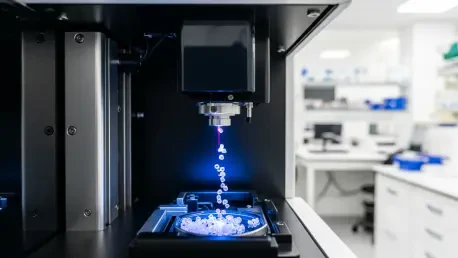
After the cultivation period is complete, the entire population of PicoShells is processed through a flow cytometer equipped for fluorescence-activated cell sorting (FACS). This specialized equipment uses high-speed lasers to scan each individual particle, measuring specific indicators of success such as protein production, lipid accumulation, or biomass growth. Because the colonies are physically contained within the shells, the fluorescent signals are concentrated and easily detectable, allowing the machine to differentiate between high-performers and mediocre variants with extreme precision. Modern image-based cytometers have further expanded these capabilities, enabling the detection of complex morphological traits like cell clumping or protein aggregation. These spatial features were previously impossible to screen at high speeds but are now vital for identifying strains that are not only productive but also easy to manage during the downstream harvesting and purification stages.
The categorization process happens at a rate of thousands of shells per second, allowing Saku Biosciences to analyze a diversity of genetic variants that would be impossible to handle through manual methods. Each particle that meets the predetermined performance criteria is physically diverted into a collection vessel by the sorting machine, while the underperforming variants are discarded. This automated isolation ensures that only the most efficient biological factories move forward in the development pipeline. The data gathered during this phase provides a comprehensive map of the library’s performance, offering insights into which genetic modifications correlate most strongly with high titers and efficient feedstock conversion. By using laser-based readouts to drive selection, the process removes much of the human error and bias that can plague traditional strain engineering. This objective analysis is a cornerstone of the platform, ensuring that the selected strains have the best possible chance of meeting the economic requirements.
4. Extract the Top Performers and Repeat the Cycle
The final stage of the optimization workflow involves the recovery of the elite cell colonies from their hydrogel enclosures for further cultivation and refinement. Once the highest-performing strains have been isolated through flow cytometry, they are released from the PicoShells using gentle chemical or mechanical methods that preserve cell viability. These top-tier performers then serve as the biological foundation for the next round of genetic modification and screening. This iterative cycle allows for the continuous improvement of the production host, effectively “breeding” the cells for maximum industrial efficiency over several generations. By repeating this process, researchers can achieve significant increases in product yield in a fraction of the time required by traditional methods. Case studies involving lipid-producing yeast have already demonstrated that this approach can increase titers by over thirty percent in just a few weeks of intensive screening and validation work.
Refining these strains through multiple cycles of selection ensures that the final production host is optimized for both output and economic viability. The data generated from each round informs the genetic edits for the next, creating a feedback loop that rapidly converges on the best possible solution for a specific manufacturing challenge. This systematic refinement is particularly valuable for companies looking to utilize non-traditional or cheaper feedstocks, as the strains can be specifically selected for their ability to thrive on alternative carbon sources. Once the optimization process reaches the desired benchmark, the resulting strains are ready for full-scale manufacturing validation. This methodical approach transforms strain engineering from a game of chance into a predictable industrial process. By providing a clear path from initial encapsulation to a high-performing production host, the technology offers a scalable solution that addresses the most significant cost drivers in the modern biomanufacturing industry.
Strategic Implementation for Industrial Efficiency
To capitalize on these advancements, industrial partners adopted a more integrated approach to strain development by embedding high-throughput screening directly into their pilot-scale operations. It was found that deploying compact, onsite screening platforms allowed for the protection of core intellectual property while maintaining the rapid iteration cycles necessary for commercial success. Organizations that shifted away from expensive, centralized biofoundries toward more agile, lower-capital setups achieved a faster return on investment. The focus moved toward creating starter strains that were pre-adapted to specific manufacturing constraints, such as high-temperature fermentation or low-cost media. This strategic shift enabled smaller firms to compete with larger incumbents by significantly lowering the barrier to entry for biological production. The resulting efficiency gains facilitated the entry of new bio-based products into the market, ranging from sustainable ingredients to advanced biofuels, at prices that finally rivaled traditional petrochemical alternatives.
Future considerations for the industry involved the integration of machine learning algorithms to analyze the massive datasets generated by image-based flow cytometry. By linking morphological traits with genetic data, researchers gained the ability to predict strain performance even before the cultivation phase began. The focus of biomanufacturing moved beyond simple yield optimization toward the development of “smart” cells that could self-regulate in response to bioreactor fluctuations. This evolution required a workforce skilled in both biology and data science, highlighting the need for interdisciplinary training programs. As the technology matured, the emphasis remained on creating robust, economically viable processes that could withstand the complexities of global supply chains. The transition to these advanced screening methods proved to be a decisive factor in the long-term sustainability of the bioeconomy, ensuring that biological innovation was no longer stalled by the limitations of traditional laboratory infrastructure.