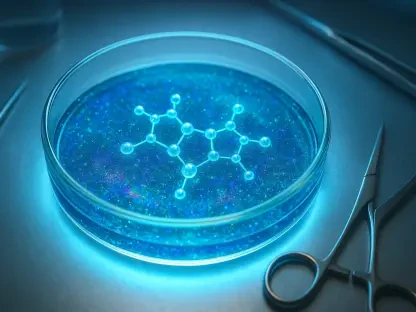

The quest to recreate the intricate complexity of human tissue within a laboratory setting has long been hindered by the limitations of static synthetic materials that fail to communicate with living cells. As bioengineering transitions from simple scaffolds to dynamic, interactive systems, Palmitoyl Tripeptide-1 has emerged as a cornerstone of bioactive chemistry. This molecule, a synthetic derivative of the naturally occurring glycyl-L-histidyl-L-lysine (GHK) peptide, is modified with a palmitic acid chain to enhance its interaction with biological membranes. By acting as a sophisticated signaling mediator, it provides the necessary cues for cells to recognize and respond to synthetic environments. Researchers are currently utilizing this peptide to bridge the gap between inanimate polymers and the vibrant, ever-changing extracellular matrix found in natural biology. This modular approach allows for the creation of smart materials that do not merely hold cells in place but actively direct their behavior.
Biochemical Foundations and Structural Versatility
Metal Coordination: Influencing Redox-Sensitive Pathways
The fundamental efficacy of Palmitoyl Tripeptide-1 is rooted in its highly specific chemical structure, particularly the GHK sequence which exhibits a profound affinity for divalent metal ions. Within the tripeptide, the histidine residue provides a critical coordination site that allows the molecule to sequester and localize copper ions, effectively creating a stable metal-peptide complex. This interaction is not merely a chemical curiosity; it is a vital mechanism for modulating cellular environments by influencing various redox-sensitive pathways and enzymatic activities. In current experimental frameworks, this ability to manage oxidative stress and facilitate metal-dependent biological processes is essential for maintaining the health of engineered tissues. By controlling the availability and localization of these metal ions, the peptide ensures that the synthetic microenvironment remains conducive to long-term cellular viability and metabolic function, providing a stable baseline for complex tissue growth.
Amphiphilic Properties: The Role of Molecular Self-Assembly
Complementing its metal-binding capabilities is the unique amphiphilic architecture of Palmitoyl Tripeptide-1, which arises from the fusion of a hydrophilic peptide head with a hydrophobic lipid tail. This dual-natured construction enables the molecule to undergo spontaneous self-assembly into complex nanostructured forms, such as micelles or bilayers, when placed in an aqueous environment. Such structural versatility is a game-changer for bioengineering, as it allows the peptide to integrate seamlessly into synthetic scaffolds or cellular membranes without the need for harsh chemical cross-linkers. By organizing itself into these localized clusters, the peptide creates high-density signaling zones that mimic the concentrated clusters of biological factors found in natural tissues. This strategic organization prevents the rapid diffusion of signaling cues, ensuring that the biological instructions delivered to the cells are both concentrated and durable, which is a prerequisite for successful material integration.
Functional Integration in Bioengineered Scaffolds
Protein Deposition: Transforming Synthetic Hydrogels
One of the most critical roles that Palmitoyl Tripeptide-1 plays in modern regenerative medicine is its capacity to stimulate the synthesis of essential structural proteins within synthetic hydrogels. When cells are embedded in a bioengineered scaffold, they often require specific biochemical signals to begin the laborious process of depositing their own extracellular matrix, particularly collagen and elastin. Pal-GHK acts as a potent molecular trigger that up-regulates the production of these proteins, effectively transforming a temporary synthetic housing into a robust, biologically active tissue construct. This transition is vital for the mechanical integrity of the engineered tissue, as the newly formed protein network provides the strength and elasticity required for functional movement. As the synthetic matrix is gradually supplemented or replaced by natural proteins, the resulting hybrid structure becomes increasingly indistinguishable from native tissue, which represents a significant milestone in the development of transplantable grafts.
Temporal Control: Enhancing Stability Through Lipidation
The inclusion of the palmitic acid chain provides a level of temporal control that was previously difficult to achieve with unmodified signaling peptides in loose hydrogel environments. This lipid modification serves as a physical anchor, pinning the peptide within the lipid-rich domains of the scaffold and preventing it from being washed away by the constant flow of nutrient media or interstitial fluids. Furthermore, this structural modification significantly enhances the resistance of the peptide to enzymatic degradation, which is a common failure point for bioactive materials. In the high-protease environment often found at sites of injury or inflammation, traditional peptides are rapidly broken down, losing their efficacy within hours. In contrast, Pal-GHK maintains its signaling capacity over extended periods, allowing for the slow and steady guidance of tissue repair processes. This durability ensures that the regenerative signals persist long enough to oversee the complete maturation of the bioengineered matrix.
Genomic Signaling and Mechanical Dynamics
Cellular Regulation: Mechanisms of Gene Expression
Beyond its role as a structural and chemical mediator, Palmitoyl Tripeptide-1 is increasingly recognized for its sophisticated influence on genomic signaling and the subsequent regulation of cellular behavior. The peptide does not necessarily need to enter the nucleus to effect change; instead, it interacts with specific cell-surface receptors that trigger a cascade of intracellular events leading to the modulation of gene expression. Current studies have identified that these pathways often lead to the up-regulation of genes responsible for matrix remodeling and cellular adhesion, which are fundamental to tissue regeneration. By acting as a master regulator within a localized cellular network, the peptide can steer a cell population away from inflammatory responses and toward a state of active synthesis and repair. This level of genomic control allows researchers to fine-tune the cellular response to a synthetic material, ensuring that the biological reaction is constructive rather than detrimental to the overall success of the project.
Mechanical Feedback: The Dialogue of Mechanotransduction
The relationship between the peptide and the cell is further complicated and enriched by the process of mechanotransduction, where physical forces are translated into biochemical signals. Palmitoyl Tripeptide-1 influences the physical properties of the surrounding matrix by promoting the deposition of structural proteins, which in turn alters the stiffness and topography of the environment. Cells sense these mechanical changes through specialized proteins called integrins, and they adapt their behavior according to the physical resistance they encounter. This creates a dynamic feedback loop where the peptide-induced matrix changes influence the cells, and the cells, in response, further modify their surroundings. Such adaptive interactions are crucial for creating bioengineered constructs that can respond to the physical demands of a living organism, much like natural bone or muscle. By understanding and harnessing these mechanical dialogues, scientists can develop materials that are not just biocompatible but are truly interactive and self-sustaining.
Strategic Advancements: Future Directions in Tissue Engineering
The integration of Palmitoyl Tripeptide-1 into bioengineered frameworks provided a clear pathway for the next generation of regenerative therapies by moving beyond simple structural support. By addressing the critical need for sustained signaling, researchers established a foundation for materials that could actively participate in their own biological maturation. The success of these lipidated constructs demonstrated that the key to effective tissue engineering lay in the synergy between biochemical cues and mechanical stability. Looking forward, the focus shifted toward optimizing these peptide-matrix interactions to accommodate more complex, multi-tissue systems that required varied signaling densities. The ability to anchor specific biological instructions within a durable matrix opened new avenues for treating chronic injuries that previously resisted conventional healing. To implement these findings, practitioners were advised to prioritize modular peptide signaling in all future scaffold designs to ensure optimal cellular integration.