
Faster-growing yeast cells in continuous culture produce enzymes with higher specific activity, suggesting that growth rate directly influences the quality of the final protein product. This discovery marks a pivotal shift in how bioengineers approach the metabolic trade-off between cellular growth and recombinant protein secretion. In the fast-paced field of industrial biotechnology, researchers often find that conditions favoring the rapid accumulation of biomass simultaneously inhibit the efficiency of protein secretion. A recent study led by Eduardo Rocco-Martínez addresses this persistent bottleneck by integrating advanced dynamic mathematical modeling with continuous fermentation techniques. By focusing on the yeast Komagataella phaffii, historically known as Pichia pastoris, the research team demonstrated that a model originally designed for microalgae could be repurposed for low-temperature yeast fermentation. This strategy bypasses traditional trial-and-error methods to provide a precise roadmap for maximizing industrial enzyme output while ensuring the system remains stable over time and across varying scales.
Leveraging Hybrid Yeast Strains and Precision Modeling
Industrial Application: The Evolution of Yeast Engineering
Komagataella phaffii stands as a cornerstone of the modern biotech industry because of its remarkable ability to achieve high cell densities in relatively inexpensive media. Unlike many other microbial platforms, this yeast possesses the complex cellular machinery required for post-translational modifications, which are essential for the functionality of human-derived proteins and specialized industrial enzymes. For the current study, researchers utilized a unique hybrid strain designated as S467. This strain was meticulously developed by crossing a standard laboratory strain with a wild isolate to enhance its natural resilience and secretion capacity. The primary objective was to evaluate how this hybrid would perform when tasked with secreting β-glucosidase, an enzyme with significant applications in the biofuel and food industries, under various environmental stressors. This approach highlights the growing trend of utilizing genetically diverse strains to meet the rigorous demands of global manufacturing.
The investigation into the S467 strain involved examining its cellular behavior across a spectrum of thermal conditions, ranging from 20°C to 30°C. While the standard operating temperature of 30°C promoted the fastest biomass accumulation, it was found to be detrimental to the per-cell efficiency of protein secretion. In contrast, dropping the temperature to a hypothermic 20°C slowed the growth rate significantly but yielded a surprising fourfold increase in the total concentration of secreted protein. This specific temperature-dependent response suggests that cooler environments can optimize the folding and secretion pathways within the yeast, even if the overall speed of the process is reduced. Since K. phaffii secretes very few of its own native proteins, almost all the protein recovered from the medium represents the desired recombinant product. This finding emphasizes the need for bioprocess engineers to look beyond simple biomass metrics to truly understand the efficiency of their production platforms.
Kinetic Modeling: Shifting from Monod to Droop
The transition toward model-guided optimization in bioprocessing is largely driven by the limitations of traditional, empirical approaches that rely on extensive trial-and-error. For decades, the industry utilized Monod kinetics, which assumes that the growth rate of a microorganism is directly proportional to the external concentration of the limiting nutrient. However, as biomanufacturing techniques became more sophisticated in 2026, researchers noticed that these models often failed to account for the internal storage of nutrients within the cell. This oversight led to inaccurate predictions, particularly when yeast cells continued to grow after the primary carbon source was depleted. To solve this, the research team adopted the Droop model, which was originally developed to describe the growth of microalgae based on intracellular nutrient quotas. This sophisticated framework allowed for a much more accurate representation of how yeast cells manage their internal resources during the fermentation process.
By introducing a “cell quota” variable into the mathematical framework, the researchers were able to track the intracellular accumulation of nutrients, providing a clear picture of the delayed coupling between substrate uptake and biomass synthesis. The resulting model tracked four critical variables: biomass, secreted protein, glucose concentration, and the cell quota. This multi-variable approach significantly outperformed traditional models, achieving high coefficients of determination that validated its predictive power. Sensitivity analyses further confirmed that the model was robust, maintaining its accuracy regardless of small variations in the initial parameters. This shift from external-only observation to internal-quota modeling represents a significant advancement in the quantitative management of microbial cultures. It provides engineers with a tool that can adapt to the dynamic conditions of a bioreactor, where nutrient availability and cellular demand are constantly shifting, thereby reducing the risk of process failure.
Implementation and Outcomes: Validating the Model
Mathematical Simulation: Determining Optimal Dilution Rates
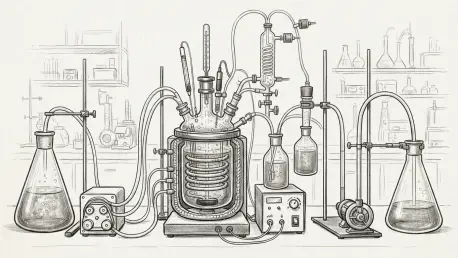
With the Droop-based model successfully calibrated, the research moved into the simulation phase to identify the ideal parameters for continuous chemostat operation. In a chemostat system, fresh medium is added at a constant rate while the culture liquid is removed at the same frequency, creating a steady state of production that can last for weeks. The primary goal of the simulation was to find the optimal dilution rate that would maximize volumetric productivity, defined as the total amount of protein produced per liter per hour. The model predicted that at a temperature of 20°C, a specific dilution rate of 0.045 per hour would provide the perfect balance. This specific rate was identified as the point where the system would produce the highest protein output despite having a lower steady-state biomass compared to higher temperatures. This counterintuitive result illustrates the power of modeling in discovering non-obvious production peaks.
The stability of this prediction was tested by varying the half-saturation constants across several orders of magnitude, yet the optimal dilution rate remained remarkably consistent, shifting by less than two percent. This high level of stability suggested that the identified operating point was a true biological optimum rather than an artifact of specific model settings. Such simulations allow bioprocess engineers to narrow down their experimental focus, saving significant resources and time that would otherwise be spent testing hundreds of different combinations in the laboratory. By identifying these narrow windows of high productivity through computation, the team established a foundation for a more sustainable and cost-effective manufacturing process. This model-first approach ensures that the subsequent physical experiments are targeted toward the most promising conditions, effectively bridging the gap between theoretical biology and industrial-scale manufacturing requirements.
Empirical Validation: Bridging Theory and Reality
The research team transitioned from computer simulations to physical laboratory trials to validate the accuracy of their mathematical predictions. They conducted a series of chemostat experiments at 20°C, utilizing dilution rates that spanned the predicted optimum to observe how the real-world system would respond. The results confirmed the model’s fundamental accuracy regarding production trends, as the volumetric productivity indeed reached its peak at the predicted rate of 0.045 per hour. However, the researchers observed that the actual biomass and productivity values were roughly twenty to thirty percent higher than the simulation had originally suggested. This discrepancy highlighted the physiological differences between the transient state of a batch culture, where the initial model parameters were derived, and the sustained, nutrient-limited environment of a continuous chemostat where the cells eventually reached a steady state.
Despite these differences in absolute values, the model successfully identified the optimal operating window, proving its utility as a guiding tool for complex fermentations. The authors noted that while models are excellent for identifying trends and optimal points, they often require refinement once a system transitions into a continuous state to capture the full magnitude of cellular output. This iterative process of modeling, testing, and refining is essential for the development of high-fidelity digital twins in biotechnology. The successful application of a microalgae-derived model to a yeast fermentation system demonstrated a high degree of versatility in modern bioengineering tools. It confirmed that the principles of intracellular nutrient management are broadly applicable across different types of microorganisms, provided the mathematical framework is robust enough to handle the complexity of cellular metabolism and environmental interactions.
Future Implications: Enhancing Enzyme Quality and Resilience
The study also provided critical insights into the functional quality of the enzyme, moving beyond simple volumetric measurements. One of the most significant findings was that as the growth rate of the yeast increased, the specific activity of the β-glucosidase enzyme also rose. This meant that faster-growing cells were producing a version of the enzyme that was more active and functional, even if the total protein volume sometimes reached its peak at a slightly lower growth rate. To investigate the cause of this quality boost, the team monitored several markers for Endoplasmic Reticulum stress, such as HAC1 and KAR2, but found no significant changes in their expression levels. This suggested that the improved enzyme quality was likely a result of more efficient protein folding or the rapid washout of extracellular proteases that could otherwise degrade the product, rather than a direct result of reduced cellular stress.
This research provided a vital template for the bioprocessing community by demonstrating how batch data and Droop-based models can be combined to optimize continuous cultures. The methodology developed by the team allowed for the precise identification of operating conditions that balanced growth, quantity, and quality. It was established that low-temperature fermentation, when combined with controlled dilution rates, significantly boosted the productivity of recombinant proteins. The study concluded that this model-guided approach should be tested with different proteins and yeast strains to further validate its broad industrial utility. By understanding the intricate interplay between temperature, internal nutrient quotas, and growth rates, the scientific community moved toward a more predictive and quantitative era of biotechnology. The findings suggested that future biomanufacturing efforts could rely more heavily on these dynamic models to ensure both the efficiency and the high quality of essential therapeutic and industrial enzymes.