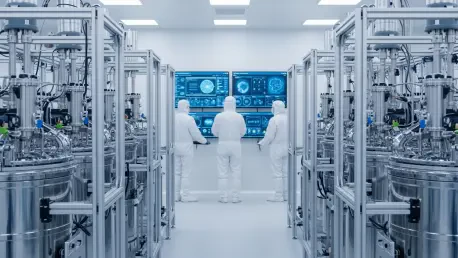

The global food production landscape is currently undergoing a radical metamorphosis as cultivated meat moves from high-concept laboratory prototypes into the realm of multi-ton industrial manufacturing facilities. This transition signifies the emergence of a specialized infrastructure specifically engineered to support the burgeoning field of cellular agriculture. It is no longer just about the biological possibility of growing muscle cells outside of an animal; rather, the focus has shifted to the complex “picks and shovels” required to sustain a global industry. This includes the development of high-capacity bioreactors, optimized cell lines, cost-effective growth media, and sophisticated scaffolding systems. Together, these elements form the backbone of a new era in food security, where the primary goal is to replicate the sensory and nutritional profile of traditional livestock products without the associated environmental or ethical costs.
As the industry advances toward the 2036 milestone, the fundamental question has evolved from whether meat can be cultivated to whether it can be produced at a price point that rivals traditional animal husbandry. This evolution necessitates a departure from pilot-scale experimentation into the territory of massive, automated manufacturing environments where predictability is paramount. Technology providers are now tasked with the monumental challenge of maintaining cell growth stability, biological safety, and consistent sensory quality at a scale never before seen in biotechnology. The move into this industrial phase is supported by a robust ecosystem of specialized firms providing the necessary engineering solutions to bridge the gap between scientific proof and commercial reality.
By the middle of the next decade, the market is anticipated to reach an impressive valuation of $5.6 billion, driven by an aggressive expansion phase that aligns technological maturation with more favorable regulatory environments. The years leading up to 2036 are viewed by experts as a critical scaling window, during which the industry must prove its long-term viability and operational efficiency. This financial appreciation is not merely a reflection of potential sales but a testament to the massive capital injections being funneled into building a sustainable and resilient protein production system. As global populations continue to rise and traditional agricultural resources become more strained, the maturation of the cultivated meat sector offers a technologically driven solution to one of the most pressing challenges of modern civilization.
Core Market Metrics and Financial Projections
Projecting the Decade: Financial and Growth Trajectories
The cultivated meat scale-up market is currently positioned for a period of exponential growth, starting from a calculated foundational baseline of approximately $385.5$ million in 2026. Financial analysts and industry experts are projecting a Compound Annual Growth Rate of 30.7%, a figure that reflects both the intensity of current research and development and the anticipated stabilization of critical supply chains. This rapid appreciation is the hallmark of an industry transitioning from its nascent proof-of-concept stage to a rigorous proof-of-scale phase. The capital currently flowing into the sector is increasingly targeted toward infrastructure that can handle the sheer volume required for mass-market penetration, moving away from the venture-backed laboratory setups of the previous few years.
This financial momentum is deeply interconnected with the convergence of technological readiness and heightened investor confidence across the globe. As manufacturing facilities increase in physical size and output capacity, the primary value in the market is shifting toward equipment and processes that offer high reproducibility and minimal risk of contamination. These technical factors are essential for attracting the large-scale, long-term capital investments required to build out a global cellular agriculture infrastructure. Investors are looking beyond the novelty of the product, focusing instead on the mechanical and biological reliability of the systems that will eventually produce thousands of tons of protein annually for a hungry global population.
The decade between 2026 and 2036 is widely regarded as the ultimate commercial test for the sector, where success is increasingly measured by the ability of individual companies to lower their operational expenditures. As the market value appreciates nearly fifteen-fold over this ten-year span, the industry is expected to adopt standardized engineering frameworks and modular facility designs. This evolution will likely stabilize the market, providing a clearer and more predictable roadmap for stakeholders, including government regulators, traditional food producers, and large-scale retailers. The goal is to create a mature market where the cost per kilogram of cultivated meat can finally reach parity with conventional beef, poultry, and pork.
Capital Allocation: Driving Infrastructure Development
Strategic investments are currently being diverted toward the “hard” assets of cellular agriculture, specifically the construction of large-scale production hubs that can serve as regional centers for meat cultivation. These facilities require specialized plumbing, climate control, and waste management systems that differ significantly from those found in traditional pharmaceutical plants. The current investment trend favors companies that can demonstrate a clear path to reducing the capital expenditure required for these builds. By standardizing the components used in bioreactor construction and utility integration, the industry hopes to lower the barriers to entry for new players while ensuring that existing leaders can scale their operations without encountering prohibitive costs.
Beyond physical buildings, a significant portion of capital is being allocated to the digital infrastructure necessary to manage these complex biological systems. Advanced data analytics and machine learning are being integrated into the production process to monitor cell health and nutrient consumption in real-time. This digital layer allows for a level of precision that was previously unattainable, reducing the likelihood of batch failures and optimizing the use of expensive growth media. As the industry scales toward 2036, the integration of hardware and software will be a defining feature of the market, with “smart” manufacturing facilities becoming the standard for any company looking to maintain a competitive edge in the global protein market.
Deep-Dive into Solution Segments
Bioreactor Infrastructure: The Engines of Growth
Bioreactors currently represent the most substantial capital expenditure for any cultivated meat facility, holding a dominant 43.2% of the market share as of 2026. These specialized vessels are far more than mere containers; they are highly controlled environments that must precisely manage heat transfer, dissolved oxygen levels, and nutrient distribution. The technical challenge lies in scaling these vessels to sizes that exceed 20,000 liters while ensuring that the delicate animal cells are not damaged by the mechanical forces required for agitation. Current innovation in this segment is focused on moving toward large-scale, stainless-steel designs that are specifically optimized for continuous harvesting and long-term stability under industrial conditions.
The engineering of these bioreactors has seen a shift toward more specialized geometries and impeller designs that minimize shear stress, which can be fatal to certain types of muscle and fat cells. Furthermore, the industry is exploring the use of hybrid systems that combine the benefits of traditional stirred-tank reactors with newer airlift or hollow-fiber designs. Each of these configurations offers different advantages in terms of cell density and oxygenation, and the choice of hardware often depends on the specific species being cultivated. As the market matures toward 2036, the standardization of these bioreactor designs will be crucial for reducing manufacturing costs and ensuring that safety protocols can be applied consistently across different production sites.
In addition to the primary growth vessels, the market for ancillary equipment such as centrifuges, filtration systems, and sterilization units is also expanding rapidly. These components are vital for the downstream processing of the cultivated biomass, where the cells are harvested and prepared for final product formulation. The ability to efficiently separate cells from the growth media without compromising their structural integrity is a major area of technical focus. Companies are increasingly seeking integrated solutions where the bioreactor and the harvesting equipment operate as a single, seamless system. This holistic approach to hardware design is expected to drive significant efficiency gains over the coming decade, further solidifying the bioreactor segment’s role as the primary engine of market growth.
Nutritional and Structural Components: Media and Scaffolding
While bioreactors provide the physical environment, growth media serves as the essential fuel for the entire production process, acting as the nutrient-rich soup that allows cells to divide and flourish. Historically, the industry faced significant ethical and financial hurdles due to its reliance on animal-derived serums, but the market has now largely pivoted toward serum-free, chemically defined alternatives. Reducing the cost of this media is perhaps the single most important factor for achieving price parity with traditional meat, as it can currently account for up to 80% of total operational expenses. Innovation in this area involves identifying low-cost, plant-based proteins and growth factors that can be produced at scale through microbial fermentation.
The development of media formulation is becoming increasingly specialized, with different recipes being designed for specific cell types, such as bovine, porcine, or avian lines. These formulations must not only support rapid cell proliferation but also encourage the cells to differentiate into the specific tissues that give meat its characteristic texture and flavor. As the industry scales, the supply chain for these raw materials is becoming more robust, with large-scale chemical and agricultural companies entering the market to provide the necessary amino acids, vitamins, and minerals. This maturation of the media supply chain is a critical precursor to the massive production volumes anticipated by 2036, ensuring that the “fuel” for cellular agriculture remains both affordable and sustainable.
Scaffolding technology provides the structural architecture necessary for cells to attach, organize, and grow into complex, three-dimensional shapes. Without a scaffold, cultivated meat would be limited to unstructured products like ground beef or nuggets; however, advanced scaffolding allows for the creation of structured cuts such as steaks, fillets, and chops. Research is currently focused on developing edible or biodegradable materials, such as collagen, cellulose, or even textured vegetable proteins, that can provide the necessary mechanical support without affecting the final taste or texture. The integration of these scaffolds into the bioreactor process is a complex engineering task, but it is essential for meeting consumer expectations for high-quality, whole-cut meat products in the future.
Process Dynamics and Economic Efficiency
Continuous Processing: Redefining Production Velocity
Continuous processing is forecast to dominate the market with a 63.4% share by 2026, largely due to its superior economic efficiency and higher throughput compared to traditional methods. In a continuous model, nutrients are constantly cycled through the bioreactor while the resulting biomass is harvested in a steady stream, allowing the equipment to run for weeks or even months without stopping. This approach closely mimics the steady-state physiological environment found in a living organism, providing a more stable environment for cell growth. By maximizing equipment utilization and reducing the downtime associated with cleaning and resetting, continuous processing significantly lowers the cost per unit of meat produced.
The implementation of continuous systems requires a high level of sophistication in terms of fluid dynamics and real-time monitoring. Unlike batch processing, where errors can be identified and corrected between runs, continuous systems must be perfectly balanced at all times to prevent the accumulation of waste products or the depletion of essential nutrients. This necessitates the use of advanced sensors and automated control systems that can make instantaneous adjustments to the bioreactor’s internal environment. While the initial setup for these systems is more complex and expensive, the long-term operational savings make them the preferred choice for companies aiming for large-scale, commercial production as the industry moves toward 2036.
Continuous production also offers significant advantages in terms of product consistency and quality control. Because the cells are maintained in a stable environment for longer periods, there is less variability between different “batches” of meat, which is a major concern for food retailers and consumers alike. However, this model does introduce specific risks, most notably the potential for long-term contamination to go undetected and ruin a massive amount of product. To combat this, manufacturers are investing heavily in closed-loop systems and rigorous sterilization protocols that can maintain an aseptic environment over extended periods of operation. The success of continuous processing will likely be the deciding factor in whether cultivated meat can truly become a staple of the global diet.
Automation and Safety: Maintaining Sterile Environments
The transition to industrial scale requires a shift away from manual laboratory tasks toward fully automated systems that can manage the complexities of cellular agriculture with minimal human intervention. Automation is not just about efficiency; it is a critical component of biological safety and contamination control. In a large-scale manufacturing environment, the introduction of even a single foreign microbe can lead to the loss of an entire production run, costing millions of dollars in lost time and materials. By using robotics for tasks such as media preparation, cell inoculation, and harvesting, companies can significantly reduce the risk of human-introduced pathogens and ensure a more sterile environment.
Sophisticated software platforms are now being deployed to manage these automated facilities, providing a digital twin of the entire production process. These platforms can predict potential issues before they occur, such as a drop in oxygen levels or a slight shift in pH, allowing operators to intervene proactively. This level of oversight is essential for meeting the stringent safety standards required by government regulators around the world. As the industry scales toward 2036, the ability to provide a transparent, data-driven record of every production run will be vital for gaining and maintaining consumer trust. The marriage of biology and digital automation is creating a new paradigm for food safety that is often superior to traditional slaughterhouse environments.
Batch processing, while less efficient for massive volumes, still plays a vital role in the early stages of market development and for specialized, high-value products. This method involves a start-to-finish cycle where the equipment is completely cleaned and reset between every run, making it easier to manage from a regulatory and quality assurance standpoint. For companies still refining their cell lines or testing new media formulations, batch processing provides a safer and more flexible way to iterate on their technology. However, as the demand for cultivated meat grows, most of these operations are expected to transition toward hybrid or fully continuous models to achieve the necessary economies of scale for broad market adoption.
Regional Growth and Regulatory Strategy
Global Innovation Hubs: Pioneering Jurisdictions
Israel has emerged as a preeminent global leader in the cultivated meat sector, with the industry there projected to experience a remarkable 29.6% growth rate. This success is largely driven by the government’s visionary “bio-convergence” program, which treats biotechnology as a national priority and fosters a unique ecosystem where startups can rapidly validate their technologies. The Israeli landscape is characterized by a high density of innovators focused on media optimization and bioreactor design, supported by a mix of public funding and private investment. This national commitment has made Israel a primary hub for technological breakthroughs, attracting talent and capital from across the globe to its Mediterranean shores.
Singapore continues to serve as a vital global sandbox for the industry, having been the first nation in the world to grant pre-market approval for cultivated meat products. This early regulatory leadership has allowed the city-state to formalize novel-food approval routes that now serve as a gold standard for other countries to follow. Given its limited land availability and high dependence on food imports, Singapore has a clear strategic interest in high-efficiency, compact modular production systems. The government’s proactive approach has encouraged many international companies to set up their initial commercial operations in Singapore, using it as a springboard to test consumer acceptance and refine their manufacturing processes before expanding elsewhere.
The Netherlands remains a central figure in the European cellular agriculture market, building on its prestigious history as the birthplace of the first cultivated burger over a decade ago. The Dutch government has implemented “controlled tasting protocols” that allow developers to gather vital sensory feedback from consumers before full regulatory authorization is granted. This feedback loop is essential for refining the design of bioreactors and scaffolding to ensure the final product meets the high culinary standards of European markets. The Netherlands also benefits from a strong traditional agricultural base and world-class universities, creating a fertile ground for the cross-pollination of ideas between conventional farming and cellular agriculture.
Standardizing Safety: The Evolution of Global Frameworks
In the United States and the United Kingdom, regulatory frameworks for cultivated meat are becoming increasingly clear and structured, which is providing the necessary certainty for large-scale market participation. The United States employs a dual-agency model where the FDA oversees the cell collection and growth phases, while the USDA takes over during the harvesting and labeling stages. This comprehensive approach ensures that every aspect of the production process is scrutinized for safety and transparency. For bioprocess providers, this clear regulatory roadmap is essential for aligning their engineering data with government expectations, thereby speeding up the time it takes to bring new facilities online.
The United Kingdom has also taken significant steps to foster innovation through its “regulatory sandbox” program, which helps companies navigate the complex safety evidence required for novel foods. This collaborative approach allows regulators to work closely with scientists to understand the underlying technology, ensuring that safety standards are met without stifling the industry’s growth. As more countries in Asia, Europe, and the Americas establish similar frameworks, the global market for cultivated meat will become more integrated and standardized. This international alignment is crucial for the eventual export and import of cultivated products, allowing companies to scale their operations across borders as they aim for the 2036 market targets.
Furthermore, the involvement of international bodies such as the World Health Organization and the Food and Agriculture Organization is helping to create a global consensus on safety standards for cultivated meat. These organizations are working to harmonize definitions and testing protocols, which will reduce the regulatory burden on companies operating in multiple jurisdictions. The establishment of these global norms is a significant driver for the industry, as it reduces the risk of trade disputes and ensures that consumers everywhere can have confidence in the safety and quality of cultivated protein. By 2036, it is expected that a robust and transparent global regulatory environment will be a cornerstone of the $5.6 billion market.
Competitive Landscape and Industry Leaders
Primary Producers: Establishing Commercial Footprints
The competitive landscape of the cultivated meat market is currently characterized by a diverse mix of “pure-play” developers and large platform providers who offer the underlying technology for others to use. Companies like Believer Meats and UPSIDE Foods are leading the way in the United States by constructing massive manufacturing plants designed to produce thousands of tons of meat annually. Their primary focus is on navigating the complex consultation and approval processes required to bring these large-scale production environments to the public. These companies are not just food producers; they are engineering firms that must solve unprecedented challenges related to fluid dynamics, waste management, and energy efficiency.
In Europe and Israel, standard-bearers like Mosa Meat and Aleph Farms are focusing on high-quality bovine cells and advanced scaffolding techniques to create premium products that can compete with high-end traditional beef. These companies are often at the forefront of biological research, developing proprietary cell lines that are optimized for industrial growth without the need for genetic modification. Another notable player, Meatable, utilizes specialized technology aimed at significantly reducing the time required for cell differentiation, which increases overall throughput and makes the production process more efficient. These innovations are critical for driving down the cost of production and making cultivated meat a viable option for the average consumer.
The success of these primary producers is heavily dependent on their ability to integrate various technological components into a single, cohesive manufacturing process. This requires a multidisciplinary approach that brings together biologists, chemical engineers, and food scientists. As the industry moves toward 2036, we are likely to see more strategic partnerships between these cultivated meat pioneers and traditional food giants, such as Tyson or JBS. These partnerships provide the necessary scale and distribution networks to bring cultivated products to a global audience, while also helping the traditional meat industry transition toward more sustainable and diversified production methods.
Enabling Technologies: Supporting the Ecosystem
A second category of companies, often referred to as “enablers,” is emerging to provide the specialized tools and materials that allow the entire industry to scale effectively. Companies like Multus and Ever After Foods are focusing on lowering the barriers to entry for others by providing high-performance growth media and productivity-boosting platforms. Multus specializes in creating low-cost, animal-free media formulations that can be used by various producers, reducing the need for every startup to develop its own proprietary recipes. Ever After Foods provides integrated platforms that significantly boost the productivity of bioreactors, allowing producers to get more biomass out of the same physical footprint.
These enablers are the “infrastructure layer” of the cultivated meat market, and their growth is just as important as that of the meat producers themselves. By specializing in specific parts of the value chain, these companies can achieve economies of scale that would be impossible for a single producer to reach on its own. For example, a company that specializes in cell line development can provide high-quality, “immortalized” lines to dozens of different producers, ensuring a consistent starting material for the entire industry. This specialization is a sign of a maturing market, where different players focus on what they do best to create a more efficient and resilient overall ecosystem.
As the market approaches the 2036 horizon, the role of these technology providers will only become more prominent. We are seeing the emergence of specialized consulting and engineering firms that offer “turnkey” solutions for building cultivated meat plants. These firms provide everything from the initial facility design to the final commissioning and regulatory filing, making it easier for new players to enter the market. This democratization of the technology is essential for ensuring that cultivated meat can be produced in every corner of the globe, contributing to local food security and reducing the environmental impact of long-distance food transport.
Key Drivers and Future Market Constraints
Economic and Environmental Drivers: Scaling Responsibly
The global movement toward “food-grade” validation is a major driver for the current market, as equipment and processes must perform consistently across thousands of production runs to meet commercial standards. There is also significant global pressure to reduce the carbon footprint of protein production, which is a major catalyst for interest in slaughter-free technology. As governments around the world set more ambitious climate goals, the potential for cultivated meat to provide a low-carbon alternative to traditional livestock is becoming a key part of national environmental strategies. Clearer regulatory dossiers and more transparent safety data are further increasing investor confidence in the long-term scalability of the necessary hardware.
Beyond environmental concerns, food security is a powerful economic driver, particularly for nations with limited agricultural land or those that are highly dependent on meat imports. Cultivated meat offers a way to produce high-quality protein locally, regardless of the local climate or soil conditions. This capability is especially valuable in a world where climate change and geopolitical instability are making traditional food supply chains more precarious. By building a network of localized production facilities, countries can reduce their vulnerability to global market fluctuations and ensure a steady supply of protein for their citizens. This strategic importance is driving a new wave of government subsidies and public-private partnerships aimed at accelerating the scale-up of cellular agriculture.
Consumer demand for more ethical and transparent food choices is also playing a significant role in the market’s expansion. A growing number of people are looking for alternatives to industrial factory farming, and cultivated meat provides a solution that satisfies the desire for real meat without the need for animal slaughter. This demographic shift is particularly strong among younger generations, who are more likely to prioritize sustainability and animal welfare in their purchasing decisions. As these consumers gain more purchasing power, the demand for cultivated meat is expected to skyrocket, providing a clear market signal for technology providers to continue their aggressive scaling efforts through the end of the decade.
Overcoming Engineering Barriers: Variability and Cost
Despite the overwhelmingly positive outlook, high capital expenditure remains a significant restraint on the market, as building a cultivated meat plant is currently more expensive than constructing a traditional slaughterhouse or processing facility. The precision engineering required for large-scale bioreactors and the sterile environments they inhabit comes with a high price tag that can be a barrier for smaller companies. Furthermore, managing “biological variability” is a constant and daunting engineering challenge. Since animal cells are living organisms, they do not always behave predictably when scaled up into massive, industrial volumes, which can lead to inconsistencies in the final product’s quality or nutritional profile.
Ensuring that cells behave consistently in 50,000-liter bioreactors requires a level of precision and control that is still being refined by the industry’s leading engineers. Small changes in temperature, pressure, or nutrient concentration can have a significant impact on the final yield, making the process highly sensitive to even the slightest deviations. To mitigate this, companies are investing in more sophisticated biosensors and machine learning algorithms that can provide real-time feedback and control. However, the complexity of these systems also adds to the overall cost and maintenance requirements of the facility. Overcoming these technical hurdles will be essential for the industry to reach the $5.6 billion valuation projected for 2036.
The journey toward a $5.6 billion market valuation by 2036 required a fundamental reimagining of how humanity interacts with cellular biology and mechanical engineering. Stakeholders across the globe focused on creating a symbiotic relationship between bioreactor design, serum-free media, and high-performance cell lines to overcome the initial hurdles of the early 2020s. This effort was largely successful because it moved beyond the theoretical realm and addressed the practical realities of industrial-scale manufacturing. The industry successfully demonstrated that biological safety and economic efficiency could coexist within a transparent and highly regulated framework. This past decade of growth established the foundation for a more resilient and sustainable global food system that continues to evolve in response to the world’s nutritional needs.