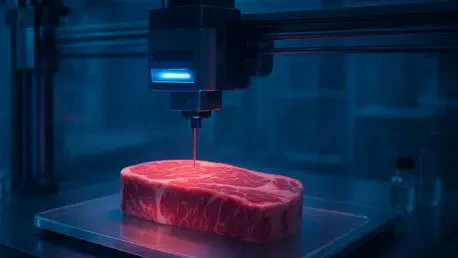

Vascularization remains a critical biotechnological hurdle for the industry, as thick tissue cuts cannot survive without internal systems to deliver nutrients and remove waste. This fundamental challenge defines the current landscape of cellular agriculture in 2026, as scientists move beyond basic proof-of-concept experiments toward the realization of complex, structured meat products. The global food system is currently grappling with the reality of a population heading toward 10 billion by mid-century, a demographic shift that requires a 70 percent increase in total food production. Traditional livestock farming, which currently occupies nearly 40 percent of the earth’s ice-free land and consumes approximately 29 percent of agricultural freshwater, is struggling to maintain efficiency in a world characterized by resource scarcity and climate instability. Cultured meat offers a transformative alternative by decoupling protein production from animal husbandry, potentially allowing for a more resilient and ethically grounded food supply. As the industry matures, the focus has shifted from the mere novelty of lab-grown protein to the intricate engineering required to make these products indistinguishable from their conventional counterparts while ensuring they are economically and environmentally viable.
Technological Foundations: Engineering Obstacles
Biological Building Blocks: Cell Development
The foundation of any cultured meat product lies in the selection and cultivation of specific cell lines, which serve as the biological precursors to the muscle and fat tissue found in traditional cuts. Currently, researchers rely heavily on satellite cells—muscle-specific stem cells—due to their inherent ability to proliferate and eventually differentiate into mature myotubes. However, the industry is increasingly looking toward induced pluripotent stem cells (iPSCs), which can be reprogrammed from adult tissue and directed to become various cell types, including intramuscular fat and connective tissue. This versatility is essential for creating the complex matrix of flavors and textures that consumers expect from a premium steak or fillet. The success of this process depends on precisely calibrated growth factors and signaling molecules that guide the cells through their developmental stages, mimicking the natural biological cues found within a living organism.
While primary cell lines offer a direct link to the original animal source, they possess a limited lifespan before entering a state of senescence, necessitating the periodic collection of new biopsies. To overcome this, many firms are developing immortalized cell lines that can replicate indefinitely, providing a stable and consistent supply of raw material for industrial-scale production. This approach, however, introduces significant regulatory and public perception challenges, as immortalization often involves genetic modifications that some consumer groups view with skepticism. In 2026, the focus has shifted toward refining non-genetic methods of extending cellular longevity and ensuring that these lines maintain genomic stability over hundreds of generations. Maintaining the biological integrity of these cells is paramount, as any drift in their genetic profile could alter the nutritional content, flavor, or safety of the final product, potentially undermining years of research and development.
Bioreactor Scaling: Scaffolding Innovation
Transitioning from small-scale laboratory dishes to massive industrial bioreactors represents perhaps the greatest engineering hurdle for the nascent cultured meat sector. Traditional pharmaceutical-grade stirred-tank reactors are often poorly suited for food production because the mechanical impellers can create high levels of shear stress, damaging the delicate membranes of adherent animal cells. To solve this, engineers are pioneering the use of specialized microcarriers—tiny suspended particles that provide an expansive surface area for cells to attach and grow within the nutrient-rich media. By 2026, the integration of edible and biodegradable microcarriers has become a standard practice, as it eliminates the costly and technically difficult step of separating the cells from their growth platform. Furthermore, advanced perfusion and hollow-fiber bioreactor designs are being tested to optimize the delivery of oxygen and nutrients while simultaneously removing metabolic waste products, thereby maintaining an ideal physiological environment for rapid tissue growth.
To move from unstructured “ground” meat products to complex, three-dimensional cuts, the industry must utilize sophisticated scaffolding systems that provide the necessary mechanical support for tissue development. Early efforts often relied on animal-derived materials like collagen or gelatin, but the modern industry has pivoted toward plant-based, fungal, and algal alternatives to ensure the final product remains consistent with ethical and sustainability goals. These scaffolds are not merely passive physical supports; they are engineered with specific viscoelastic properties that provide mechanical signals to the developing cells, encouraging them to align and mature into functional muscle fibers. Recent breakthroughs in 2026 involving 3D bioprinting and decellularized plant tissues, such as spinach leaves or apple slices, have demonstrated the potential to create intricate vascular networks within the meat. These architectures allow for the production of thicker cuts by ensuring that every cell within the structure receives the necessary life-sustaining nutrients, finally bringing the vision of a lab-grown steak within reach of commercial reality.
Environmental, Economic, and Social Integration
Sustainability Metrics: Economic Viability
The environmental promise of cultured meat has long been its primary selling point, with early projections suggesting it could reduce land use by 99 percent and greenhouse gas emissions by up to 96 percent compared to conventional beef. However, more recent life cycle assessments in 2026 have introduced a necessary degree of nuance to these claims, highlighting the energy-intensive nature of the production process. While cattle are major sources of methane—a potent but short-lived greenhouse gas—cultured meat facilities primarily consume electricity, which results in carbon dioxide emissions. Because carbon dioxide can persist in the atmosphere for centuries, the long-term warming impact of a massive cultured meat industry could theoretically exceed that of traditional ranching if the global energy grid is not fully decarbonized. Consequently, the true “greenness” of the industry is currently tied to its ability to integrate renewable energy sources and improve the thermal efficiency of large-scale bioreactor operations.
Beyond environmental impact, the economic survival of the sector depends on reducing the cost of the growth media, which currently accounts for the vast majority of production expenses. Historically, the use of Fetal Bovine Serum was a major bottleneck due to its high price and the ethical contradictions of using an animal-derived product to create slaughter-free meat. In 2026, the industry has made significant strides in developing serum-free media formulations that utilize recombinant proteins and specialized growth factors produced through microbial fermentation. Despite these advancements, achieving price parity with conventional commodity meat remains a significant challenge that requires massive economies of scale and further optimization of the nutrient “soup.” For cultured meat to compete effectively with established plant-based alternatives and traditional animal protein, the cost of these pharmaceutical-grade ingredients must drop by several orders of magnitude, a task that requires continued collaboration between biotechnologists and industrial chemical suppliers.
Consumer Acceptance: Sensory Fidelity
Public perception of cultured meat is shaped by a complex interplay of “food neophobia,” cultural traditions, and the terminology used to describe the technology. Studies conducted throughout 2026 indicate that consumers are more likely to accept products labeled as “cultivated” or “cell-based” rather than “lab-grown” or “synthetic,” as the latter terms often trigger a sense of “unnaturalness.” Younger, urban demographics generally show a higher willingness to trial these products, motivated by concerns over animal welfare and environmental sustainability. However, there remains a significant portion of the population that views the technology with suspicion, particularly regarding the long-term health effects of consuming meat grown in a controlled environment. Building consumer trust requires a commitment to radical transparency, where companies openly share their production methods, ingredient lists, and safety data to demystify the process and address the ethical gray areas surrounding the initial cell biopsies and the use of animal-derived inputs.
Winning over the mainstream consumer also necessitates achieving a level of sensory fidelity that perfectly matches the experience of eating traditional meat. This involves more than just replicating the protein structure; it requires the integration of adipose tissue to provide the characteristic “marbling” and flavor profile associated with high-quality beef. The unique metallic taste of red meat, primarily driven by heme proteins, must be carefully balanced with the complex aromas released during the Maillard reaction when the meat is cooked. Furthermore, the nutritional profile of cultured meat must be optimized to ensure it provides essential vitamins such as B12 and minerals like iron in bioavailable forms. By 2026, regulatory bodies such as the FDA and EFSA have established clearer frameworks for the safety assessment of these products, yet the industry still faces a fragmented international landscape. Success in the global market will ultimately depend on the ability of producers to deliver a product that is not only ethical and sustainable but also delicious, affordable, and culturally resonant.
The transition toward a cell-based protein economy reached a pivotal moment as the industry addressed the long-standing challenges of scale and sensory authenticity. Throughout the developmental process, researchers successfully identified serum-free media formulations that lowered production costs while maintaining the rapid cellular proliferation required for industrial viability. Engineers also deployed advanced scaffolding techniques that allowed for the growth of thicker tissue sections, bringing the goal of structured meat products closer to the consumer market. These technical achievements were supported by a maturing regulatory environment that prioritized food safety and transparent labeling, helping to mitigate public concerns regarding the “naturalness” of the technology. As energy grids became increasingly reliant on renewable sources, the environmental benefits of cultured meat moved from theoretical projections to measurable reductions in land and water usage. The industry moved toward a future where cellular agriculture served as a crucial pillar of a diversified and resilient global food system, providing a sustainable pathway to meet the protein demands of a growing world.