
The agonizing reality for patients living with Recessive Dystrophic Epidermolysis Bullosa involves a daily struggle against skin so fragile that the slightest friction causes debilitating blisters and permanent scarring. For years, medical intervention remained limited to palliative care, focusing on wound dressing and infection management rather than addressing the underlying genetic deficiency. However, the current shift toward scalable stem cell therapy is fundamentally changing the prognosis for these individuals by providing a method to replace missing collagen proteins permanently. Scientists have moved beyond small-scale laboratory experiments to establish protocols that produce large, genetically corrected skin grafts. This transition represents a significant leap in regenerative medicine, as it combines high-fidelity genome editing with advanced bioprocessing. By focusing on the structural integrity of the basement membrane, this technology aims to transform skin that was once delicate into a resilient barrier capable of withstanding the rigors of daily life.
Genomic Correction: The Integration of CRISPR and Induced Pluripotent Stem Cells
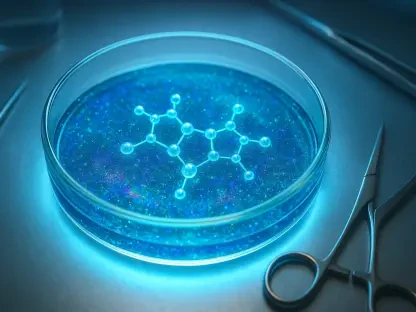
The technical foundation of this breakthrough lies in the synergy between CRISPR-Cas9 genome editing and the utilization of induced pluripotent stem cells. By harvesting a small sample of the patient’s own blood or skin, researchers can now reprogram these cells into a pluripotent state, effectively creating a blank slate for therapeutic modification. Unlike older methods that relied on viral vectors with unpredictable integration patterns, modern CRISPR techniques allow for the precise insertion of the functional COL7A1 gene. This precision is critical to ensure that the newly generated skin cells produce the Type VII collagen necessary to anchor the epidermis to the dermis. In 2026, the efficiency of these edits has reached a threshold where the risk of off-target mutations is negligible, satisfying stringent safety requirements for human application. Furthermore, the autologous nature of these cells eliminates the need for immunosuppressive drugs, which often carry heavy side effects for patients already in a weakened and vulnerable state.
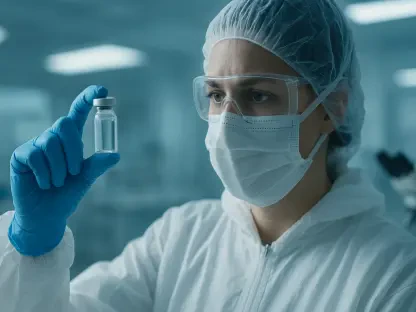
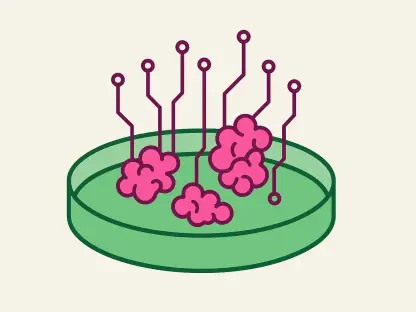
Scaling the production of these corrected cells from a petri dish to a clinical-grade manufacturing facility required a complete overhaul of traditional bioprocessing workflows. Automated bioreactors have replaced the labor-intensive manual culturing processes that previously limited treatment to a handful of patients per year. These sophisticated systems utilize artificial intelligence to monitor the health and metabolic activity of the cell cultures in real-time, adjusting nutrient delivery and gas exchange to optimize growth. By maintaining a highly controlled environment, manufacturers can now produce square meters of genetically corrected skin tissue in a fraction of the time previously required. This move toward industrialization ensures that the therapy is no longer a bespoke luxury but a repeatable medical procedure. The ability to generate large volumes of tissue also allows for the treatment of systemic skin loss rather than just localized wounds, providing a comprehensive solution for patients who face extensive damage across their entire bodies.
Clinical Application: Transforming Surgical Outcomes and Economic Accessibility
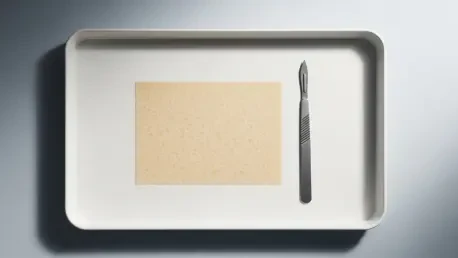
The translation of scalable stem cell technology into the operating room has redefined the standard of care for complex dermatological conditions. During clinical interventions, surgeons apply these bioengineered skin sheets to chronic wounds that have failed to heal through conventional methods for months or even years. Because these grafts are composed of the patient’s own corrected cells, they integrate seamlessly with the surrounding tissue, establishing new vascular networks within days of application. Observation of the treated areas reveals a remarkable increase in mechanical stability, as the newly synthesized collagen begins to form the anchoring fibrils that were previously absent. This structural reinforcement prevents the recurrence of blistering in the treated zones, allowing patients to regain mobility and reduce their dependence on daily bandage changes. The success seen in these procedures highlights the potential of regenerative therapies to provide long-term functional recovery rather than temporary symptomatic relief, marking a shift toward curative medicine.
The transition toward scalable and genetically corrected skin therapy reached a critical inflection point where the focus shifted from proving feasibility to optimizing delivery and affordability. In the past, the healthcare community prioritized the identification of genetic markers, but the recent emphasis on automated manufacturing and decentralized logistics finally bridged the gap between the lab and the bedside. Clinicians and biotechnology firms recognized that long-term success depended on the integration of these therapies into insurance models and the training of specialized surgical teams. The progress made during this period demonstrated that orphan diseases could serve as the catalyst for broader innovations in regenerative medicine. It became evident that stakeholders needed to prioritize modular manufacturing units that could be rapidly deployed to underserved regions. By maintaining a focus on the durability of clinical outcomes and the reduction of per-patient costs, the industry established a sustainable roadmap for treating fragile skin.