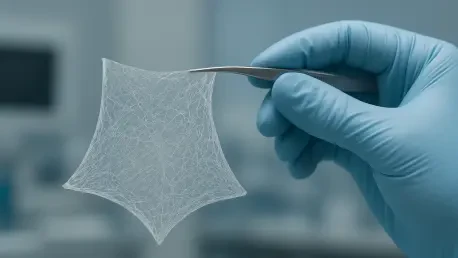

The historical reliance on rigid synthetic substrates for intestinal research has created a significant gap between laboratory observations and the soft, flexible reality of living human tissue. For decades, scientists have struggled to replicate the physiological environment of the gut using standard plastic petri dishes and stiff polymer membranes, which often lead to inaccurate cellular behaviors and misleading experimental results. Recognizing this fundamental disconnect, a collaborative research team from POSTECH, CHA University, and the Cleveland Clinic has introduced the C-NaDE membrane, a sophisticated cell culture platform that mirrors the biochemical and mechanical properties of the human intestine. This breakthrough represents a major leap in regenerative medicine, as it provides a far more realistic foundation for cultivating organoids and studying the complexities of intestinal health. By moving away from static materials, the researchers have created a dynamic space where cells can thrive in a manner that closely resembles their natural state.
Engineering the C-NaDE Hybrid System
Merging Structural Integrity With Biological Signaling
To address the inherent rigidity of previous technologies, the development of the C-NaDE membrane utilized an advanced electrospinning process to create an ultrathin, nanofibrous scaffold. These fibers, significantly thinner than a human hair, provide a structural foundation that mimics the intricate architecture found within the native human intestine. Unlike traditional synthetic membranes that are often thousands of times stiffer than living tissue, this nanofibrous network maintains a high degree of flexibility and softness. This mechanical compatibility is vital because cells are not merely passive occupants of their environment; they possess a keen ability to sense the physical texture and resistance of the surface to which they adhere. By providing a substrate that more closely matches the elastic modulus of the intestinal wall, the hybrid system ensures that the cells do not experience the mechanical stress associated with rigid plastic, which can otherwise trigger abnormal growth patterns.
The importance of this mechanical harmony is grounded in the biological process known as mechanotransduction, where physical forces are converted into chemical signals within the cell. When intestinal cells are placed on a surface that is too stiff, their internal signaling pathways are often disrupted, leading to a loss of essential characteristics such as stemness and the ability to differentiate into specialized cell types. The C-NaDE membrane prevents these issues by offering a supportive yet pliable matrix that allows for natural movement and deformation. This approach is particularly effective for growing organoids, which are miniature, stem-cell-derived versions of organs that require a specific physical niche to maintain their biological integrity. By integrating this soft structural scaffold into standard laboratory culture wells, the researchers have made it possible to conduct high-fidelity studies that were previously hindered by the limitations of commercial materials that failed to respect the soft nature of the gut.
Integrating Biochemical Instructions for Cellular Growth
Beyond its mechanical advantages, the C-NaDE membrane incorporates a biological component derived from porcine colon tissue, known as decellularized extracellular matrix or dECM. This process involves stripping the living cells from the animal tissue while leaving behind the complex network of proteins, sugars, and signaling molecules that originally supported the cells. This matrix serves as a natural reservoir of biochemical instructions that are specific to the intestine, providing cues that synthetic polymers simply cannot replicate. While earlier research often relied on coating plastic surfaces with isolated proteins like collagen, this method was often too simplistic to capture the full breadth of signals found in the body. The inclusion of the full dECM cocktail within the C-NaDE membrane allows human cells to recognize their surroundings at a molecular level, triggering the expression of genes that are necessary for healthy development and functional maturity in a laboratory setting.
The synergy between the nanofibrous scaffold and the porcine-derived matrix creates a biomimetic niche that satisfies both the physical and chemical requirements of human cells. This dual-action design represents a shift in tissue engineering from providing a mere surface for growth to creating a holistic environment that guides cellular destiny. Researchers found that this combination was essential for bridging the gap between simplified 2D models and the complex 3D reality of human anatomy. By ensuring that the cells receive a consistent stream of tissue-specific signals, the membrane facilitates a more accurate transition from stem cells to a mature, functioning intestinal lining. This achievement is particularly significant for long-term research projects, as it enables the maintenance of cell populations over extended periods without the rapid degradation of quality that typically occurs in synthetic environments. The result is a more stable and reliable platform for testing medical hypotheses.
Impact on Cellular Behavior and Future Utility
Improving Biological Accuracy and Differentiation
Observations of human colon organoid-derived epithelial cells grown on the C-NaDE membrane revealed substantial improvements in biological performance compared to traditional platforms. One of the most critical findings was the enhanced maintenance of stem cell populations and a consistent rate of healthy cellular proliferation. In conventional synthetic environments, these regenerative cells often lose their unique properties or stop dividing prematurely, making it difficult to study long-term tissue dynamics. However, the biomimetic cues provided by the new membrane allowed the cells to retain their stemness, ensuring a continuous supply of new cells to replenish the intestinal lining. This capability is fundamental for creating accurate models of the human digestive tract, which is one of the most rapidly self-renewing tissues in the body. The ability to preserve this natural regenerative cycle in a lab setting marks a major step forward for researchers aiming to understand how the gut maintains its health.
Furthermore, the C-NaDE platform demonstrated a unique ability to encourage the differentiation of specialized secretory cell lineages, such as goblet cells and enteroendocrine cells. These cell types are essential for a functional intestine, as they produce the mucus and hormones necessary for digestion and immune protection, yet they are notoriously difficult to cultivate on synthetic surfaces. The study showed that genetic markers for these rare cell populations were significantly higher when the cells were grown on the biomimetic membrane. This suggests that the environment not only supports general growth but also provides the specific instructions needed for cells to specialize and organize into a diverse cellular community. The resulting epithelial layer displayed a morphological accuracy that closely mirrored the architecture of the native human intestine, with structural arrangements that were significantly more complex and lifelike than those seen on standard rigid substrates.
Expanding the Horizons of Medical Research
The practical implications of these findings are particularly relevant for disease modeling and the development of new pharmaceutical therapies. By providing a realistic and functional barrier, the C-NaDE membrane allows researchers to study the progression of inflammatory bowel disease, colorectal cancer, and other gastrointestinal pathologies with unprecedented detail. The high level of biological fidelity means that the responses observed in these models are more likely to predict how actual human patients will react to various treatments. In the realm of toxicology and drug development, this platform serves as a superior tool for evaluating how medications are absorbed across the intestinal wall and whether they cause any adverse effects on the tissue. This precision is expected to improve the success rate of clinical trials and could eventually reduce the heavy reliance on animal testing, which often fails to capture the nuances of human-specific biology and mechanical tissue responses.
As the scientific community moved into this more advanced era of tissue engineering, the integration of the C-NaDE membrane into microfluidic Organ-on-a-Chip systems became a priority for accelerating gut-microbiome research. The stability and realism of the membrane provided an ideal surface for studying the complex interactions between human intestinal cells and the trillions of microbes that inhabit the gut. These interactions were linked to a wide range of health outcomes, from metabolic efficiency to immune system regulation. By fostering an environment where cells behaved as they would inside the human body, the researchers established a new standard for laboratory modeling that respected both the mechanical and biochemical heritage of living tissue. This innovation ensured that future discoveries in digestive health were built upon a foundation of biological truth, offering a clearer pathway toward personalized medicine and the development of targeted therapies that addressed the specific needs of patients.