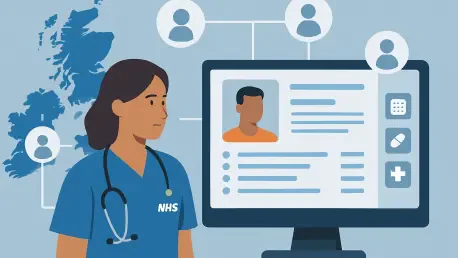

The fragmented landscape of the British healthcare system is currently undergoing a radical transformation as the government mandates a move toward a centralized Single Patient Record. This legislative shift aims to dismantle the long-standing silos that have historically prevented hospitals and local clinics from sharing vital medical information in real time. For decades, patients have navigated a labyrinth of disconnected services, often finding themselves repeating complex medical histories to multiple providers during a single course of treatment. The introduction of this unified digital framework signifies a departure from outdated, paper-heavy processes toward a streamlined ecosystem where data follows the patient rather than remaining trapped within individual institutions. By consolidating diagnostic results, medication histories, and surgical notes into one accessible portal, the initiative seeks to eliminate the dangerous delays and administrative redundancies that have plagued the National Health Service for years.
Transforming National Clinical Integration
Overcoming Traditional Data Fragmentation
The primary catalyst for this shift is the need to replace “analogue” systems with a high-speed digital backbone that serves every facet of the healthcare journey. Currently, paramedics responding to a stroke or heart attack often lack immediate access to a patient’s pre-existing conditions or allergy profile, which can lead to critical delays in administering life-saving interventions. Under the new mandate, emergency responders will have instant visibility into a centralized record, allowing for precision care at the point of impact. This level of integration is intended to extend beyond emergencies, ensuring that specialists at major regional hospitals can view the primary care notes from a patient’s local general practitioner without the need for manual record requests or faxes. The objective is to foster a seamless flow of information that reduces the risk of diagnostic errors and minimizes the administrative burden on clinical staff who would otherwise spend hours chasing missing files.
This structural overhaul is part of a broader ten-year strategy that involves significant institutional changes, including the planned dissolution of NHS England by 2027. By reorganizing the management of healthcare services, the government intends to centralize authority and oversight of data standards, ensuring that every healthcare provider operates on a compatible platform. While the full legislative framework is expected to be finalized within the next year, specific clinical areas like maternity services and frailty care are already being prioritized for early implementation. These sectors were chosen because they involve frequent interactions between different types of care providers, making them the ideal testing ground for the centralized record. Success in these high-stakes departments will provide the necessary proof of concept for the wider rollout, demonstrating how real-time data access can improve outcomes for vulnerable populations and expectant mothers alike.
Enhancing Patient Safety and Precision
Health officials argue that the centralized record is not merely a convenience but a fundamental necessity for modern precision medicine and patient safety. By utilizing a unified dataset, clinicians can leverage real-time insights to identify potential drug interactions or contraindications that might be missed in a fragmented system. Dr. Alec Price-Forbes and other leading voices within the NHS emphasize that this digital evolution will allow for more personalized treatment plans, as the system can flag specific risk factors based on a comprehensive medical history. Furthermore, the reduction in duplicate testing is expected to save the treasury significant sums of money, as doctors will no longer need to order blood tests or scans that have already been performed by a different facility. This efficiency allows resources to be redirected toward frontline care, ultimately shortening wait times and improving the overall quality of the patient experience.
To maintain public trust during this transition, the government has proposed a system of tiered access and rigorous audit trails that track every instance of data retrieval. Every professional who accesses a patient’s file will leave a digital footprint, ensuring that medical information is used solely for the purpose of providing or coordinating care. This transparency is intended to reassure a skeptical public that their sensitive information is being handled with the highest level of security and professional integrity. Officials have stated that the centralized architecture will actually be more secure than the current patchwork of local servers, as it allows for uniform encryption standards and centralized monitoring for cyber threats. By setting high technical benchmarks, the initiative aims to create a robust defense against data breaches while simultaneously empowering doctors with the information they need to save lives.
Balancing Privacy and Professional Autonomy
Addressing Concerns of the Medical Community
Despite the technical and clinical advantages touted by proponents, the British Medical Association has voiced significant opposition to the centralized mandate. The primary point of contention revolves around the lack of meaningful consultation with general practitioners, who serve as the gatekeepers of patient data. Doctors have expressed concerns that the centralization of records shifts the balance of power from the patient-clinician relationship to the Department of Health and Social Care. There is a fear among the medical community that the loss of data sovereignty could compromise the confidentiality that is central to primary care. Representatives from the BMA argue that existing systems already allow for sufficient data sharing when necessary and that a new, massive centralized database may introduce more risks than it solves, particularly regarding how data might be used for purposes beyond direct clinical treatment.
Furthermore, medical professionals are advocating for a more transparent model where patients have explicit control over who views their records via the NHS App. The BMA has been vocal about the necessity for patients to have an easily accessible log showing exactly which staff members have viewed their files and for what specific reasons. This demand for granular transparency is linked to broader concerns about secondary data usage, such as for research or administrative planning. Doctors are reminding the public that the right to opt out of such data-sharing schemes must remain a central pillar of the new system. Without these safeguards, critics argue that the centralized record could inadvertently erode the trust that patients place in their doctors, leading to a situation where individuals may be hesitant to share sensitive health information for fear of it being scrutinized by a central authority.
Securing the Digital Healthcare Future
The success of the Single Patient Record ultimately hinges on the government’s ability to reconcile the need for clinical efficiency with the professional and ethical standards of the medical workforce. Moving forward, policymakers must prioritize a collaborative approach that includes doctors and data privacy experts in the technical design phase of the project. It is essential that the finalized system incorporates a clear opt-out mechanism for secondary data use while maintaining the integrity of the primary record for clinical emergencies. Additionally, the government should invest in public education campaigns that clearly explain the benefits of the centralized system, such as reduced diagnostic times and better-coordinated care for chronic conditions. Ensuring that the technology is user-friendly for both clinicians and patients will be vital in overcoming the initial resistance and achieving the long-term goal of a modern, data-driven healthcare service.
Future considerations must also address the long-term maintenance and cybersecurity of the centralized database to prevent it from becoming a single point of failure. Regular independent audits of the system’s security protocols and access logs should be mandated to maintain ongoing public and professional confidence. As the NHS transitions away from its previous management structure by 2027, the focus should remain on creating a resilient infrastructure that can adapt to future medical advancements. Clinicians should be encouraged to provide continuous feedback on the system’s utility, ensuring that the technology serves the needs of the frontline rather than just the requirements of administrators. By fostering an environment of transparency and technical excellence, the UK can lead the way in demonstrating how centralized health data can be harnessed to provide safer, faster, and more effective medical care for an entire nation.