
The realization of a completely artificial life form marks a definitive turning point in human history, transitioning biological science from a discipline of observation to one of pure engineering and design. This milestone was achieved through the intricate assembly of a digital genome that was chemically synthesized and subsequently transplanted into a recipient cell whose original genetic material had been entirely removed. This procedure effectively stripped away the legacy of billions of years of evolution, replacing it with a set of instructions written entirely by human researchers using sophisticated computer algorithms. The resulting organism, though microscopic in scale, represents a monumental leap in the ability to manipulate the fundamental building blocks of existence. It operates exclusively under the guidance of its human-designed genetic code, proving that the complex machinery of a living system can be directed by instructions that did not originate in any natural ancestor.
Constructing the Digital Genome from Chemical Precursors
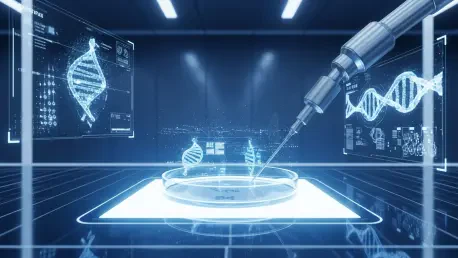
The technical execution of this project required a level of precision that was previously unattainable, involving the synthesis of millions of base pairs of DNA with zero room for error. Utilizing high-throughput DNA printers and advanced enzymatic assembly techniques, researchers painstakingly built the genetic sequence from chemical precursors. This process involved segmenting the desired genome into smaller fragments that were later joined together in a specific order to ensure functional integrity. Every gene was optimized for the specific metabolic requirements of the artificial cell, ensuring that once the code was activated, the organism could maintain essential life functions such as nutrient uptake and replication. The reliance on digital modeling allowed the team to simulate the interactions within the cell before a single strand of DNA was actually produced, significantly reducing the trial-and-error phase that characterized earlier efforts in synthetic biology.
Once the synthetic genome was fully assembled, the final challenge involved the physical manifestation of life within an empty biological chassis. This was accomplished by inserting the artificial DNA into a bacterial shell from which all native genetic instructions had been purged, creating a biological vacuum ready for a new operating system. Upon entry, the synthetic DNA began the process of expressing proteins and reconstructing the internal environment of the cell according to the new digital blueprints. This “booting up” phase confirmed that a non-natural genome could successfully hijack the pre-existing cellular machinery to produce a self-sustaining and self-replicating entity. The success of this transition demonstrated that the hardware of life—the cell membrane and ribosomes—could be effectively decoupled from its evolutionary software. Consequently, this established a framework where genetic packages can be swapped with the same ease as computer code in a digital environment.
Implementation of Global Standards for Synthetic Life
Navigating the complexities of this new biological era required organizations to invest heavily in specialized computational infrastructure and high-fidelity sequencing technologies. To remain competitive in a landscape where life could be programmed, industrial leaders prioritized the integration of artificial intelligence with biological design workflows to accelerate the discovery of functional genetic patterns. This strategic shift enabled companies to move away from the limitations of natural bioprospecting and toward the proactive design of bespoke biological solutions for diverse challenges. Educational institutions also played a critical role by updating curricula to include cross-disciplinary training that bridged the gap between computer science, chemistry, and molecular biology. These efforts ensured that the workforce was equipped to handle the unique demands of synthesizing life, focusing on the development of rigorous testing environments where new organisms were safely evaluated.
The emergence of the first fully synthetic cell ultimately demanded a comprehensive reevaluation of the relationship between technology and the natural world. Scientists and engineers recognized that the ability to write genetic code was a responsibility that necessitated proactive solutions for environmental monitoring and biosecurity. Consequently, new industry standards were implemented to track synthetic DNA signatures throughout the global supply chain, ensuring that every engineered organism remained under strict oversight. These actions provided the necessary safeguards to pursue even more ambitious projects, such as the synthesis of multi-cellular structures and the restoration of extinct biodiversity through advanced genomic reconstruction. By moving beyond the constraints of evolution, the scientific community laid the groundwork for a future where biological systems were designed for resilience. This transition from observing life to actively constructing it solidified a new era of human ingenuity.