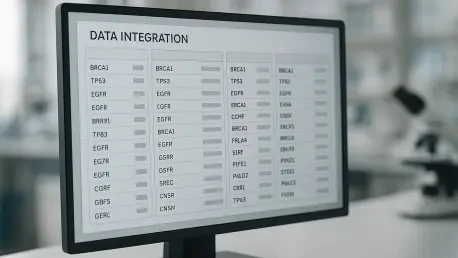

Discrepancies in gene nomenclature often force clinicians and computational biologists to struggle with different identifiers for the exact same biological sequence. In the high-stakes environment of 2026, where personalized medicine depends on granular genomic insights, this fragmentation represents a significant operational hurdle. A single gene, such as the well-known tumor suppressor TP53, might be categorized as ENSG00000141510 in the Ensembl database or assigned the number 7157 within the Entrez system. This linguistic divide between databases frequently results in catastrophic data loss during the integration of multiple datasets. When researchers attempt to merge findings from clinical trials with laboratory-based sequencing, the lack of a standardized vocabulary can lead to miscalculated statistical significance or the omission of critical biomarkers. To rectify this foundational bottleneck, a team of Italian bioinformaticians from the Istituto Oncologico del Mediterraneo and the University of Catania introduced Geneslator. Published in BMC Bioinformatics, this R package serves as a robust integration layer, enabling researchers to translate gene identities with high fidelity directly within their existing analysis pipelines, ensuring that biological data remains coherent across the entire research lifecycle.
Resolving Nomenclature Fragmentation: The Challenge of Data Decay
The fundamental issue that Geneslator seeks to solve is the inherent instability and decay of genomic nomenclature over time. Biological identifiers are not static; they are subject to constant revision as the scientific community’s understanding of the human genome evolves. Nomenclature committees regularly update gene symbols to reflect new functional discoveries, while major genomic repositories release periodic genome assemblies that renumber, merge, or retire specific records entirely. This creates a persistent staleness problem where mapping tables used in research projects become obsolete within just a few months of their creation. Consequently, many researchers find themselves dealing with orphan genes—data points that effectively disappear from the final analysis because their outdated identifiers no longer correspond to the records found in current versions of reference databases. This mismatch is particularly problematic in longitudinal studies where data collected from 2026 to 2028 must be compared against the most recent genomic frameworks without losing vital context.
Beyond the logistical headache of updating tables, this fragmentation poses a direct threat to the reproducibility of scientific research across the global community. Most traditional conversion tools treat gene identifiers as isolated, static tokens and often resort to discarding any entry that they fail to map instantly. In a typical high-throughput sequencing experiment involving tens of thousands of genes, even a loss of five to ten percent of the data can significantly skew statistical results. Such omissions might lead a researcher to miss a biologically significant finding or, conversely, to identify a false positive result based on an incomplete dataset. The developers of Geneslator argue that this systemic fragmentation has become a primary hurdle in making genomics a truly interoperable field. By providing a dynamic and automated way to bridge these gaps, the tool ensures that researchers no longer have to choose between manual, error-prone data cleaning and the broad, often inaccurate brushes of automated web-based converters that lack version control.
The Structural Design: Three Pillars of Functional Mapping
Geneslator is architected as a unified solution that eliminates the cumbersome need for researchers to navigate disparate web servers or maintain manual lookup tables. The first of its three functional pillars is Gene Identifier Conversion, which facilitates seamless translation between the most prominent naming systems, including HGNC symbols, Ensembl GeneIDs, and Entrez GeneIDs. Unlike simpler scripts, the package is built to handle the inherent complexities of the genomic record, such as merged or retired IDs that often cause standard workflows to fail. By acting as a reliable bridge between these different database conventions, the tool ensures that the identity of a biological sequence remains consistent regardless of the specific repository from which the data originated. This capability is essential for modern multi-omic analyses, where researchers must synthesize information from proteomics, transcriptomics, and clinical records that rarely share a common identification scheme, thus providing a much-needed layer of semantic clarity.
The second and third pillars of the package extend its utility far beyond simple ID swapping by providing essential biological context through ortholog mapping and pathway annotation. The ortholog module is particularly vital for translational research, as it allows scientists to project gene lists across species boundaries with high precision. For instance, a researcher investigating a specific developmental pathway in zebrafish can use Geneslator to find the direct human equivalents, facilitating the application of basic science to clinical contexts. Once the identifiers are standardized and mapped, the package connects them directly to functional databases such as the Gene Ontology (GO) and the Kyoto Encyclopedia of Genes and Genomes (KEGG). This integration allows for immediate functional interpretation within the R environment, enabling a researcher to go from a raw list of identifiers to a sophisticated pathway analysis without ever having to export data or change software tools, thereby maintaining the chain of custody for the data.
Technical Versatility: Comprehensive Coverage Across Model Organisms
A standout feature of the Geneslator package is its expansive organismal coverage, which currently supports eight of the most widely utilized model organisms in modern biology. This diverse lineup includes humans, mice, rats, fruit flies, zebrafish, budding yeast, roundworms, and the thale cress plant. By encompassing such a broad spectrum of life, the tool becomes an indispensable asset for a vast array of scientific disciplines. A developmental biologist studying the fruit fly and a clinical oncologist analyzing human tumor samples can now utilize the same standardized toolset for their data normalization needs. This cross-disciplinary utility is especially important in the current research landscape, where collaborative projects often span multiple species to validate findings. The ability to handle diverse genomic structures under a single programmatic umbrella reduces the learning curve for bioinformaticians and ensures that methodologies remain consistent across different laboratory groups and research consortiums worldwide.
To maintain the highest levels of accuracy, Geneslator draws its information from the most authoritative and up-to-date sources available for each specific organism, such as the HGNC for human data or the Zebrafish Nomenclature Committee for Danio rerio. During the development phase, the creators conducted rigorous benchmarking tests to evaluate how the package performed against existing state-of-the-art conversion tools. The results indicated that Geneslator consistently outperformed its competitors in terms of mapping coverage and the prevention of data loss. By minimizing the number of entries that fall through the cracks during the conversion process, the tool guarantees that the statistical integrity of high-throughput experiments is preserved. This technical excellence is critical for researchers who are working with rare transcripts or novel isoforms, where every single data point contributes to the overall biological signal. The software ensures that the nuances of the genomic landscape are not sacrificed for the sake of computational convenience.
Clinical Validation: Processing High-Stakes Cancer Genomics Data
To demonstrate the practical utility of the tool in a rigorous, high-stakes environment, the developers applied Geneslator to the massive datasets provided by The Cancer Genome Atlas (TCGA). Cancer genomics presents a uniquely difficult challenge because TCGA data have been generated and re-processed over more than a decade using a wide variety of analysis pipelines. Each generation of these pipelines often featured its own idiosyncratic naming conventions, specific genome versions, and outdated metadata standards. When researchers attempt to integrate mutation calls with clinical outcomes across thousands of patients from different study generations, they often encounter a digital Babel where the same genomic alterations are described in incompatible ways. This complexity often requires hundreds of hours of manual curation, which is both prone to human error and difficult for other researchers to audit or reproduce, making the need for a programmatic solution like Geneslator absolutely paramount for large-scale meta-analyses.
The performance of Geneslator in the TCGA case study highlighted its exceptional ability to manage large-scale, multi-platform data integration. By using the package to align disparate data generations, the research team was able to create a cohesive dataset that reflected the actual biological state of the samples rather than the artifacts of the sequencing pipelines. This successful application signals that the tool is specifically designed for the rigors of modern clinical research, where integrating data from different eras and different sequencing technologies is a daily requirement. The package provided a clear path forward for researchers who needed to merge historical data with new, high-resolution sequences generated in the current year. By ensuring that the translation process was both version-aware and comprehensive, the developers proved that Geneslator could effectively bridge the gap between historical archives and cutting-edge discoveries, thereby maximizing the value of existing genomic resources for the benefit of patient care.
Advancing Open Science: Integration Within the R Statistical Ecosystem
The strategic decision to develop Geneslator as an R package aligned perfectly with the current standards of the bioinformatics community, as R remained the primary language for statistical genomics. In previous years, the necessity of gene ID conversion often forced analysts to break their workflow and leave the R environment to use external, web-based converters. These third-party sites were frequently difficult to document in a reproducible manner and their underlying algorithms could change without notice, creating black box steps in an otherwise transparent analysis. By embedding the entire conversion and annotation workflow within a single programmatic interface, Geneslator enabled end-to-end reproducibility. This allowed every step of the data cleaning and mapping process to be captured within a single, auditable script. Such transparency was increasingly required by top-tier journals and funding agencies that demanded fully reproducible computational workflows to verify the validity of published results.
The implementation of Geneslator represented a significant step forward in the movement toward open and reliable science. By releasing the package under an open-source license and making the source code freely available on GitHub, the developers ensured that the global research community contributed to its long-term maintenance and evolution. Labs that adopted this tool successfully streamlined their data preparation phases and reduced the incidence of nomenclature-related errors in their published findings. Moving forward, researchers were encouraged to integrate these automated mapping functions into their standard operating procedures to safeguard the integrity of their data. This approach prioritized completeness and data longevity, ensuring that the vast oceans of genomic information produced by modern laboratories remained accessible and interpreable. By addressing the technical debt of fragmented nomenclature, the scientific community moved closer to a scenario where data was shared and understood across all institutional and technological boundaries.