
Diabetic patients face a significantly prolonged recovery following bone injuries, with healing speeds trailing eighty-seven percent behind those of healthy individuals. This stark disparity represents one of the most persistent hurdles in orthopedic medicine, as the metabolic complexities of diabetes often turn routine fractures into chronic, non-healing wounds. When the body’s natural regenerative processes are dampened by high glucose levels and systemic inflammation, the risk of severe complications, including infections and necessary amputations, triples for this specific demographic. Scientists have long sought a method to bypass these biological roadblocks, focusing on the cellular environment that dictates how bone tissue rebuilds itself. Recent breakthroughs suggest that the solution lies not in merely stimulating growth factors, but in addressing a fundamental energy failure occurring at the microscopic level. By shifting the focus to cellular mechanics, a collaborative team has pioneered a nanotherapy that targets the metabolic core of healing.
The Biological Barriers to Healing
Addressing the Mitochondrial Crisis
The chronic inflammatory state characteristic of diabetes creates a hostile environment that essentially starves bone-building cells of the energy they require to function. Mitochondria are the primary engines within cells, responsible for producing the fuel necessary for tissue repair and synthesis. In a healthy individual, these organelles perform efficiently, but in the presence of diabetic complications, they undergo significant damage and become dysfunctional. This results in what researchers describe as a localized energy crisis, where the cells responsible for forming new bone, known as osteoblasts, simply do not have the power to complete their work. While the body possesses a natural backup system where macrophages can donate healthy mitochondria to these struggling osteoblasts, the system fails in diabetic patients. This failure occurs because the donor mitochondria within the macrophages are already compromised by the systemic metabolic disruption, leaving the bone-building cells without any viable source of external support.
Consequences for Osteoblast Function
When the energy supply within the cellular environment is depleted, the bone-building cells lose their ability to synthesize the essential proteins and minerals required for skeletal structural integrity. Osteoblasts are highly active cells that must produce vast amounts of collagen and calcium-binding agents to bridge the gap in a fracture or defect. Without functioning mitochondria to provide the necessary ATP, these cells fall into a state of dormancy or premature death. This metabolic shutdown is further exacerbated by the persistent presence of pro-inflammatory signals that prevent the transition from the initial inflammatory phase of healing to the crucial regenerative phase. Consequently, the bone remains in a state of arrested development, often leading to non-union fractures where the two ends of the bone fail to fuse. This specific biological bottleneck has historically been one of the most difficult obstacles to overcome in orthopedic surgery, requiring more than just traditional physical stabilization to resolve.
Precision Nano-Engineering Innovations
Restoring Macrophage Vitality
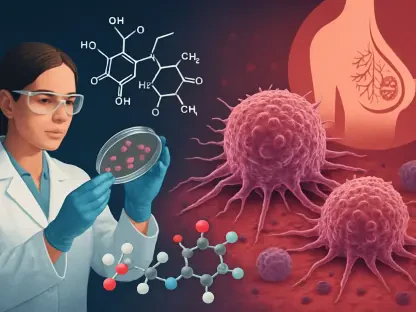
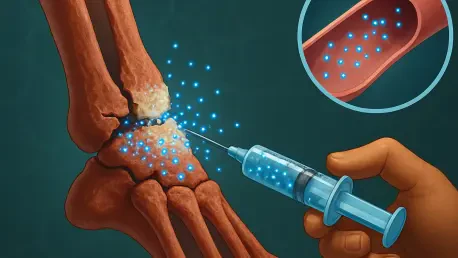
The primary breakthrough in this therapy involved the rehabilitation of macrophages, which are essential immune cells that orchestrate the healing environment. In diabetic tissues, these cells are often locked in a pro-inflammatory state, rendering their natural repair mechanisms ineffective. The researchers utilized carbon quantum dots doped with manganese ions, which were specifically targeted using folate as a homing device. Since macrophages in inflamed tissue express folate receptors, the nanoparticles were able to seek out these specific cells with remarkable precision. Once inside, the manganese ions repaired the damaged mitochondria, allowing the macrophages to regain their metabolic health. This restoration enabled the donor cells to transfer healthy mitochondria to the nearby osteoblasts, providing the energy needed to begin synthesizing new bone. This cycle proved that by addressing the energy deficit in immune cells, it is possible to trigger a cascade of healing that overcomes systemic limitations.
Future Clinical Implications
The study concluded that targeting mitochondrial health provided a transformative pathway for regenerating bone in patients with metabolic disorders. Researchers observed that the rehabilitated cells not only survived but thrived within the previously toxic inflammatory environment. These findings established a foundation for moving beyond simple symptom management toward true precision nanomedicine. As the medical community looks toward the implementation of these technologies from 2026 to 2028, the focus is shifting to optimizing delivery for human applications. This study demonstrated that cellular energy restoration is a viable alternative to existing treatments that often fail in diabetic contexts. Actionable next steps involve validating these results in diverse patient profiles to ensure broad efficacy across different stages of diabetes. By successfully merging nanotechnology with cellular biology, this research paved the way for a new era of orthopedic care that prioritizes metabolic recovery as the key to physical healing.