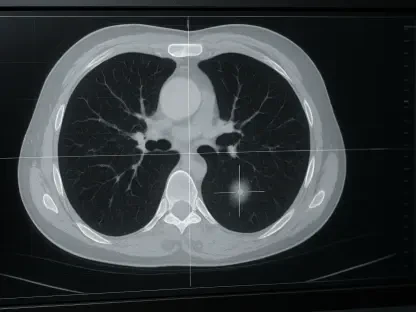

The clinical research community has long grappled with the invasive necessity of liver biopsies, yet the publication of the LITMUS Imaging Study in Nature Medicine marks a definitive turning point in the pursuit of non-invasive diagnostics. For decades, the liver biopsy stood as the undisputed gold standard for assessing Metabolic Dysfunction-Associated Steatotic Liver Disease (MASLD), despite the procedural discomfort and inherent risks it posed to patients. In the current landscape of 2026, the need for a more patient-centric and scalable approach has reached a critical mass, driving researchers to seek alternatives that provide equivalent or superior diagnostic accuracy. This landmark study provides a rigorous validation dataset that compares state-of-the-art non-invasive imaging techniques with traditional serum biomarkers, offering a comprehensive roadmap for future clinical trial designs. By validating these endpoints, the research suggests that the field is rapidly transitioning toward a sophisticated, data-driven methodology that may soon replace the need for histological samples in clinical trials.
Structural Limitations: The Failure of Traditional Histology
The shift toward non-invasive endpoints is largely propelled by the fundamental structural failures and operational vulnerabilities associated with the traditional liver biopsy. While regulatory bodies like the FDA historically granted accelerated approvals based on histological changes, the practical application of these procedures often yields inconsistent results due to sampling variability. A tiny tissue sample, often representing less than one-fifty-thousandth of the total organ, frequently fails to capture the heterogeneous nature of liver disease, leading to potential misclassification of fibrosis stages. Furthermore, the invasive nature of the procedure presents significant barriers to patient recruitment and retention, as many individuals are understandably reluctant to undergo repeated needle insertions for longitudinal monitoring. These challenges have often complicated the interpretation of clinical data, as the inherent noise in biopsy readings can obscure the true therapeutic effects of a drug, potentially stalling the progress of otherwise promising metabolic treatments.
Operational Challenges: Variability in Biopsy Sampling
Recent analyses of failed cirrhosis and MASLD trials have underscored the urgency of moving beyond subjective histological assessments toward more objective measures. The pathology-based approach relies heavily on human interpretation, which introduces inter-observer variability and limits the reproducibility of results across different clinical sites globally. This realization has fostered an industry-wide consensus that more reliable, less burdensome diagnostic tools are not merely a preference but a necessity for the long-term viability of drug development in this therapeutic area. As the industry matures, the focus has pivoted toward technology that offers a holistic view of the liver rather than a localized snapshot. By prioritizing techniques that minimize patient burden and maximize data reliability, researchers are building a foundation for trials that are both more efficient and more ethical. This evolution reflects a broader commitment to precision medicine where diagnostic clarity is prioritized over traditional but flawed methodologies.
Imaging Performance: Magnetic Resonance vs. Ultrasound
The LITMUS study provides a precise quantification of performance differences between various imaging technologies currently utilized in specialized clinical settings. By conducting a head-to-head comparison between Magnetic Resonance Elastography (MRE) and Vibration-Controlled Transient Elastography (VCTE), the researchers identified a substantial performance gap that has significant implications for trial design. MRE demonstrated a notably higher Area Under the Receiver Operating Characteristic (AUROC) curve for the detection of advanced fibrosis, establishing it as a more sensitive tool for staging patients accurately. This disparity is more than just a statistical finding; it represents a major clinical advantage in ensuring that participants are correctly categorized before they are enrolled in a study. While transient elastography remains a valuable tool due to its portability and lower cost, its limitations in accuracy for certain patient populations make it a less reliable primary endpoint for late-phase pharmaceutical trials.
Data Integrity: Ensuring Accuracy in Trial Staging
For pharmaceutical sponsors, the heightened sensitivity of MRE is becoming an indispensable asset for protecting the integrity of expensive and time-consuming clinical programs. When patients are misclassified at baseline using less accurate tools, the perceived efficacy of an investigational drug can be significantly diluted, leading to trial failures that might have been avoided with better screening. The LITMUS data clarifies that MRE and transient elastography are not functionally interchangeable, forcing sponsors to be more selective when designing their operational protocols. Relying on less sensitive modalities now poses a strategic risk that could jeopardize the regulatory approval of novel therapies by introducing unnecessary variability into the primary dataset. Consequently, there is an increasing trend toward prioritizing sites that have the capability to perform high-quality MRE scans, as this ensures the collection of regulatory-grade data that can withstand the scrutiny of health authorities. This shift is reshaping the competitive landscape of clinical trial site selection and infrastructure investment.
Regulatory Shifts: FDA Acceptance of Imaging Surrogates
The regulatory environment is undergoing a parallel evolution, with the FDA demonstrating an unprecedented openness to the inclusion of imaging data in drug approval packages. Recently, the agency accepted a Letter of Intent to qualify liver stiffness measurements as reasonably likely surrogate endpoints for specific categories of liver disease trials. This formal acknowledgement indicates that the path toward drug approval is no longer strictly tied to biopsy-proven histological improvement, provided that the imaging data meets rigorous validation standards. The LITMUS study was specifically designed to provide this high-quality validation data, bridging the gap between experimental research and regulatory requirements. This shift allows for a more streamlined approval process, where therapeutic effects can be measured through non-invasive means that are more reflective of real-world patient outcomes. However, the requirement for high-quality data remains paramount, and sponsors must continue to invest in standardized imaging protocols to satisfy the agency demand for reproducibility and accuracy in longitudinal studies.
Biomarker Strategy: Differentiating Screening and Endpoints
Alongside imaging advancements, the LITMUS findings provide critical insights into the strategic role of serum-based biomarkers, such as the FIB-4 index, in the modern clinical trial ecosystem. While these simple blood-based markers are highly effective for screening large populations in primary care settings due to their low cost and ease of implementation, they often lack the granular sensitivity required to serve as primary efficacy endpoints. The study helps sponsors distinguish between tools used for broad patient identification and those necessary for measuring subtle physiological changes in liver health over the course of a treatment regimen. This distinction facilitates a hybrid diagnostic approach where inexpensive serum panels handle the initial screening phase, while advanced imaging provides the precise measurement needed for trial endpoints. This tiered strategy optimizes resource allocation, ensuring that high-cost imaging resources are reserved for patients most likely to benefit from the trial. By integrating these different modalities, researchers can build a more comprehensive and cost-effective patient journey.
Operational Transition: Implementing MRE in Clinical Sites
The publication of this extensive validation data necessitates immediate structural changes to clinical operations and statistical analysis plans within the pharmaceutical sector. Sponsors are now required to evaluate the feasibility of providing MRE access at trial sites, as the continued use of less sensitive methods may no longer be defensible during regulatory submissions. Trials that are already in progress may need to be adapted to include sensitivity analyses that anchor their histological results to these newly validated imaging markers. These operational adjustments are essential for navigating a research environment that increasingly favors decentralized, patient-friendly methodologies that reduce the logistical friction of participation. As the industry moves forward, the adoption of centralized reading services for imaging data will likely become the standard, ensuring that results are interpreted consistently across different geographies. This move toward standardization not only improves data quality but also facilitates the comparison of results across different therapeutic programs.
Future Evolution: The Road to Biopsy-Free Research
As the industry moved toward 2027, the transition to qualifying imaging biomarkers reached its final stages, signaling a new era in metabolic research. The move toward biopsy-free pipelines became a reality as GLP-1 combinations and other novel therapies advanced through clinical phases with imaging as a central pillar of their evidence packages. Sponsors successfully implemented hybrid screening models that utilized serum biomarkers to narrow the patient pool before confirming stages with magnetic resonance technology. This evolution represented a significant victory for patient care, as it accelerated the delivery of life-saving medications while reducing the physical burdens of traditional research. Companies that proactively updated their protocols to include MRE were better positioned to meet the expectations of regulatory authorities. Ultimately, the validation of these endpoints transformed the landscape of MASLD research into a digital-first operation. The clinical community moved decisively toward these solutions to ensure that drug development remained robust and compassionate.