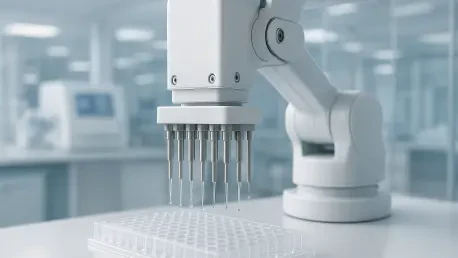

The transition to automated systems is less about replacing scientific staff and more about liberating them from the mechanical motions of repetitive bench work. For decades, researchers spent significant portions of their day manually pipetting microvolumes of liquids into 96-well plates, a process prone to human error and physical fatigue. Today, the landscape of the life sciences laboratory has undergone a radical transformation into a streamlined, high-throughput environment where robotics handle the mundane while humans focus on high-level data interpretation and experimental design. This shift is driven by the urgent need for faster drug discovery and more precise genomic sequencing. As laboratories adopt these sophisticated systems, they are seeing a massive reduction in cross-contamination and an increase in the reproducibility of complex assays. The integration of advanced sensors and real-time monitoring tools ensures that every step of a biological process is documented with a level of granular detail that was previously impossible to achieve manually.
Engineering the Modern High-Throughput Workflow
Precision Liquid Handling: Acoustic Technologies
Liquid handling remains the cornerstone of laboratory automation, yet the technology has evolved far beyond the simple motorized pipettes of the past. Acoustic droplet ejection (ADE) has emerged as a disruptive force, using sound waves to transfer nanoliter droplets of liquid with pinpoint accuracy without any physical contact between the source and the target plate. This method eliminates the need for plastic tips, drastically reducing environmental waste and preventing the carry-over contamination that often plagues high-sensitivity assays. By 2026, many research institutions have fully integrated these acoustic systems into their primary screening pipelines. This transition allows for the miniaturization of assays, which is critical when working with expensive reagents or rare patient-derived samples. The ability to move small volumes consistently has enabled researchers to run thousands of tests simultaneously, accelerating the identification of viable drug candidates during the early stages of the pharmacological development process.
Robotic Modularity: Flexible Architectures
Beyond individual instruments, the rise of modular robotic platforms has allowed laboratories to customize their automation suites to meet specific project needs. Companies like Hamilton and Tecan are providing systems that can be reconfigured in real-time to transition from a genomics-focused workflow to a protein purification setup without requiring extensive downtime. These robots are equipped with multi-axis articulated arms that mimic human dexterity but operate with a consistency that no person could maintain over a twenty-four-hour shift. The modular approach is particularly beneficial for contract research organizations that must pivot quickly between diverse client requirements. Between 2026 and 2029, the industry is expected to see a significant investment in these flexible architectures, ensuring that the lab infrastructure remains relevant as scientific methodologies continue to evolve. This physical flexibility is paired with sophisticated scheduling software that optimizes plate movement and instrument usage to maximize daily output.
Digital Integration and Autonomous Discovery
The Convergence: Artificial Intelligence and Hardware
Automation is no longer confined to the physical movement of samples; it has extended deep into the digital infrastructure that manages experimental data. Laboratory Information Management Systems (LIMS) now communicate directly with robotic hardware, creating a closed-loop environment where data flows seamlessly from the bench to the cloud. Artificial intelligence algorithms are being utilized to analyze results in real-time, allowing the system to make autonomous decisions about the next steps of an experiment. For example, if a high-throughput screen identifies a promising hit, the AI can automatically trigger a secondary confirmation assay without human intervention. This self-driving lab concept represents the pinnacle of modern life sciences, where the latency between data generation and actionable insight is reduced to minutes. Such systems are capable of identifying patterns in large datasets that might be missed by human observers, leading to more robust discoveries in personalized medicine and synthetic biology.
Future Strategies: Workforce Evolution
The industry successfully navigated the initial hurdles of high-throughput integration by focusing on standardized communication protocols and open-source software frameworks. Stakeholders prioritized the training of specialized staff who possessed both biological expertise and proficiency in computational engineering. This dual-competency workforce proved essential for troubleshooting complex automated workflows and ensuring data integrity across large-scale operations. Moving forward, laboratories sought to implement universal data standards to facilitate better collaboration between international research centers. Decision-makers evaluated the total cost of ownership by considering long-term gains in throughput and the reduction of experimental failures. It became clear that the most effective strategies involved a gradual scaling of automation, starting with high-impact bottlenecks before expanding to the entire pipeline. Researchers utilized these advanced tools to reach new milestones in genomic editing and vaccine development, ultimately setting a new benchmark for scientific efficiency and precision.