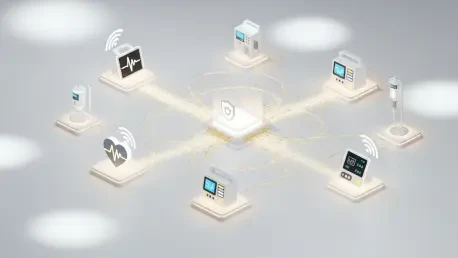

The modern hospital landscape has shifted so fundamentally that the protection of digital networks is now indistinguishable from the preservation of human life during medical emergencies. While healthcare facilities once viewed cybersecurity as an isolated administrative function hidden away in basement server rooms, the rapid integration of interconnected medical devices and real-time data streaming has moved digital defense to the very center of clinical operations. Today, a compromised network does not merely result in a leaked spreadsheet or a financial discrepancy; it manifests as a paralyzed intensive care unit where ventilators, infusion pumps, and electronic health records cease to function simultaneously. This evolution means that the boundary between a software vulnerability and a patient safety crisis has effectively dissolved, forcing a total reconsideration of how medical institutions prioritize their capital investments and daily operational protocols to ensure that technology serves as a reliable lifeline rather than a catastrophic point of failure.
The Evolution of Digital Threats into Clinical Hazards
Global criminal syndicates and aggressive nation-state actors have transitioned from simple data theft to sophisticated, systemic disruptions that target the foundational infrastructure of healthcare delivery. These adversaries no longer focus solely on exfiltrating social security numbers for identity theft; instead, they recognize that the extreme time-sensitivity of medical care creates massive leverage for extortion through ransomware. This shift is exacerbated by a sprawling attack surface that extends far beyond the hospital’s physical perimeter into a complex web of third-party vendors, including cloud-based diagnostic platforms, offshore billing services, and remote maintenance portals for HVAC systems. Recent forensic analyses indicate that over eighty percent of significant healthcare data breaches now originate within these external partner networks, proving that a single vulnerability in a secondary service provider can trigger a cascading failure that brings an entire metropolitan trauma center to a standstill within minutes.
Ransomware attacks in the current landscape are being reclassified by medical professionals as direct physical threats rather than mere financial or administrative inconveniences. When a malicious actor encrypts a hospital’s database, they are not just locking files; they are effectively disconnecting the surgeon from the patient’s history and the pharmacist from the patient’s allergy list. The resulting delays in emergency surgeries, the inability to process time-sensitive oncology treatments, and the forced diversion of ambulances to distant facilities can lead to permanent disability or mortality. Consequently, industry leaders and regulatory bodies are advocating for a paradigm shift where every cyber incident is investigated with the same rigor as a surgical error or a medication mishap. By viewing cybersecurity through the lens of clinical risk, hospitals can begin to allocate resources toward redundant systems and real-time monitoring that prioritize the continuity of patient care over the simple recovery of business records.
Strengthening Governance and Operational Resilience
Achieving a truly secure medical environment requires moving beyond siloed IT departments and integrating cybersecurity into the highest levels of organizational governance and clinical leadership. Hospital boards and executive suites must move past the “compliance-only” mindset to embrace a proactive culture where every new technological adoption is vetted through a rigorous multidisciplinary safety framework. This approach involves asking critical questions about the necessity of data access and the security of network connections before any new medical device or software platform is introduced into the clinical workflow. Furthermore, precise data mapping has become a vital necessity, as the vast majority of data exfiltration currently occurs through secondary servers and specialized medical equipment rather than the primary electronic medical record systems. Gaining total visibility into these hidden data flows allows institutions to identify and close the “visibility gap” that frequently enables attackers to remain undetected for months.
True resilience in the face of an inevitable cyberattack depends on a facility’s ability to maintain essential clinical functions during a total technological blackout through practiced manual workarounds. Organizations must move beyond theoretical business continuity plans and develop “muscle memory” for downtime procedures, ensuring that frontline staff can manage patient intake, medication administration, and surgical scheduling without any digital assistance. This level of preparedness involves regular, high-fidelity simulations where entire departments practice operating in a technological vacuum to identify bottlenecks and resource gaps before a real crisis occurs. By focusing on the gritty reality of extended outages, healthcare providers can ensure that their most vital life-saving services remain functional even when the network is dark. Ultimately, the goal is to transform cybersecurity from a defensive IT posture into a foundational pillar of the modern Hippocratic Oath, ensuring that the commitment to “do no harm” remains unbroken in the digital age.
Strategic Paths Toward Future Medical Security
Medical institutions transitioned toward a more integrated defense model that prioritized the segmentation of critical life-support systems from general administrative networks. This strategic isolation ensured that even if a common phishing attack compromised the hospital’s billing or email servers, the telemetry monitors and anesthesia machines remained operational and shielded from the primary infection. Furthermore, the implementation of zero-trust architectures became the standard, requiring continuous authentication for every device and user attempting to access sensitive clinical data. This shift moved the industry away from the outdated “perimeter” defense model, acknowledging that threats are just as likely to originate from a compromised internal workstation or a vendor’s remote access point as they are from an external hacker. These technical enhancements were coupled with a newfound emphasis on supply chain integrity, where hospitals demanded rigorous security certifications and transparent vulnerability reporting from every manufacturer of connected medical equipment.
The focus of healthcare leadership successfully moved toward a holistic view of resilience that combined high-tech monitoring with low-tech manual redundancy. Hospitals invested heavily in specialized training for clinical staff, ensuring that the transition to paper charts and manual vitals tracking could be executed without a moment’s hesitation during a network failure. This cultural shift was supported by the adoption of standardized incident response frameworks that treated a cyberattack as a “Code Silver” or a mass-casualty event, triggering immediate, pre-planned actions across every department from the pharmacy to the morgue. Moving forward, the most successful organizations will be those that continue to view cybersecurity as a dynamic clinical discipline rather than a static IT cost center. By maintaining a constant state of readiness and fostering deep collaboration between technical experts and medical practitioners, the healthcare industry can protect the sanctity of the patient-provider relationship against the evolving threats of an increasingly connected and volatile digital world.