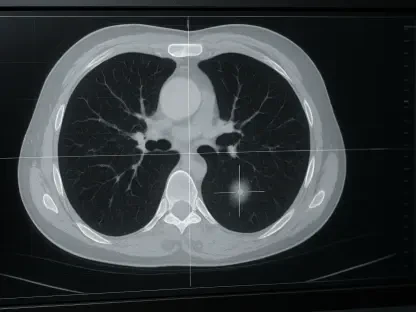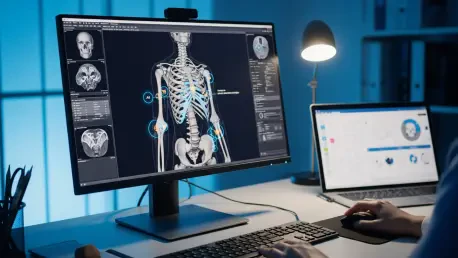

The sheer volume of diagnostic imaging studies generated by modern healthcare systems has reached a staggering tipping point that threatens to overwhelm the global medical workforce. For years, the prevailing narrative suggested that automated systems would eventually displace human diagnosticians, leaving little room for the clinical expertise developed over decades of medical training. However, the current landscape reveals a starkly different reality where artificial intelligence has transitioned from a perceived threat to an indispensable lifeline for overburdened departments. As the demand for sophisticated imaging continues to outpace the recruitment of new specialists, the focus has shifted toward technological integration as a means of survival rather than mere optimization. Instead of replacing the human element, these advanced systems are now being utilized to buffer the intense pressures of a system pushed to its limits. This evolution marks a critical turning point in how medical professionals interact with technology in the daily clinical environment.
Part 1: Addressing the Global Shortage of Specialists
The medical community is currently grappling with an unsustainable growth in imaging volume that far exceeds the proportional increase in the physician population. Throughout the United States and Europe, healthcare facilities are reporting record-high turnover rates and a significant wave of early retirements among experienced radiologists. This exodus of talent is occurring precisely when an aging global population requires more frequent and complex diagnostic scans to manage chronic conditions and emergency interventions. Without the intervention of sophisticated computational tools, the delay in diagnostic reporting could lead to significant bottlenecks in patient care, potentially compromising clinical outcomes. Consequently, the adoption of intelligent software is no longer a matter of maintaining a competitive edge but is a fundamental requirement for the continued operation of modern radiology departments. These tools provide the necessary support to manage the sheer density of data generated by modern scanners while allowing specialists to maintain their high diagnostic standards.
Part 2: Categorizing the Functional Roles of AI
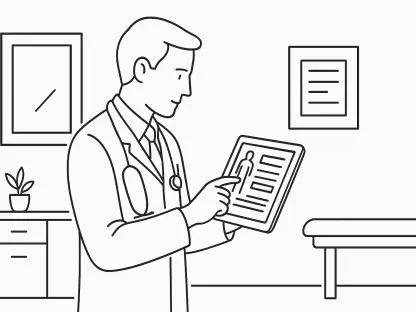
To address these logistical hurdles, modern AI applications are generally classified into three distinct functional categories: autonomous, generative, and augmented systems. Autonomous platforms are increasingly tasked with filtering out routine, negative scans, allowing radiologists to dedicate their focus to cases that exhibit genuine abnormalities. Meanwhile, generative AI has taken over the administrative burden by automatically summarizing patient medical histories, lab results, and prior imaging findings into concise reports for the interpreting physician. Finally, augmented AI serves as a digital co-pilot that assists with repetitive and time-consuming tasks, such as the precise measurement of lesions or the identification of subtle fractures that might be missed during a long shift. By delegating these specific responsibilities to machine learning algorithms, the medical workforce can reclaim valuable time that was previously lost to manual data processing. This collaborative approach ensures that the expertise of the doctor remains central to the diagnostic process.
Part 3: Triage and Prioritization in Emergency Care
One of the most impactful applications of this technology is found in the triaging of high-volume emergency examinations, such as non-contrast head CT scans. In a typical emergency department setting, a significant percentage of these tests are ordered as a precautionary measure and eventually return results within normal limits. However, every scan must still be meticulously reviewed by a qualified specialist, a process that consumes hundreds of redundant hours across a large hospital network. By implementing AI-driven triage systems, healthy scans can be flagged and temporarily sidelined, while exams containing signs of intracranial hemorrhage or large-vessel occlusion are instantly moved to the top of the reading list. This prioritization ensures that life-saving interventions are initiated minutes earlier than would be possible under a traditional first-come, first-served workflow. Because the clinical stakes in neuroimaging are exceptionally high, these automated systems are subject to continuous rigorous validation to maintain safety.
Part 4: Integrating Automation into the Clinical Workflow
Beyond immediate triage, the future of radiology efficiency lies in the seamless integration of automation into the digital infrastructure of the modern reading room. These platforms are evolving to provide real-time alerts and intelligent worklists that dynamically adjust based on the severity of the clinical findings detected by background algorithms. Furthermore, the automation of coding and reporting requirements has significantly reduced the amount of time clinicians spend on documentation, allowing them to return their focus to complex case interpretation. By integrating historical patient records and longitudinal data directly into the diagnostic viewer, these systems provide a comprehensive clinical context that was previously difficult to assemble manually. This holistic view of the patient’s health trajectory enables more accurate diagnoses while simultaneously decreasing the cognitive load on the radiologist. The goal is to create a digital environment where the technology handles the data management so the human can focus solely on the patient.
Part 5: Mitigating Risks and Managing Hallucinations
While the benefits of automation are undeniable, maintaining strict human oversight is essential to protect patient safety from the inherent limitations of current algorithms. Artificial intelligence systems are still susceptible to “hallucinations,” where the software identifies patterns that do not exist or fails to account for rare medical conditions that were not well-represented in the training data. Additionally, the performance of these tools can drift over time as imaging hardware is upgraded or as the patient demographics within a specific region change. To mitigate these risks, healthcare organizations must implement robust quality control protocols and transparent auditing processes that involve frequent validation by human experts. Relying solely on automated outputs without a critical review process could introduce new types of errors into the clinical workflow. Therefore, the most effective strategy involves a hybrid model where the algorithm proposes findings and the radiologist provides the final validation and clinical synthesis.
Part 6: Future Considerations for Clinical Safety
The transition toward an AI-integrated radiology model required a fundamental shift in how medical organizations approached technology and workforce management. Leading institutions recognized that the key to success was not the wholesale replacement of staff, but the strategic deployment of tools that enhanced human performance. They established dedicated committees to oversee the selection and implementation of algorithms, ensuring that each tool addressed a specific clinical need rather than adding unnecessary complexity. Moving forward, the industry prioritized the development of interoperable systems that communicated across different hospital networks to ensure consistency in care. By focusing on the synergy between computational power and human judgment, the medical community successfully navigated a period of unprecedented demand without sacrificing the quality of diagnostic services. The integration of these systems demonstrated that technology is most effective when it serves as a partner in the pursuit of better patient health outcomes.