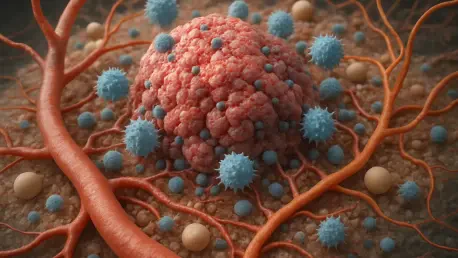

The shift toward perceiving oncological pathologies as dynamic ecological systems has fundamentally altered the trajectory of modern clinical intervention and therapeutic research. Recent breakthroughs led by specialized teams at Peking University have moved the medical community away from the reductive view of a tumor as a static collection of malignant cells, instead defining it as a sophisticated, co-evolving neighborhood. This tumor microenvironment comprises a dense network of immune cells, vascular structures, and even neurological elements that collaborate or compete in a constant state of flux. To address this complexity, the “virtual tumor” has emerged as a digital framework designed to map these interactions with unprecedented precision, providing a computational roadmap for the next phase of personalized medicine. By simulating the intricate biological dance between a patient’s immune defenses and the disease itself, clinicians can now visualize the hidden mechanics of resistance and progression before the first dose of medication is even administered.
Mapping the Cellular Landscape: High-Dimensional Precision
Achieving a panoramic understanding of the tumor microenvironment requires tools that go beyond the limitations of legacy bulk sequencing, which typically averaged cellular signals and obscured critical variations. Current methodologies, such as single-cell transcriptomics and high-resolution spatial omics, allow researchers to dissect the tumor landscape at a granular level, identifying the unique signature of every individual cell within its physical context. This high-dimensional mapping is essential because it reveals the subtle communication channels that allow cancer to evade detection and flourish despite aggressive treatment protocols. By utilizing these advanced datasets, the virtual tumor model constructs a detailed digital twin that mirrors the biological reality of the patient. This technological leap ensures that no rare cell population or critical interaction remains hidden, enabling a much more accurate assessment of how a specific tumor is likely to evolve over time.
Within these complex cellular maps, specific subsets of immune cells serve as vital diagnostic indicators that dictate the likelihood of a successful therapeutic outcome. The discovery of specialized T cells operating within structured “immune hubs” has provided a clearer explanation for why some patients exhibit robust responses to immunotherapy while others do not. These hubs represent tactical organizational centers where the body coordinates its defense, yet they are often countered by the presence of “barrier” cells that physically and chemically shield the malignancy. The virtual tumor platform excels at identifying these specialized subtypes, allowing researchers to observe the internal power struggle between pro-inflammatory and immunosuppressive forces. By cataloging these structural and functional nuances, the model moves beyond simple categorization, offering a dynamic view of the patient’s internal defenses and the specific obstacles preventing a cure.
Analyzing Networks: Functional Blueprints and Structural Barriers
The emphasis on functional networks within the tumor microenvironment has allowed for a more sophisticated differentiation between cellular roles that appear similar on the surface. By focusing on the CXCL9-SPP1 signaling axis, researchers can now identify specific macrophage behaviors that either promote or inhibit tumor growth. This distinction is crucial, as some macrophages actively recruit therapeutic immune cells, while others focus on structural remodeling that supports the tumor’s expanding blood supply. This shift toward functional analysis provides a much more accurate set of clinical predictions, as it relies on the dynamic behavior of cells within the network rather than static markers. By understanding these operational rules, clinicians can better anticipate how a tumor might react to targeted inhibitors. This strategy moves the field away from broad-spectrum interventions and toward a model of precision that accounts for the active biological conversations occurring within the tumor ecosystem.
Infrastructure components such as fibroblasts and nerve cells create significant physical hurdles that can obstruct the delivery of therapeutic agents to the tumor core. Recent findings suggest that cancer cells often exploit the body’s own nervous system, utilizing existing neural pathways to facilitate movement and systemic invasion. The virtual tumor model identifies these structural vulnerabilities through the analysis of “aberrantly conserved” blueprints, which are patterns of remodeling shared across various cancer types. By mapping these physical barriers, researchers are able to design therapies that target the physical and structural foundations of the malignancy. This includes developing treatments that dismantle the protective scaffolds built by fibroblasts, effectively opening a path for immune cells and chemotherapy to reach their target. Addressing these physical barriers ensures that biological treatments are not rendered ineffective by the tumor’s architectural defenses.
Simulating Outcomes: AI Virtual Tumors and Clinical Application
The integration of artificial intelligence with virtual tumor modeling has revolutionized the way drug combinations are selected and tested for individual patients. These AI virtual tumors process vast amounts of high-dimensional data to simulate how a specific cellular ecosystem will react to various therapeutic combinations. This computational approach allows for the digital testing of thousands of scenarios, identifying the most effective treatment paths without exposing the patient to unnecessary side effects. By modeling the spatial architecture and cellular composition simultaneously, the AI can predict resistance patterns that traditional methods would likely miss. This capability enables a highly personalized approach to oncology, where every treatment plan is constructed based on the unique biological constraints of the individual tumor. The ability to simulate clinical outcomes in a digital environment provides a safety net that has fundamentally improved the success rates of complex pharmaceutical interventions.
To maximize the impact of this technology, efforts from 2026 to 2028 focused on refining the accuracy of predictive algorithms and expanding the diversity of the datasets used for training. Researchers concentrated on incorporating longitudinal data, which allowed virtual tumors to evolve digitally at the same rate as the physical disease, providing a continuous feedback loop during the treatment process. This iterative approach proved essential for managing late-stage resistance and adjusting therapies as the tumor microenvironment shifted. Additionally, investment in decentralized computational platforms enabled smaller clinics to access high-powered AI simulations, democratizing precision medicine beyond major academic centers. These initiatives ensured that the benefits of virtual tumor modeling reached a broader patient population, regardless of geographic or economic constraints. By prioritizing scalability and algorithmic precision, the industry established a resilient framework for long-term innovation.