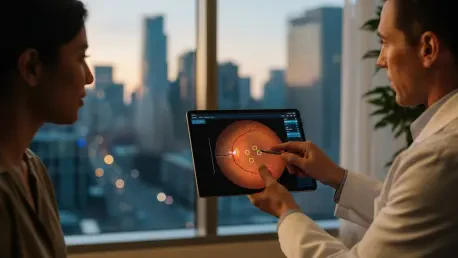

The global healthcare landscape is currently grappling with a dual crisis of aging demographics and a chronic shortage of specialized medical professionals who are capable of performing complex diagnostic procedures. In this environment, the emergence of artificial intelligence has transitioned from a theoretical concept into a fundamental necessity for maintaining the efficacy of clinical operations. At the heart of this shift is the Computer Assisted Retinal Analysis platform, or CARA, which has been meticulously developed to serve as a high-precision triage system for eye diseases. By analyzing retinal fundus images with machine learning algorithms trained on hundreds of thousands of specialized data points, the platform identifies early markers of diabetic retinopathy and age-related macular degeneration. This capability allows primary care providers to manage larger patient volumes efficiently while ensuring that the limited time of ophthalmologists is reserved for patients who require urgent intervention or surgical care.
Navigating the Global Regulatory Gauntlet
Adopting Modern Lifecycle: International Standards
The pursuit of widespread clinical adoption has led to a sophisticated regulatory strategy that treats medical software as a living, dynamic entity rather than a static tool. In Canada, the implementation of a Predetermined Change Control Plan has allowed the platform to evolve its algorithms in real time without the traditional delays associated with full re-authorization for every minor optimization. This modern framework acknowledges that AI models must adapt to new demographic data and hardware updates to maintain their diagnostic accuracy over long periods. By establishing these protocols, the system ensures that performance remains consistent regardless of whether it is being used in a high-resource metropolitan hospital or a remote rural clinic. This proactive approach to software lifecycle management represents a major shift in how health authorities oversee digital health products, fostering an environment where innovation can keep pace with the rapid advancements in neural network architecture and data science.
Beyond the North American market, the expansion into international territories like Saudi Arabia demonstrates a growing global consensus on the necessity of standardized AI regulation. The submission process to the Saudi Food and Drug Authority highlights the critical importance of cybersecurity, data integrity, and ethical data sourcing in the deployment of diagnostic tools. To achieve approval, the platform must demonstrate substantial equivalence to existing diagnostic methods, proving that the automated analysis is at least as safe and reliable as the manual assessments performed by human experts. This international alignment is crucial for scaling the technology across different healthcare infrastructures, as it builds a foundation of trust among global regulatory bodies. As these systems become more integrated into national health programs, they set a precedent for how digital health interventions should be validated, emphasizing the need for rigorous clinical evidence and transparent reporting of algorithmic performance across diverse populations.
Leveraging Strategic Alliances: Economic Tailwinds
The economic landscape for automated retinal analysis is expanding rapidly as the prevalence of chronic metabolic diseases continues to rise globally, driving a massive demand for preventative screening. To meet this demand, strategic partnerships with industry leaders such as EssilorLuxottica and IRIS have been formed to provide the infrastructure necessary for large-scale distribution. These alliances allow the CARA software to be integrated directly into existing commercial channels, such as retail optical locations and community-based screening centers, effectively bypassing the traditional barriers to entry that often hinder smaller technology firms. By turning the software into a force-multiplier, these partnerships empower non-specialist clinicians to perform high-level screenings that were once the exclusive domain of specialized hospitals. This commercial model not only increases the accessibility of eye care but also creates a sustainable economic pathway for the technology to thrive in a competitive and highly regulated market.
This strategic integration into the primary care workflow addresses a critical diagnostic bottleneck that has historically led to delayed treatments and preventable vision loss. The economic potential of this technology is further bolstered by its ability to reduce the overall cost of care through early detection, which prevents the need for expensive late-stage interventions and long-term disability support. As more healthcare systems transition toward value-based care models, the role of AI-driven screening tools becomes even more significant, as they provide a cost-effective method for managing population health. The data generated through these thousands of clinical screenings also provide valuable insights into disease trends, allowing public health officials to allocate resources more effectively. Through these collaborations, the platform has managed to bridge the gap between high-tech innovation and practical, everyday healthcare, ensuring that advanced diagnostic insights are available to patients in their own communities.
The Evolution Toward Systemic Health Screening
Unlocking the Potential: Ocular Biomarkers
The scientific community has increasingly recognized the eye as a unique and non-invasive window into the internal state of the human body, specifically regarding the vascular and nervous systems. Collaborative research efforts with academic institutions like Montreal’s École de Technologie Supérieure are currently focused on expanding the capabilities of the CARA platform to detect systemic health markers. By analyzing the fine vascular structures of the retina, the AI is being trained to identify subtle changes that could indicate an elevated risk for cardiovascular disease and stroke. This research, supported by significant federal funding, aims to transform the retina into a primary site for holistic health monitoring, moving beyond simple ocular diagnosis. If successful, this shift will allow the platform to serve as an early warning system for heart conditions, providing clinicians with the data needed to implement preventative lifestyle or medical interventions years before a major cardiac event occurs.
This transition from a specialized eye-care tool to a broader diagnostic hub represents a fundamental change in the perception of retinal imaging within the medical community. The ability to monitor systemic health through a simple, painless eye scan could revolutionize how routine check-ups are conducted, making high-level cardiovascular screening as accessible as an annual vision test. This vision for the future emphasizes the role of AI in moving healthcare from a reactive model, which treats symptoms as they appear, to a proactive model that identifies risks before they manifest. By leveraging the retina as a biomarker, the technology provides a glimpse into the future of personalized medicine, where diagnostic tools are integrated to provide a comprehensive view of a patient’s well-being. As these algorithms become more refined, they will likely become a standard component of preventative healthcare, offering a level of insight that was previously impossible without invasive and expensive testing procedures.
Fostering Synergy: AI Innovation and Clinical Trust
The long-term viability of medical artificial intelligence is entirely dependent on its ability to gain and maintain the professional trust of the clinicians who use it daily. To address the common concern of black box algorithms, the development process has prioritized transparency and the mitigation of data bias through rigorous validation across diverse patient groups. With a track record of screening over 400,000 patients in sixteen different countries, the CARA platform provides a level of real-world evidence that is essential for overcoming clinical skepticism. Demonstrating consistent performance across varied clinical environments proves that the technology is not just a laboratory curiosity but a robust tool capable of performing under the pressures of a busy medical practice. This focus on data quality and ethical development ensures that the insights provided by the AI are accurate, reliable, and representative of the global population it is intended to serve.
Ultimately, the goal of integrating AI into the diagnostic workflow is to empower frontline healthcare workers with sophisticated tools that simplify complex decision-making processes. By providing immediate, actionable data at the point of care, the platform enables doctors to have more informed conversations with their patients regarding their treatment options and risk factors. The seamless integration of these tools into existing electronic health records and clinic management systems is a vital step in ensuring that they become a natural part of the clinical routine. As these technologies continue to mature, they will likely establish new global standards for the detection and monitoring of chronic diseases, ensuring that patients receive the highest quality of care regardless of their geographic location. The focus remains on creating a synergistic relationship between human expertise and machine intelligence, where the strengths of both are utilized to achieve the best possible health outcomes for an aging and increasingly vulnerable global population.
Establishing New Paradigms: Actionable Clinical Standards
The integration of advanced retinal diagnostics into the standard of care became a reality as health systems shifted their focus toward sustainable, long-term wellness strategies. Clinical leaders recognized that the successful deployment of AI-driven tools required not only technological excellence but also a fundamental redesign of patient pathways to ensure that every screening led to a meaningful medical outcome. These organizations adopted new protocols that prioritized immediate data feedback, allowing primary care physicians to interpret complex retinal patterns with the same confidence as a specialist. This shift effectively eliminated the weeks-long waiting periods that previously defined the diagnostic process, ensuring that high-risk individuals were fast-tracked into specialized treatment programs without delay. By standardizing these workflows, the medical community established a more resilient infrastructure that could withstand the pressures of increasing disease prevalence while maintaining a high level of diagnostic accuracy.
The lessons learned from the widespread implementation of the CARA platform provided a roadmap for the future of multi-modal health monitoring. It was discovered that the most effective digital health interventions were those that functioned as collaborative partners to the physician, rather than isolated software applications. This necessitated a move toward more integrated data ecosystems where ocular, cardiovascular, and metabolic data could be synthesized to provide a 360-degree view of patient health. Future developments were centered on expanding the reach of these tools to mobile and home-based devices, further democratizing access to high-level diagnostic insights. As the technology matured, it became clear that the value of AI lay in its ability to handle the massive volume of routine screenings, thereby freeing human experts to focus on complex cases and patient-centered care. These advancements ensured that the healthcare system remained proactive and focused on prevention, ultimately securing a healthier future for the global population.