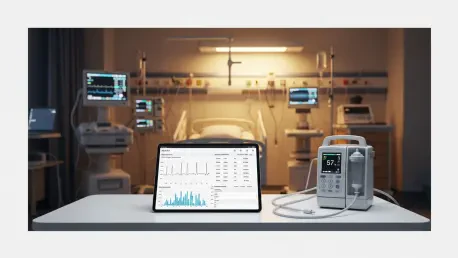

The critical window following an aneurysmal subarachnoid hemorrhage often determines the thin line between a successful recovery and permanent neurological deficit for thousands of patients every single year. These life-threatening brain bleeds require immediate and precise pharmacological intervention to prevent secondary complications, yet the medical community has long struggled with the limitations of existing oral treatments. Grace Therapeutics recently achieved a monumental regulatory breakthrough for its lead candidate, GTx-104, which aims to modernize this standard of care. The United States Food and Drug Administration provided formal meeting minutes confirming that the drug’s clinical profile is officially considered sound and sufficient for approval purposes. This validation effectively eliminates the need for any additional clinical trials, allowing the company to pivot its entire focus toward the final technical and manufacturing requirements. By clearing this major clinical hurdle, the regulatory agency has essentially signaled that the fundamental science behind the therapy is robust enough to support a commercial launch, provided the remaining administrative and production-level criteria are met with the same level of rigor.
Refining the Regulatory Path: Clinical Validation and Administrative Milestones
The formalization of the clinical data as complete marks a pivotal transition for Grace Therapeutics, shifting the narrative from experimental uncertainty to a concrete execution phase. Earlier in the development process, a Complete Response Letter had introduced a period of strategic recalibration, as the agency sought additional clarity on specific technical elements rather than the efficacy of the drug itself. The recent feedback clarifies that the hurdles remaining are purely administrative and manufacturing-related, rather than concerns about the safety or effectiveness of the intravenous nanoparticle formulation. This distinction is vital for stakeholders and investors, as it significantly reduces the inherent risk associated with late-stage drug development. Instead of facing the high costs and unpredictable timelines of new patient enrollment or multi-year studies, the company now operates with a clear roadmap focused on dossier perfection and facility compliance. This regulatory clarity allows the leadership team to allocate resources toward optimizing the final New Drug Application resubmission, ensuring that every technical detail aligns with the agency’s rigorous expectations for life-saving critical care medications.
Beyond the broad validation of clinical efficacy, the agency’s feedback highlighted the specific need for more granular data regarding the nanoparticle formulation’s inactive ingredients. Specifically, the regulatory body requested additional information concerning the toxicology of excipients and potential leachables that could occur during the shelf-life of the product. Grace Therapeutics is currently actively generating this specific data, utilizing advanced laboratory techniques to demonstrate that the specialized aqueous solution remains stable and safe for patient administration. This focus on the chemical and physical stability of the formulation is a standard yet essential component of bringing a nanoparticle-based drug to the market. Because these particles are engineered to deliver the active pharmaceutical ingredient more effectively than traditional methods, the safety of the delivery vehicle itself must be beyond reproach. The company’s commitment to providing this deep-level toxicological evidence reflects its broader strategy of transparency and scientific excellence. By addressing these manufacturing-specific queries with comprehensive data, Grace is building a fortress of evidence that supports not only the approval of the drug but also the long-term safety of the thousands of patients who will eventually receive it in intensive care units.
Manufacturing Resilience: Transitioning to Domestic Production Facilities
The path to commercialization was previously complicated by operational deficiencies at a third-party manufacturing site, which necessitated a bold and strategic shift in the company’s production philosophy. Recognizing that reliance on a single external contractor could pose a significant risk to the launch timeline, the management team initiated a dual-source manufacturing strategy to ensure a more resilient supply chain. This approach involves the integration of a secondary, high-specification facility based within the United States, providing a safeguard against the localized failures that slowed progress in the previous year. By diversifying the production footprint, the company effectively decoupled its regulatory success from the remedial actions of a single partner. This strategic pivot not only satisfies the immediate concerns regarding manufacturing compliance but also strengthens the company’s logistical position for the future. The domestic facility serves as a primary hub that can be closely monitored and audited, ensuring that every batch of the drug meets the highest standards of Good Manufacturing Practices without the complexities often associated with overseas oversight.
The ongoing technology transfer to the American manufacturing site represents a complex and highly coordinated effort between chemical engineers, regulatory experts, and quality control specialists. This process involves the meticulous replication of the proprietary nanoparticle formulation protocols to ensure that the drug produced at the new site is identical in quality and performance to that used in clinical trials. This proactive investment in domestic capacity allows Grace Therapeutics to choose the most efficient path for its New Drug Application resubmission, providing the flexibility to utilize either the remediated original site or the new American facility. Such redundancy is a hallmark of sophisticated pharmaceutical planning, especially when dealing with critical care drugs where supply interruptions could have dire consequences for hospital systems. The company’s ability to execute this technology transfer while simultaneously addressing the previous technical queries demonstrates an impressive operational agility. As the domestic site nears readiness, the company is positioning itself to enter the market with a reliable and scalable production model that can meet the anticipated demand immediately upon receiving final regulatory clearance.
Clinical Performance Metrics: Analyzing the STRIVE-ON Trial Results
The clinical backbone of the drug’s potential approval is the data derived from the STRIVE-ON trial, which meticulously compared the intravenous nanoparticle formulation against the established oral standard of care. One of the most significant findings from this study was the dramatic reduction in incidents of hypotension, a complication that frequently plagues patients receiving traditional treatment for subarachnoid hemorrhage. Maintaining stable blood pressure is a critical priority in the management of brain bleeds, as sudden drops can lead to inadequate cerebral perfusion and further neurological damage. The data revealed that the controlled intravenous infusion allowed for more precise hemodynamic management, providing clinicians with a level of control that was previously unattainable with oral dosing. This improvement in cardiovascular stability during the acute phase of treatment represents a meaningful advancement in bedside care. By minimizing one of the most common and dangerous side effects of the therapy, the new formulation offers a safer alternative for patients who are already in a highly vulnerable and unstable condition.
Further analysis of the trial data underscored the superior functional recovery outcomes observed in patients who received the nanoparticle treatment over a ninety-day observation period. The nature of the intravenous delivery allowed for a significantly higher dose intensity compared to the oral group, where administration is often inconsistent due to the patients’ inability to swallow or the presence of nasogastric tubes. In the STRIVE-ON study, the oral cohort frequently missed scheduled doses or received incomplete treatments, whereas the intravenous cohort benefited from a continuous and reliable pharmacological effect. These variations in dose consistency directly correlated with the long-term neurological health of the survivors. Patients treated with the newer method showed better scores on standardized functional assessment scales, suggesting that the reliable delivery of the medication is just as important as the medication itself. This link between delivery precision and long-term quality of life provides a compelling clinical argument for the adoption of the technology across neurology departments. The ability to guarantee that every patient receives the full, intended therapeutic dose regardless of their physical state is a transformative shift in the treatment of aSAH.
Technological Innovation and Economic Positioning: Securing Future Market Leadership
The innovative nanoparticle technology utilized in this therapy serves as a sophisticated solution to the historical solubility challenges associated with nimodipine. For decades, the medical community was forced to rely on bulky capsules or messy liquids that required manual preparation and were prone to absorption variability. This new aqueous solution bypasses the digestive system entirely, delivering the active compound directly into the bloodstream with near-perfect bioavailability. This method eliminates the “food effect” and other gastrointestinal factors that can lead to unpredictable drug levels in critically ill patients. For an unconscious patient in an intensive care unit, this means they can receive high-quality neuroprotective therapy without the risks associated with invasive feeding tubes or the uncertainty of gastric absorption. The technology transforms a difficult-to-manage drug into a precise instrument of modern medicine, allowing healthcare providers to focus on the patient’s recovery rather than the logistical difficulties of medication delivery. This leap in drug delivery science is the core differentiator that sets the company apart in a specialized market.
The business strategy surrounding this development was reinforced by a comprehensive intellectual property portfolio and significant regulatory protections. The company successfully secured an Orphan Drug Designation, which provided a guaranteed seven-year window of market exclusivity upon approval, alongside a library of over fifty patents protecting the proprietary formulation and delivery methods. During the recent phase of development, the leadership team prioritized the stabilization of the supply chain and the refinement of the manufacturing dossier to capitalize on these protections. The data substantiated the claim that the intravenous delivery reduced hospital resource utilization by decreasing the frequency of ICU readmissions and the total time patients spent on mechanical ventilation. These pharmacoeconomic benefits provided a clear value proposition for hospital administrators and insurance providers alike, as the drug demonstrated its potential to lower the overall cost of care while improving patient outcomes. As the company finalized its technical submissions, it established a dominant position in the rare disease space, ensuring that its investment in high-stakes clinical research resulted in a protected and highly valuable market asset. This systematic approach to both science and business strategy paved a clear path for the drug to become the new standard of care in neurocritical environments.