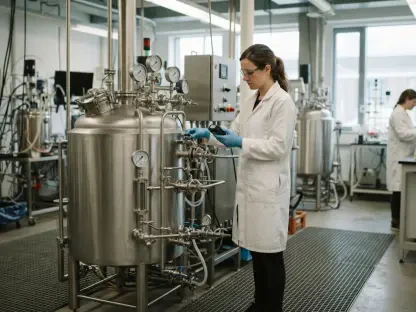

The recent shift toward complex therapeutic modalities like bispecific antibodies has created an urgent need for advanced manufacturing facilities capable of delivering high-quality biologics at scale within the United States. WuXi Biologics has officially achieved a major operational milestone by commencing commercial manufacturing at its MFG18 drug substance facility located in Cranbury, New Jersey. This transition follows the successful completion of a rigorous commercial Process Performance Qualification campaign for a bispecific antibody program, proving the site’s readiness for large-scale distribution. By establishing these capabilities locally, the company is addressing a critical bottleneck in the global supply chain, allowing partners to move from late-stage development to market entry. The Cranbury site represents a cornerstone of the strategy to integrate specialized production with domestic demand. This achievement underscores the technical maturity of the operations, which are designed to support the requirements of modern medicine.
Technical Advancements and Regional Synergy
The biopharmaceutical landscape is undergoing a profound transformation as specialized molecules like bispecific and multispecific antibodies begin to dominate the drug development pipeline. Currently, these complex modalities represent more than half of the integrated projects handled by the organization, reflecting a significant trend toward more targeted and effective therapies. To accommodate this growing demand, the Cranbury site is executing a phased capacity increase that aims to reach a total of 13,300 liters by 2027. This expansion is not merely about volume but also about the technical sophistication required to produce antibodies that can engage multiple targets simultaneously. As of mid-2026, the organization has supported over 200 such projects, demonstrating a deep expertise in handling the unique challenges of protein folding and stability. By investing in these advanced systems, the facility ensures that clients can scale their most promising discoveries without compromising on quality or yield.
Beyond technical specifications, the organization is unifying its domestic operations by linking the New Jersey facilities with a major upcoming site in Worcester, Massachusetts. This Worcester facility, identified as MFG11, is being scaled significantly to 36,000 liters to meet the rising demand for domestic biomanufacturing. By combining the drug substance manufacturing capabilities in Cranbury and Worcester with specialized drug product services—such as liquid filling at the Robbinsville site—the company provides a comprehensive end-to-end service model. This strategy allows clients to transition seamlessly from process development to large-scale commercial distribution within a localized supply chain. Furthermore, the proximity of these sites fosters a highly efficient logistics network that minimizes the risks associated with international shipping. This regional concentration of resources ensures that high-quality treatments for complex diseases can be produced and delivered more effectively to the global market.
Enhancing Global Resilience and Future Innovation
The successful launch of commercial manufacturing in New Jersey established a new standard for localized bioproduction and demonstrated the viability of high-capacity facilities in the United States. As the industry progressed through 2026, the focus shifted toward maximizing the output of these integrated sites by implementing more advanced digital automation and sustainable practices. Stakeholders found that investing in localized infrastructure was a necessary step for ensuring long-term supply chain security and reducing lead times for critical therapies. Looking forward, the emphasis remained on the continuous refinement of manufacturing processes to accommodate even more complex modalities, such as gene-modified cell therapies and next-generation conjugates. Organizations prioritized the adoption of modular manufacturing units that could be quickly adapted to changing market needs or sudden public health requirements. By maintaining a commitment to technical excellence and regulatory transparency, the sector secured a more resilient pathway for the delivery of modern medicine.
The integration of New Jersey and Massachusetts facilities provided a blueprint for future biopharmaceutical clusters that sought to combine research intensity with high-volume production capabilities. This model allowed companies to transition from clinical trials to full-scale commercialization without the traditional delays associated with transferring technology between disparate geographic regions. Experts noted that the reliance on dual-sourcing strategies across global networks mitigated the risks of regional disruptions, ensuring that patient access to essential treatments remained uninterrupted. Furthermore, the emphasis on execution excellence and stringent regulatory compliance set a benchmark for new entrants in the contract manufacturing space. Moving ahead, the industry favored the expansion of end-to-end service models that streamlined everything from drug substance synthesis to final drug product packaging. These advancements ultimately facilitated a more agile and responsive healthcare ecosystem, where innovation was limited only by the pace of scientific discovery rather than manufacturing logistics.