
As the landscape of oncology shifts toward increasingly targeted therapies, the industry faces a persistent mystery: why do some patients respond miraculously to treatment while others, with seemingly identical profiles, show no improvement at all? Ivan Kairatov, a veteran Biopharma expert with a profound background in research and development, has spent years navigating these technical complexities. His insights into the intersection of innovation and clinical application provide a unique lens through which we can view the next generation of cancer treatment. We explore the limitations of current pharmacological models, the emergence of single-cell spatial pharmacobiology, and how visualizing the physical architecture of a tumor can reveal the hidden barriers preventing drug success.
Traditional pharmacology often fails to explain why cancer drugs succeed or fail within solid tumors. How does this new platform fundamentally change our perspective on drug-tumor interactions?
Traditional tools and imaging methodologies have left researchers in a difficult position because they essentially operate in the dark, unable to distinguish between a drug that doesn’t work and a drug that simply cannot reach its target. When we look at a patient’s failure to respond, we often blame the biology of the cell, but the Single-Cell Spatial Pharmacobiology (SSP) platform allows us to see the physical reality of the tumor microenvironment for the first time. It is a striking shift from measuring general drug levels in the blood to actually visualizing the drug-tumor interactions within the human body. By utilizing this experimental and analytical platform, we can now measure drug delivery and signaling at a level of precision that was previously unimaginable. It allows us to move past the “black box” of pharmacology and start answering why these agents fail to penetrate certain regions of a solid tumor.
The concept of spatial heterogeneity seems to be at the heart of why treatments are inconsistent. Could you describe how this physical distribution, or lack thereof, impacts the efficacy of therapeutic antibodies?
When we analyze tumor samples using the SSP approach, we observe a pronounced spatial heterogeneity that is almost visceral to behold; the drug is not a uniform blanket but rather a scattered, uneven presence. This uneven physical distribution means that while some areas of a tumor are heavily saturated with the therapeutic agent, other regions remain completely untouched, hidden behind dense architectural walls. This research highlights that the noncancerous tissue, or the dense stroma surrounding a tumor, acts as a formidable physical barrier that effectively locks drugs out. If a therapeutic antibody cannot physically touch its molecular target, it doesn’t matter how potent the drug is on paper. We are seeing that the architecture of the tumor microenvironment is just as important, if not more so, than the genetic makeup of the cancer cells themselves.
In your experience with drug development, how significant is it to finally be able to distinguish between a “biologically unresponsive” tumor and one that is simply “underexposed”?
This distinction is the “holy grail” for clinical researchers because it dictates the entire strategy for the next phase of treatment. If a tumor is truly biologically unresponsive, we know we need to switch the mechanism of action or find a different molecular target entirely. However, if the SSP platform reveals that the tumor is simply underexposed, it tells us that our drug is actually effective but is being physically blocked by the stromal architecture. This realization saves us from discarding perfectly good drugs that were simply failing due to delivery issues rather than a lack of potency. It provides a roadmap for combining therapies with agents that might break down those physical barriers, ensuring the antibody can finally reach its destination and engage its target.
The research mentions Panitumumab-IRDye800CW in Phase 1 trials for fluorescence-guided surgery. How does this specific application illustrate the power of real-time visualization in a clinical setting?
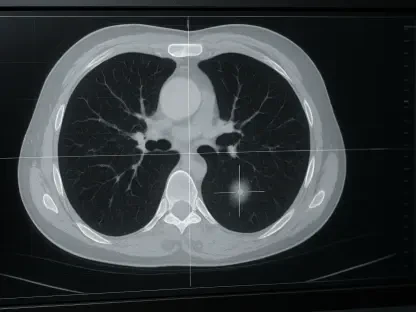
The use of Panitumumab-IRDye800CW is a perfect example of how cutting-edge fluorescence imaging is being integrated into the very fabric of cancer treatment and surgery. In these Phase 1 trials, the antibody isn’t just a treatment; it’s a beacon that helps surgeons navigate the complex and often deceptive landscape of human tissue. By directly measuring drug delivery at the site of the therapy, surgeons can see exactly where the drug is engaging with the tumor in real-time. This level of insight was supported by significant National Institutes of Health grants, including R01CA239257 and R01CA279249, which underscores the high priority the scientific community places on this technology. It transforms the surgical process from a game of estimation into a precise, data-driven procedure where the drug itself illuminates the path.
Looking at the data coming out of these studies, what are the most critical steps needed to move this spatial pharmacobiology platform from a research tool to a standard part of clinical practice?
The most immediate priority is the validation of these findings across much larger sample sizes of patients to ensure that the barriers we’ve identified are consistent across diverse populations. We need to confirm that the conserved stromal barriers identified in the Nature Biotechnology study are indeed universal enough to inform standardized treatment protocols. There is a tangible sense of hope that as we accumulate more data, SSP will become a routine diagnostic step, helping us screen patients before they even begin a full course of therapy. We are also looking toward the year 2026 and beyond, where integrated spatiotemporal profiling might become the norm for evaluating everything from CAR-T cells to new antibody-drug conjugates. The transition will require a significant shift in how we think about clinical trial design, moving away from “one size fits all” and toward a model that accounts for the physical geography of every individual tumor.
What is your forecast for the future of antibody delivery in solid tumors?
I believe we are entering an era where the “delivery barrier” will be addressed with as much scientific rigor as the “genetic mutation” has been over the last decade. Within the next few years, I expect we will see a surge in “combination architectures,” where we pair potent antibodies with stromal-modulating agents specifically designed to open the gates identified by SSP. We will likely stop seeing “failed” trials and instead see trials that are “rerouted” based on single-cell spatial data that tells us exactly where the drug is getting stuck. By the late 2020s, the ability to visualize drug-tumor interactions in real-time will likely be the standard of care, ensuring that no patient is ever left “underexposed” to a life-saving treatment. The physical fortress of the tumor is finally being mapped, and once you have a map, you can finally find a way inside.