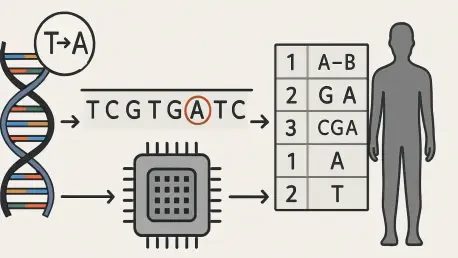

The systematic analysis of extended intronic splice-site regions allows scientists to understand how regulatory changes might impact the functional consequences of genetic mutations. As high-throughput genomic technologies continue to evolve in 2026, the reliance on machine-learning models for variant interpretation has necessitated the development of comprehensive, standardized reference sets. In a significant contribution to computational biology, researchers Liu Sun, Rongshu Wang, and Jian Yang introduced DeepMutSim. This open-source Python tool was designed to solve a persistent preparatory challenge: the systematic and exhaustive enumeration of every theoretically possible single-nucleotide variant and amino acid substitution across human genes. By operating on the foundation of canonical transcripts and adhering to strict international nomenclature standards, DeepMutSim provides a robust framework for researchers engaged in deep mutational scanning, functional assay design, and predictive modeling. This tool ensures that even the rarest potential changes are documented.
Technical Framework and Data Integrity
Core Methodology
The operational integrity of DeepMutSim is deeply rooted in its strategic use of MANE Select transcripts, which represent a high-quality, singular reference for every human protein-coding gene. This choice ensures that the sequence used as a baseline remains consistent across different genomic databases and clinical platforms, a necessity for collaborative research. The software systematically analyzes several key sequence compartments, including coding sequences, untranslated regions, and splice sites. To maintain the highest level of accuracy at non-coding boundaries, the tool retrieves reference bases directly from official RefSeqGene records rather than inferring intronic sequences. This method effectively eliminates the risk of coordinate shifting or sequence mismatch errors that often plague genomic simulations. By focusing on these high-fidelity sources, DeepMutSim creates a reliable ground truth that researchers can use to calibrate their experimental assays and validate predictions.
Nomenclature Standards
Every variant generated by the software is meticulously cataloged using official Human Genome Variation Society nomenclature and mapped to GRCh38 genomic coordinates. This adherence to global standards ensures that the output is immediately compatible with modern bioinformatics pipelines, allowing for seamless integration into existing workflows. Historically, the genomic community lacked specialized software for the in silico generation of all potential mutations before they were observed in clinical settings. Researchers often relied on custom scripts that were prone to coordinate errors and lacked uniformity, creating a significant bottleneck for experiments like deep mutational scanning. DeepMutSim addresses this gap by providing a lightweight, automated engine that ensures every possible change is cataloged accurately. By offering such a granular level of detail, the tool allows researchers to evaluate all alternative nucleotides at every position, facilitating a deeper understanding of the genetic landscape.
Granularity and Empirical Validation
Protein-Level Analysis
DeepMutSim extends beyond simple nucleotide changes to provide an exhaustive map of protein-level variations, calculating all nineteen possible amino acid substitutions for every residue. At the codon level, it evaluates all sixty-three possible alternative codons for each position, though it deliberately excludes terminal stop codons to focus on missense and synonymous variations that are most relevant to functional studies. This level of granularity is particularly beneficial for training artificial intelligence models designed to predict protein stability and binding affinity across the entire landscape of possible states. By providing a complete picture of theoretical mutations, the tool enables scientists to explore the potential consequences of genetic changes that have not yet been documented in population databases. This forward-looking approach is essential for identifying pathogenic mutations in rare diseases and understanding how specific protein modifications might influence disease progression.
Validation Results
The reliability of the tool was confirmed through a comprehensive evaluation of the human G6PD gene and an offline test suite of eighty unit checks. Researchers validated approximately four hundred thousand generated genomic coordinates across five diverse test genes, representing different lengths and genomic strands. The validation process, which cross-referenced generated coordinates against reference chromosome sequences, resulted in zero mismatches, proving that the tool is a robust and error-free engine for variant generation. This high degree of precision is critical for the development of clinical diagnostics and personalized medicine strategies. Beyond its technical accuracy, the developers emphasize that DeepMutSim is an enumeration engine rather than a diagnostic tool. It does not process raw sequencing data or provide functional pathogenicity scores. Instead, it serves as a foundational resource that simplifies the complex task of variant mapping, allowing bioinformaticians to focus on biological significance.
Future Implications for Genomic Standardization
As the medical field transitioned into a more data-intensive era in 2026, the demand for standardized tools like DeepMutSim increased significantly. Future considerations for the research community involved the integration of this enumeration engine into larger cloud-based platforms to facilitate real-time variant assessment and global data sharing. Scientists looked toward implementing these standardized libraries to improve the accuracy of machine-learning models used in drug discovery and precision oncology. By providing a consistent framework for describing mutations, DeepMutSim helped bridge the gap between theoretical genetics and practical clinical application. Organizations involved in genomic research benefited from adopting this open-source tool to harmonize their internal databases with international standards. The continued refinement of such automated engines remained essential for managing the vast complexity of the human genome, ensuring that every possible genetic variation was accounted for. This systematic approach established a more targeted path for medical interventions.