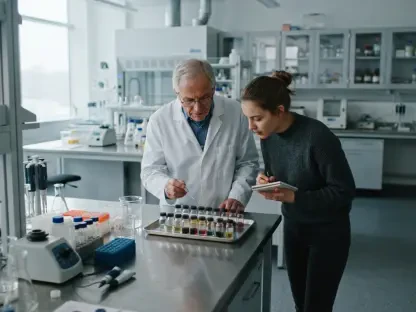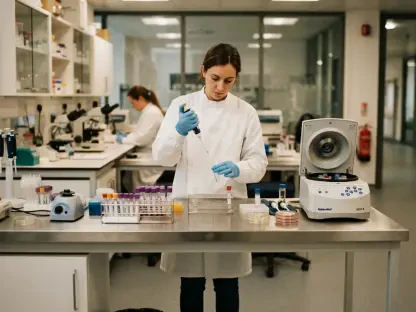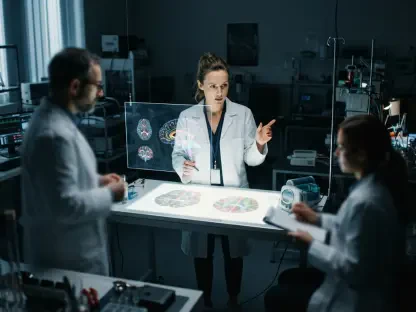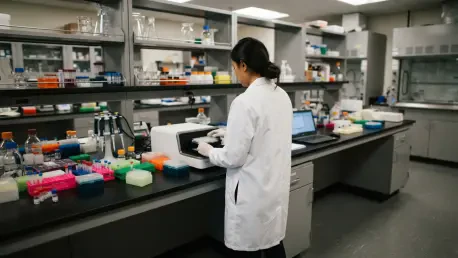

The proposed biosecurity assay can be integrated into existing laboratory workflows using standard microscopes and multi-well plate readers, making it highly accessible for institutional oversight. This advancement arrives at a critical juncture in the evolution of synthetic biology, as researchers from the University of Strathclyde and Durham University address a burgeoning gap in global biosurveillance. While the current biological landscape is dominated by organisms with a specific molecular “handedness,” the prospect of engineered life forms with inverted chirality—mirror-image organisms—poses a unique challenge to established safety protocols. These hypothetical systems would utilize the exact opposite stereochemical configurations of natural life, rendering them virtually invisible to the diagnostic tools that have protected public health and ecological stability for decades. By focusing on physical chiroptical sensing rather than traditional biochemical recognition, the team led by Dr. Lewis E. MacKenzie and Professor Robert E. Pal has provided a proactive solution to a problem that was once relegated to the realm of science fiction but is now a necessary consideration for modern biosecurity frameworks.
Addressing the Diagnostic Gap
Challenges: The Significance of Molecular Chirality
Biological systems on Earth are defined by homochirality, a fundamental structural bias where all living organisms utilize a specific set of three-dimensional molecular configurations. In this natural framework, amino acids are exclusively left-handed, while the sugars that constitute the backbone of DNA and RNA are right-handed. This consistency allows for the “lock and key” interactions essential for metabolism, replication, and cellular signaling. When scientists discuss mirror-image biology, they are referring to the creation of organisms that use the inverted versions of these building blocks: right-handed amino acids and left-handed sugars. While such organisms would be chemically identical to their natural counterparts, their physical orientation would prevent them from interacting with the natural world in predictable ways. This structural inversion creates a biological “dark zone” where traditional recognition mechanisms fail to engage with the inverted templates, effectively allowing mirror-image entities to exist outside the reach of the enzymes and proteins that regulate terrestrial life.
Limitations: The Failure of Modern Diagnostics
The primary obstacle in detecting mirror-image life lies in the inherent enantioselectivity of modern diagnostic technologies such as quantitative Polymerase Chain Reaction, Next-Generation Sequencing, and Enzyme-Linked Immunosorbent Assays. These methods rely on natural biological components—enzymes, primers, and antibodies—that are precision-tuned to recognize and bind only to natural, homochiral structures. For instance, a standard PCR enzyme will not recognize or replicate a strand of mirror-image DNA, just as a natural antibody will fail to bind to a mirror-image protein. Consequently, if a mirror-image pathogen were to be introduced into an environment, it would remain undetectable by every conventional biosurveillance platform currently in operation. This diagnostic blindness necessitates a shift toward physical sensing methods that do not depend on biochemical affinity. The newly developed optical assay solves this by identifying the physical “twist” of light as it interacts with chiral molecules, providing a universal detection method that is independent of an organism’s specific genetic sequence or metabolic pathway.
Implementing Circularly Polarized Luminescence
Mechanics: The Physics of the Optical Assay
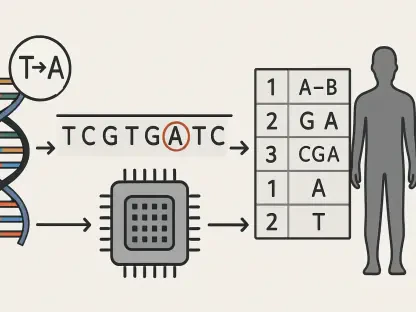
The technical foundation of this new biosecurity tool is Circularly Polarized Luminescence, a specialized form of spectroscopy that measures how chiral molecules emit light. Chiral molecules lack internal symmetry, causing them to interact with polarized light in a way that reflects their specific spatial orientation. When these molecules are photoexcited, they emit light with a characteristic polarization signature, effectively revealing their “handedness” through the twist of the emitted photons. This process is functionally similar to the technology used in modern 3D cinema, where distinct polarization filters ensure that the correct visual data reaches each eye to create a coherent image. By applying this principle to biological samples, the assay can determine the stereochemical configuration of a specimen with high precision. This allows researchers to verify whether a sample is composed of natural L-amino acids or synthetic D-amino acids simply by analyzing the optical properties of the light it produces, bypassing the need for complex genetic sequencing.
Methods: Advanced Multi-Probe Sensing
To ensure the robustness of the detection process, the assay utilizes a sophisticated panel of multi-probe sensors designed to target various subcellular components simultaneously. These probes are engineered to bind with structures such as nucleic acids and cell membranes, where they generate an “induced” circularly polarized signal upon interaction. This multi-target approach is essential for maintaining high sensitivity and specificity in complex biological environments where background noise or sample turbidity might otherwise interfere with the results. By pairing intrinsically chiral luminescent complexes with achiral fluorophores, the system creates a verifiable signature that is unique to the molecular orientation of the target organism. This methodology not only confirms the presence of mirror-image material but also guards against false positives by cross-referencing signals from different cellular architectures. Such a comprehensive sensing strategy ensures that the assay remains reliable even when analyzing samples from diverse ecological or clinical sources, providing a clear and unambiguous diagnostic output.
Evaluating Biosecurity and Risks
Risks: The Threat of Stealth Organisms
The urgency surrounding the development of these detection tools is driven by the potential for mirror-image life to act as a “stealth” entity within the natural environment. Because the enzymes produced by natural predators, such as bacteriophages, protozoa, and fungi, have evolved to metabolize only homochiral biopolymers, they would be unable to digest or break down mirror-image organisms. This lack of natural biological checks could allow a synthetic mirror-image bacterium to proliferate unchecked, potentially outcompeting natural species for resources and disrupting entire ecosystems. In a human context, the risks are even more direct; the adaptive immune system relies on the ability of proteases to cleave microbial proteins into antigens for recognition by T-cells. If a pathogen were composed of mirror-image proteins, these natural defense mechanisms would be unable to process them, effectively allowing the pathogen to bypass the body’s primary immune response and lead to systemic infections that are resistant to traditional medical interventions.
Trends: Pharmaceutical Development and Dual-Use
The rise of mirror-image biology is not merely a theoretical concern but is closely tied to ongoing trends in the pharmaceutical industry. Currently, D-peptides and other mirror-image molecules are becoming increasingly popular for drug development because their resistance to enzymatic degradation allows for longer-lasting therapeutic effects in the body. While these non-replicating molecules provide significant medical benefits, they also represent a step toward the more complex synthesis of self-replicating systems. The dual-use nature of this research means that the same techniques used to create life-saving drugs could, in theory, be repurposed to develop high-risk organisms. Global organizations, including the United Nations and various national science offices, have identified this “biosurveillance gap” as a critical priority. They note that without verifiable detection methods, the scientific community would be unable to respond effectively to an accidental or intentional release of a self-replicating mirror organism, making the implementation of chiroptical screening a vital safeguard for modern biotechnology.
Enhancing Governance and Oversight
Governance: Integration into Institutional Safety
The Circularly Polarized Luminescence assay serves as a practical instrument for institutional governance, providing biosafety committees and research offices with a reliable way to monitor synthetic biology projects. As the field moves beyond simple genetic modification toward more fundamental biochemical engineering, existing biosafety levels will require continuous reassessment to account for these new categories of risk. The assay can be seamlessly integrated into the screening protocols of university laboratories and private research firms, allowing them to differentiate between benign, non-replicating molecular tools and high-risk research into replicating mirror-image systems. By establishing clear optical thresholds for what constitutes “authorized” material, institutions can ensure that their work remains within the boundaries of established safety regulations. This level of oversight is crucial for maintaining public trust and ensuring that the pursuit of innovation does not outpace the development of the safety mechanisms required to manage it.
Compliance: Procurement and Global Standards
Beyond the laboratory, this technology offers significant advantages for the global supply chain and the regulation of biological materials. Gene synthesis providers, who currently screen customer orders for regulated pathogen sequences, could implement chiroptical verification to identify the synthesis of mirror-image DNA that might otherwise bypass automated sequence-alignment flags. Furthermore, the assay provides a verifiable record of molecular chirality for Material Transfer Agreements, ensuring transparency when biological samples are exchanged between international partners. The accessibility of the hardware—requiring only standard microscopes and plate readers—means that these checks can be performed in diverse settings without the need for specialized, prohibitively expensive equipment. This ease of deployment allows for the creation of a standardized, global framework for molecular verification, where the chirality of a sample is treated with the same level of scrutiny as its genetic sequence, fostering a more secure and transparent international research environment.
Establishing Global Safeguards
Direction: Future Paths for Biosurveillance
The roadmap for operationalizing this technology involves extensive testing across a wide variety of cell lines to establish comprehensive baseline reference spectra. By building a library of chiroptical signatures for both natural and synthetic systems, the research team aims to further refine the optical sensitivity thresholds of the assay. This ongoing work is essential for ensuring that the tool can distinguish between subtle stereochemical variations and provide accurate results in the presence of complex environmental contaminants. Furthermore, the ability to calibrate the system using non-pathogenic terrestrial cells means that robust biosurveillance infrastructure can be built without the inherent risks of handling dangerous mirror-image organisms during the development phase. This proactive approach ensures that by the time more complex synthetic systems emerge, the global community will already possess a validated and scalable method for their detection and management, effectively bridging the current gap in biological security.
Solutions: Synthesizing Policy and Actionable Steps
The development of the CPL-based optical assay represents a vital step forward in the field of biosecurity, providing a technologically feasible solution to a previously unaddressed threat. The research team successfully demonstrated that physical chiroptical properties could be leveraged to identify synthetic organisms that were otherwise invisible to biochemical diagnostics. As synthetic biology continued to push the boundaries of molecular engineering, the integration of these sensing techniques into standard laboratory practices became a cornerstone of institutional oversight. The project facilitated a “safety-first” culture by allowing for the creation of detection safeguards long before the hypothetical hazards they targeted were fully realized. By operationalizing these optical tools, the scientific community moved toward a more resilient framework that protected the homochiral biosphere while still allowing for the exploration of mirror-image therapeutics. This strategic foresight ensured that innovation remained balanced with the necessary precautions to safeguard global health and ecological integrity.