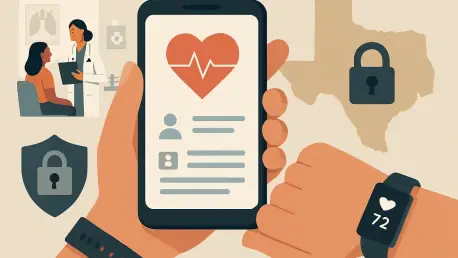

The seamless transition of healthcare services from traditional clinical settings to the palms of our hands through smartphones and wearable sensors has fundamentally reshaped the landscape of individual privacy in America. While these digital innovations offer unparalleled convenience and real-time monitoring, they simultaneously create a significant vulnerability in the way sensitive medical information is handled by non-clinical entities. The core issue remains that the existing regulatory framework was designed to protect the institution holding the data rather than the data itself, leaving a massive gap for commercial exploitation. Consequently, highly personal details about a resident’s health journey are often stripped of their legal protections once they migrate beyond the secure confines of a doctor’s office. In a state like Texas, this discrepancy is increasingly glaring because the legislative tools necessary for a solution are present but lack the cohesion to safeguard citizens.
Part 1: The Structural Obsolescence of Federal HIPAA Protections
The primary structural obstacle to modern data privacy is recognized as the HIPAA handoff, a systemic failure caused by the inherent limitations of the Health Insurance Portability and Accountability Act. Because this federal law was enacted in 1996, long before the digital revolution transformed the medical sector, its authority is strictly restricted to a group of covered entities, such as hospitals and insurance providers. When a patient enters their medical history into a third-party application or utilizes a discount prescription platform, that information officially exits the clinical sphere and enters a legal vacuum. Within this void, federal protections effectively disappear, allowing companies to operate without the confidentiality requirements that govern traditional medical practices. This transition occurs without a clear warning to the consumer, who often assumes that their sensitive health details remain legally shielded regardless of the platform used for storage or the entity managing the server.
Part 2: The Commercialization of Personal Health Data
Recent investigations highlighted the severity of this issue, exposing how popular fertility-tracking apps and telehealth services monetize user data to increase their corporate revenue. These companies were caught sharing sensitive counseling records and ovulation cycles with third-party advertisers to fuel sophisticated marketing campaigns. In many cases, these platforms used invisible tracking pixels and metadata harvesting tools to turn private medical histories into commodities for corporate algorithms. This commercialization of health data creates an imbalance of power, where individuals are left with a false sense of security while their intimate life details are sold to the highest bidder in an unregulated data market. The absence of oversight means that once data is leaked or sold, there is no effective mechanism to prevent its further dissemination across the vast digital economy that thrives on behavioral profiling and targeted advertisements.
Part 3: Reconciling Disconnected State Statutes
Texas maintains a unique position to address this crisis because the state already has two powerful, yet disconnected, laws: the Texas Medical Records Privacy Act of 2001 and the Texas Data Privacy and Security Act of 2023. The 2001 statute is remarkably broad, applying to any entity that handles health data for commercial gain, including app developers who are typically exempt from federal HIPAA regulations. However, this older law lacks the modern enforcement mechanisms that today’s digital landscape requires, such as the right to delete information or the ability to port data between different service providers. Conversely, the 2023 law provides these modern consumer rights but assumes that health-related data is already adequately protected by federal standards. This assumption creates a gap for non-clinical tech companies that handle sensitive health information but do not fall under the strict definitions of a traditional clinical healthcare provider.
Part 4: Closing the Regulatory Gap for Tech Entities
The result of this legislative disconnect is an environment where an average Texan’s online shopping history actually receives more legal protection than their reproductive health records or chronic illness data. Because the 2023 privacy law excludes many health-related contexts and the 2001 law lacks specific digital rights, the HIPAA handoff remains a major vulnerability for residents. Texas must move to bridge this gap by ensuring that the modern rights found in the newest legislation are explicitly applied to the broad range of entities already identified in the older medical privacy statute. By integrating these two legal frameworks, the state could establish a comprehensive shield that follows the data rather than the organization. This alignment would ensure that privacy protections remain constant, whether a person is consulting with a specialist or simply logging their daily symptoms in a fitness application via their mobile device.
Part 5: Restoring Patient Autonomy and Sovereignty
The lack of a unified standard also creates significant hurdles for families and individual patients who seek to maintain control over their own personal information. Currently, adolescent health data exists in a state of flux; under certain modern privacy interpretations, protections for minors can drop off as early as age 13, leaving teenagers with fewer rights than younger children. Furthermore, the absence of true data portability means that patients often face long wait times and administrative fees just to move their own records between different healthcare providers. In a digital age where information moves at light speed, this process should be instantaneous and free, dictated by state law rather than the default settings of a software vendor or hospital administrator. The current friction in data movement not only hinders patient care but also entrenches the power of tech platforms that use data silos to lock users into their specific ecosystems.
Part 6: Standardizing Portability and Consent Rules
To solve this systemic issue, Texas lawmakers must ensure that affirmative consent and seamless data portability become the non-negotiable standards for all entities handling health information. These protections should be anchored to a universal definition of accountability so that app developers and contractors are held to the same ethical standards as licensed physicians. By making consent portable—meaning a user’s privacy preferences and restrictions travel with their data—Texas can lead the nation in establishing true data sovereignty. This reform would fundamentally transform individuals from mere data points in a corporate spreadsheet back into protected patients with inherent rights. Ensuring that personal information remains private, no matter where it is stored or who manages the server, is essential for maintaining trust in the rapidly evolving digital health infrastructure that characterizes the modern and increasingly mobile medical experience.
Part 7: Legislative Pathways for Texas Reform
Texas lawmakers established a clear roadmap for closing the digital health privacy gap by prioritizing a unified approach to data governance and individual rights. The state moved toward a model where the Texas Medical Records Privacy Act was successfully amended to incorporate the rigorous consumer protections found in modern privacy statutes. This change ensured that non-covered entities, such as fitness trackers and health-focused tech firms, were held to the same stringent standards as clinical providers. Furthermore, the introduction of mandatory data portability provided residents with the ability to transfer their records securely and without cost, breaking down the silos that previously restricted patient autonomy. By focusing on affirmative consent as the cornerstone of every digital interaction, the legislature effectively curtailed the unauthorized monetization of sensitive information, ensuring the personal health data of every Texan remained secure.
Part 8: Cultivating a Culture of Digital Ethics
Beyond these legislative adjustments, the state successfully fostered a culture of digital ethics that extended to the private sector and academic institutions alike. This era of reform emphasized that health data sovereignty was not merely a regulatory hurdle but a fundamental right that empowered citizens to participate in the digital economy without fear. Texas effectively leveraged its position as a major technology hub to encourage developers to adopt privacy by design principles, ensuring that new health applications prioritized user safety from the earliest stages. By implementing a standardized audit process for health apps operating within state borders, the government provided a clear benchmark for compliance and trust. These initiatives created a marketplace where transparency became a competitive advantage for companies specializing in medical technology. This shift secured a future where medical innovation and personal privacy could coexist in a stable environment.