


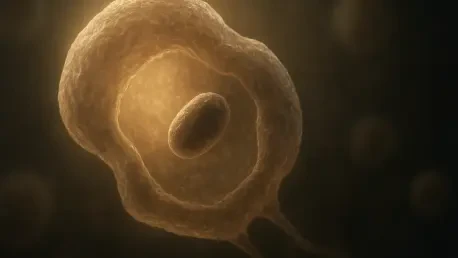

Research from the MitoCarta Tree of Life project has revealed that mitochondria likely emerged late in the eukaryotic timeline after cells had already developed internal structures. This monumental finding comes from an extensive collaboration involving institutions like the Broad Institute of MIT and Harvard, shifting the paradigm of how biologists view the dawn of complex life. For decades, the scientific community debated whether these energy-producing organelles were the primary drivers of cellular complexity or merely a later addition to an already sophisticated framework. The MitoCarta project utilized a massive dataset spanning diverse species to clarify this timeline, moving beyond the traditional human-centric focus. By cataloging the protein composition—or mitoproteome—of varied organisms, researchers have established a comprehensive map that spans two billion years of biological history. This work underscores the idea that mitochondria are far more versatile and adaptive than previously imagined, functioning as dynamic components that evolve alongside their hosts to meet specific ecological demands.
Evolutionary Origins: Mapping the Timeline of Life
The journey to understanding the mitochondrion began roughly two billion years ago when an ancestral host cell engulfed a free-living bacterium. This event, known as endosymbiosis, is a cornerstone of modern biology, yet the specific order of events has long remained a subject of intense academic dispute. Some theories suggested that the acquisition of the mitochondrion was the spark that enabled the development of a complex nucleus and internal membranes. However, the data provided by the MitoCarta Tree of Life project suggests a different sequence. By applying advanced machine-learning algorithms to the proteomic signatures of hundreds of species, the research team identified patterns that favor the late-arrival hypothesis. This implies that the ancestral host was already a relatively sophisticated entity, possessing the structural foundations necessary to manage and integrate a foreign organism. Such a shift in perspective requires a complete reevaluation of the selective pressures that originally drove the formation of complex cells.
Theoretical Breakthroughs: The Late Appearance Hypothesis
One of the most profound contributions of this research is its exploration of how complex life first emerged on Earth. By utilizing advanced machine-learning tools trained on newly generated proteomic data, the researchers predicted the mitoproteomes of hundreds of previously unstudied species. Their analysis strongly supports the “late appearance” theory, suggesting that mitochondria were integrated into the eukaryotic lineage after the ancestral cell had already developed other sophisticated internal structures. This finding refines the timeline of biological complexity and reshapes our understanding of the origins of the modern cell. Traditionally, it was believed that the energy boost provided by the mitochondrion was a prerequisite for complexity. Instead, it seems that complexity was already present, perhaps even serving as the necessary environment to facilitate the transition of a bacterium into an organelle. This evidence provides a more nuanced view of the symbiotic relationships that defined early life.
Genetic Integration: The Migration of Biological Instructions
Furthermore, the project clarifies how the integration process fundamentally restructured the genetic landscape of early life. Once the bacterium was safely inside the host, a massive transfer of genetic material began, with the majority of the endosymbiont’s DNA moving into the host cell’s nucleus. This evolutionary strategy allowed the host to centralize control over the organelle while leaving only a minimal, specialized set of instructions within the mitochondrion itself. The project’s analysis of diverse lineages shows that this migration was not a uniform process but varied significantly depending on the organism’s evolutionary path. In some cases, the organelle retained more independence, while in others, it became almost entirely reliant on nuclear-encoded proteins. Understanding these variations provides a much clearer picture of how different branches of the tree of life achieved their current complexity. This data serves as a foundational reference for genomic studies that seek to trace the origins of metabolic systems.
Technological Innovation: Proteomics and Cellular Plasticity
The technical backbone of this research was the state-of-the-art mass spectrometry equipment hosted at the Broad Institute’s Proteomics Platform. This technology allowed scientists to break down cellular components into their constituent peptides and identify them with unprecedented precision. By measuring the abundance and diversity of proteins in a wide array of organisms, the team was able to construct a high-resolution map of the mitochondrial landscape. This approach moved beyond simple genomic sequencing, which only tells us what a cell is capable of, and instead focused on what proteins are actually present and functional. The ability to distinguish between proteins that belong to the mitochondrion and those that are simply nearby was a major hurdle that the project successfully overcame. This achievement provides a new gold standard for proteomic research, demonstrating how deep molecular profiling can solve historical biological puzzles that have remained unanswered for over a century.
Molecular Mapping: Innovations in Mass Spectrometry
In addition to hardware innovations, the project relied heavily on the development of new computational tools to interpret the vast amounts of raw data generated by mass spectrometry. These machine-learning models were trained to recognize the “postal codes”—specific amino acid sequences—that direct proteins from the nucleus to the mitochondria. Because these signals vary from one species to another, the team had to create a flexible system that could adapt to the unique biological language of plants, amoebas, and human parasites. This computational breakthrough enabled the researchers to predict the mitochondrial protein inventories of hundreds of species whose genomes had been sequenced but whose cellular biology remained a mystery. The synergy between high-throughput laboratory work and sophisticated data analysis has effectively fast-tracked the field of comparative biology. This methodological framework is now being applied to other organelles, potentially leading to a comprehensive understanding of the entire cell.
Functional Diversity: Lessons from Minimalist and Complex Organelles
One of the most striking revelations of the project is the discovery of extreme functional plasticity within the mitochondrion. While high school textbooks often describe the organelle as the “powerhouse of the cell,” the study of the parasite Giardia proved that this label is not always accurate. In Giardia, the mitochondrion has shrunk to a minimal “remnant” containing only 59 proteins, a tiny fraction of the thousand or more found in human cells. This vestigial organelle has completely lost its ability to generate energy through oxygen-based respiration, instead serving more niche roles in the assembly of iron-sulfur clusters. This finding demonstrates that the mitochondrion is not defined by a single function but rather by its evolutionary heritage. Even when its primary job is no longer required, the organelle remains an essential component of the cell’s architecture. This survival of a minimalist organelle highlights the incredible resilience of eukaryotic life and challenges the notion that structures must be complex to be useful.
Global Health: Targeting Pathogens through Open Science
The implications of the MitoCarta project for medicine are profound, particularly in the realm of infectious diseases that have long been neglected by the pharmaceutical industry. By mapping the mitochondrial proteomes of parasites like Leishmania and Trypanosoma, the researchers identified hundreds of proteins that are essential for the parasite’s survival but are absent in humans. These unique molecules represent high-priority targets for drug developers, as they provide a way to attack the pathogen without affecting the patient’s own cellular machinery. Traditionally, many treatments for tropical diseases have been highly toxic because they target processes that are shared between the parasite and the human host. The precision provided by this new proteomic atlas allows for a more surgical approach to drug design. By focusing on the unique vulnerabilities of a pathogen’s mitochondrion, scientists can now develop therapies that are both more effective and safer for millions of people worldwide.
Targeted Therapy: Unique Proteins in Pathogenic Mitochondria
Furthermore, the project has shed light on the biology of Babesia, a tick-borne pathogen that is increasingly threatening public health as shifting climate patterns expand the range of its vectors. The team developed specialized techniques to isolate and study the mitochondria of these tiny parasites, uncovering unique protein interactions that could be disrupted by new chemical compounds. This work is not limited to Babesia alone, as the findings are directly applicable to related organisms, including those that cause malaria and toxoplasmosis. The researchers identified specific metabolic pathways that the parasites use to evade the host’s immune system, providing a new perspective on how these diseases persist. This approach marks a shift from reactive to proactive drug discovery, where the basic biological blueprint of a pathogen is used to predict and neutralize its survival strategies. This systematic cataloging of parasitic vulnerabilities is a major step forward in the global effort to eradicate disease.
Future Considerations: Collaborative Research and Open Data
The MitoCarta project successfully redefined the boundaries of mitochondrial biology by transitioning from a human-centric focus to a comprehensive view of the entire tree of life. This initiative provided a definitive resolution to the long-standing debate over the timing of mitochondrial evolution, proving that the organelle was a late addition to the eukaryotic cell. The collaborative effort demonstrated how integrating mass spectrometry and machine learning could reveal hidden layers of cellular complexity across diverse species. By making the entire dataset public, the consortium empowered the scientific community to move forward with targeted drug development and evolutionary studies. Looking ahead, the next logical step involved the application of these methodologies to other organelles and cellular structures to build a truly complete map of life. The project laid the groundwork for a future where molecular biology was no longer limited by the scope of model organisms. This comprehensive atlas functioned as a catalyst for innovation.







