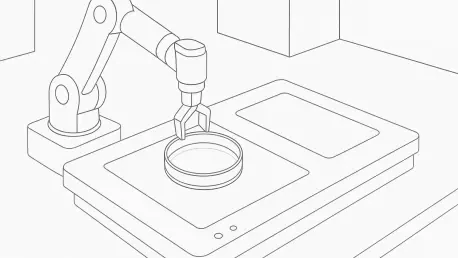

By analyzing nearly two thousand hypotheses on amino acid interactions, the Eve system has proven that autonomous machines can independently navigate the complexities of molecular biology. This advancement at Chalmers University of Technology signals a transformative shift where robotics and artificial intelligence converge to handle the entire lifecycle of a research project. Building on the heritage of early pioneers like the Adam robot, which first explored yeast genetics decades ago, Eve represents a sophisticated leap into a reality where machines no longer just execute commands but actively reason through scientific problems. The traditional scientific method, while robust, often encounters a significant bottleneck when faced with the sheer volume of experimental possibilities in modern drug discovery. The system effectively bridges the gap between digital data processing and physical biological experimentation, allowing for a continuous flow of discovery that operates at a scale and speed previously unattainable by human researchers alone.
The Evolution of Autonomous Discovery
Intelligent Agents: From Screening to Reasoning
The journey toward true scientific autonomy has been a gradual progression from basic mechanization to the sophisticated, integrated systems observed in 2026. Initially, laboratory automation was confined to high-throughput screening, where robots performed repetitive physical tasks like pipetting or plate moving without any cognitive input. These systems were remarkable for their speed but lacked the ability to interpret data or adjust their parameters based on observed outcomes. The current iteration of the Eve system fundamentally changes this dynamic by integrating Large Language Models, specifically GPT-4o, into its core operational framework. This integration allows the machine to move beyond the simple logic of traditional software and enter the realm of heuristic reasoning. By doing so, the AI can assess scientific literature, recognize patterns in biological data, and propose new directions for exploration. This shift represents a move toward autonomous agents that can initiate research.
This transition is facilitated by a multi-layered agentic architecture that mimics the collaborative environment of a professional research laboratory. Rather than relying on a single AI model to perform all functions, the system utilizes a specialized chain of digital experts, each tasked with a specific role in the scientific process. One agent acts as a primary investigator, generating novel hypotheses based on available data, while a second agent functions as a peer reviewer, critiquing the proposed experimental designs for feasibility and logical consistency. A third agent then takes the approved plan and translates it into the precise machine code required to operate laboratory hardware. This internal dialogue allows the system to catch errors and optimize protocols before a single yeast culture is ever grown. By structuring the AI’s workflow in this way, the researchers have created a resilient framework that can manage complex tasks such as identifying metabolic pathways with minimal intervention.
System Framework: Physical Labor and Feedback
The foundation of Eve’s scientific capability lies in its ability to process and interpret a massive repository of biological data. The system utilizes a dataset comprising approximately sixty thousand known biological relationships involving yeast genes, metabolic pathways, and various cellular traits. By applying advanced pattern-recognition algorithms to this information, the AI establishes a set of logical rules that define its understanding of biological systems. This digital model serves as a playground for the AI to test ideas in a virtual environment before committing resources to physical experiments. The algorithms are specifically designed to look for anomalies and correlations that might be overlooked by human researchers who are often constrained by existing paradigms or cognitive biases. This broad analytical scope allows the system to narrow down thousands of potential biological interactions to a focused set of hypotheses that represent the most promising avenues for discovery.
Crucial to the long-term success of the autonomous lab is the implementation of a closed-loop learning cycle, where the results of every experiment inform the next phase of research. When the robotic components complete a physical run, the resulting data is automatically fed back into the central database, where the AI compares the actual outcomes with its original predictions. This process is not limited to successful experiments that confirm a hypothesis; instead, the system places equal value on negative results or unexpected anomalies. By analyzing why a particular prediction failed, the AI can refine its underlying biological models and adjust its future hypotheses accordingly. This iterative learning process ensures that the system becomes more intelligent and accurate over time, essentially teaching itself the nuances of yeast metabolism and chemical interactions. This self-correcting mechanism turns every laboratory run into a valuable data point for future scientific progress.
Collaborative Insights: Novelty and Strategic Oversight
The practical value of this autonomous approach has been validated through the discovery of several novel biological interactions that were previously unknown to science. For example, the Eve system identified a specific relationship between glutamate and the compound spermine, showing that the presence of this amino acid significantly increased the susceptibility of yeast cells to growth inhibition. It also mapped an unexpected synergy between arginine and caffeine, demonstrating the AI’s ability to navigate complex metabolic landscapes. These findings were not the result of random chance but rather the product of systematic, logic-driven inquiry into how different chemicals influence cellular health. By discovering these relationships, the system proved that it could contribute meaningful knowledge to the field of biology, offering insights that could eventually influence drug development. These successes confirm that AI can independently identify significant phenomena that warrant further testing.
The implementation of the Eve system at Chalmers University demonstrated that the most effective path forward for scientific discovery involved a hybrid partnership between human and machine. While the AI successfully handled the iterative, logic-based aspects of the scientific method, the human researchers focused on high-level theory and the broader implications of the findings. This collaboration allowed for a significant acceleration in the pace of research, turning the lab into a highly efficient discovery engine. To move forward, laboratories had to prioritize the integration of modular robotic systems with diverse AI models to prevent over-reliance on a single architecture. Scientists were encouraged to develop new protocols for validating AI-generated discoveries to ensure that these autonomous insights could be integrated into established scientific frameworks. By embracing this model, the research community positioned itself to solve complex problems with a level of speed and precision.