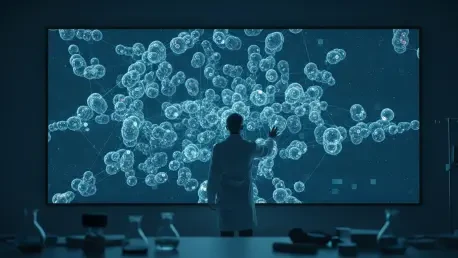

The silent, molecular conversations occurring within a single drop of human blood have long remained an impenetrable enigma for medical researchers seeking the earliest signs of disease. For several decades, the primary challenge in biomolecular characterization has been the persistent inability to discern finer biological details within a chaotic sea of data. According to the groundbreaking 2026 study by Han, Melkonian, Rolando, and their colleagues, a new high-throughput imaging platform offers a transformative way to analyze individual extracellular vesicles directly from human plasma. By moving beyond the inherent limitations of traditional bulk analysis, which typically averages the signals of millions of disparate particles, this technology provides a high-resolution map of the unique messengers circulating in our bloodstream. This shift from population averages to single-entity resolution allows for the identification of rare but significant markers that were previously obscured by the sheer volume of healthy biological background noise.
The Technological Architecture: Single-Vesicle Analysis
The success of this diagnostic platform is deeply rooted in the clever integration of advanced microfluidic engineering and high-resolution optical microscopy. At its technical core, the system utilizes a custom-designed microfluidic device that automates the isolation and immobilization of vesicles from raw plasma samples. Unlike traditional ultracentrifugation, which is notoriously labor-intensive and can frequently damage delicate biological structures through intense mechanical force, this method uses meticulously optimized surface chemistry to capture vesicles while preserving their structural and molecular integrity. This streamlined workflow ensures that the sample remains in its pristine, native state, allowing for a far more accurate representation of the patient’s internal physiological landscape. By creating a controlled environment where vesicles are tethered to a functionalized surface, the platform establishes a stable foundation for the sensitive imaging processes that follow, ensuring that even the smallest particles remain in a fixed position for detailed observation.
To visualize these captured particles with sufficient clarity, the platform utilizes Total Internal Reflection Fluorescence microscopy, a technique that is perfectly suited for small-scale analysis. This specialized imaging modality is ideal for single-vesicle studies because it selectively illuminates only a very thin layer near the device surface, effectively eliminating the background interference that typically plagues traditional wide-field microscopy. This high level of sensitivity allows for the detection of individual particles and the quantification of specific surface markers with unprecedented clarity and precision. Because the system requires only minimal plasma volumes—often just a few microliters—it is exceptionally well-suited for clinical environments where conserving patient samples is a top priority for subsequent testing. The combination of this optical precision and the microfluidic control enables researchers to observe the heterogeneity of the vesicle population in real-time, providing a level of detail that was once thought impossible for high-throughput clinical applications.
Molecular Profiling: Computational Intelligence Integration
One of the most powerful features of this imaging platform is its remarkable capacity for multiplexed molecular profiling at the level of the individual vesicle. By employing a sophisticated cocktail of fluorescently labeled antibodies, researchers can simultaneously track and quantify multiple protein markers on the surface of a single particle. This allows for a granular classification of vesicles into distinct phenotypes, such as identifying a specific particle as originating from an epithelial cell while simultaneously detecting markers for oncogenic signaling activity. This level of detail provides a multi-dimensional view of the disease landscape that was previously impossible to achieve with standard diagnostic assays that rely on total protein concentrations. Such phenotypic mapping is essential for understanding the complex roles these vesicles play in systemic communication, as it reveals the specific cargo being transported between different organ systems during the progression of chronic or acute illnesses.
Managing the massive influx of raw data generated by such high-throughput imaging requires a sophisticated computational backbone capable of processing information in real-time. The research team developed a custom software suite that utilizes advanced machine learning algorithms to segment individual vesicles and analyze their fluorescence intensity across multiple channels. By removing the need for manual interpretation, the software ensures that the results are consistently reproducible and free from the subjective biases that can often plague traditional laboratory workflows. This automated pipeline is a critical step toward making vesicle profiling a standardized, clinical-grade tool that can be deployed across different hospital systems with high reliability. The algorithms are specifically trained to distinguish between true biological signals and experimental artifacts, which significantly lowers the false-positive rate and enhances the overall diagnostic power of the platform, making it a robust solution for the complex data environments of modern medicine.
Bridging the Gap: Research to Clinical Practice
The development of this single-vesicle platform mirrors a broader movement in the biomedical sciences toward single-entity analysis as the new standard for diagnosis. As the medical community increasingly recognizes the inherent heterogeneity of biological systems, the focus has shifted from looking at the average cell or vesicle to understanding the unique characteristics of each individual component. This trend is further supported by the ongoing lab-on-a-chip revolution, which aims to make complex laboratory procedures faster, more affordable, and more accessible to clinicians at the point of care. By shrinking a massive suite of laboratory equipment into a single microfluidic device, the platform reduces the physical footprint and the logistical complexity of high-end biological analysis. This democratization of advanced diagnostics ensures that the benefits of single-vesicle imaging are not limited to well-funded research institutions but can eventually reach community clinics and rural healthcare providers.
Standardization has long been a significant hurdle in the field of extracellular vesicle research, as different laboratories often produce conflicting results due to varied isolation protocols. This high-throughput platform addresses this persistent challenge by providing a unified, automated process that covers everything from the initial capture to the final data analysis. By establishing a potential gold standard for vesicle profiling, the technology paves a clear way for wider clinical adoption and regulatory approval. This shift ensures that data collected in a research setting can be reliably translated into actionable insights for patient care without the fear of procedural variability. Furthermore, the ability to generate a standardized report from a simple blood draw simplifies the decision-making process for physicians, who can now rely on a consistent set of metrics to evaluate the progression of a disease or the efficacy of a specific pharmacological intervention over a period of time.
Future Implications: Personalized Medicine Evolution
The clinical applications for this technology are virtually limitless, particularly in the rapidly evolving field of oncology and cancer immunotherapy. Because the platform can detect tumor-derived vesicles at the earliest stages of their development, it offers a non-invasive liquid biopsy that could identify cancer long before a physical mass appears on an MRI or CT scan. Furthermore, the ability to perform repeated blood draws allows doctors to monitor a patient’s response to therapy in real-time, providing an early warning system for treatment resistance or disease recurrence. This longitudinal monitoring is especially crucial for personalized medicine, where the goal is to tailor treatments to the specific molecular profile of an individual’s disease. By observing how the population of circulating vesicles changes in response to a drug, clinicians can make rapid adjustments to the treatment plan, potentially avoiding the side effects of ineffective therapies and improving long-term patient outcomes.
Looking ahead, the modular nature of the system suggests it can be easily adapted for other biofluids, such as urine or cerebrospinal fluid, providing a window into organ systems. This expansion would allow for the non-invasive study of the central nervous system, potentially identifying the early onset of neurodegenerative conditions without the need for invasive spinal taps. As artificial intelligence continues to advance, its integration into the platform will likely uncover even more subtle patterns within vesicle data, leading to the discovery of entirely new classes of biomarkers. This innovation represents a fundamental change in how the medical community monitors human health, moving society closer to a future of truly proactive medicine. The ability to decode the complex messages carried by vesicles will undoubtedly play a central role in the next generation of diagnostics, where the focus shifts from treating symptoms to addressing the underlying molecular drivers of disease at their very inception.
Actionable Steps for Clinical Implementation
The path forward for single-vesicle imaging involved several strategic initiatives to ensure its successful transition from the laboratory to the bedside. Researchers prioritized the validation of the platform across larger, more diverse patient cohorts to confirm that the identified vesicle signatures remained consistent across different demographics and stages of disease. This effort was matched by a focus on manufacturing scalability, ensuring that the microfluidic devices could be produced at a cost-effective price point for widespread hospital use. Regulatory engagement became a central pillar of the strategy, with teams working closely with health authorities to establish clear benchmarks for the sensitivity and specificity of single-entity assays. These steps helped build the necessary clinical confidence to integrate the platform into standard diagnostic protocols for oncology and neurology, providing a reliable framework for future developments.
Furthermore, the integration of these high-resolution datasets into existing electronic health records required the development of new data management standards. Hospitals invested in training for laboratory technicians and clinicians to ensure they could properly interpret the phenotypic reports generated by the automated software. Collaboration between biotech firms and academic researchers accelerated the discovery of new antibody panels, expanding the range of detectable diseases to include rare metabolic and autoimmune disorders. By focusing on these practical elements, the medical community successfully turned a sophisticated imaging technique into a practical tool for daily patient care. The emphasis on interoperability and standardized reporting allowed for a seamless flow of information between different specialists, ensuring that the insights gained from a single vesicle could be translated into a comprehensive treatment strategy that addressed the unique needs of every individual patient.