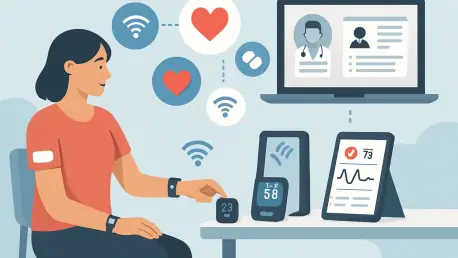

The clinical research landscape has undergone a radical transformation as the traditional model of intermittent patient check-ups gives way to a continuous stream of real-time physiological data. Gone are the days when a study participant had to travel hundreds of miles just to have their blood pressure recorded or heart rate monitored once a month in a sterile office. Instead, the integration of connected medical devices has created a digital bridge between the patient’s home and the research facility, ensuring that no critical health event goes unnoticed during the observation period. This shift is not merely a matter of convenience; it represents a fundamental change in how drug efficacy and safety are measured and validated. By leveraging wearable biosensors and precision dosing monitors, researchers can now capture the nuances of a patient’s daily life, providing a much clearer picture of how a therapy performs outside the controlled environment of a clinic. As the industry moves further into this data-driven era, the focus has shifted toward the complex logistics required to maintain these sophisticated tools throughout the duration of a study.
Navigating the Logistics: Hardware Management and Infrastructure
Technical Lifecycle: From Procurement to Maintenance
The successful deployment of connected medical devices requires a meticulous operational framework that spans the entire duration of a clinical trial. It is no longer sufficient to simply ship a device to a participant; instead, organizations must manage a complex lifecycle that includes rigorous procurement standards, precise calibration, and ongoing maintenance. When a wearable sensor or a home-based diagnostic tool is utilized, its reliability depends entirely on the technical support structure behind it. Specialized personnel must ensure that every piece of hardware is synchronized with central databases and that firmware updates are handled without disrupting data collection. If a device fails or loses its calibration in the middle of a study, the resulting data gap can compromise the entire project. Therefore, establishing a robust logistics chain is essential for mitigating technical risks. This involves not only the physical movement of goods but also the implementation of remote monitoring systems that can detect hardware malfunctions before they impact the quality of the gathered information.
Building upon this technical foundation, the storage and refurbishment of clinical-grade hardware have become specialized disciplines within the broader research industry. Unlike consumer-grade electronics, medical devices used in trials must adhere to strict regulatory standards regarding sanitization and data security. Once a participant completes their portion of a study, the device must be recovered, wiped of all sensitive patient information, and meticulously inspected before it can be redeployed to another user. This circular economy of clinical hardware demands a level of precision that many traditional research sites are not equipped to handle. Consequently, sponsors are increasingly turning to dedicated technology partners who can manage the heavy lifting of inventory control and global distribution. By outsourcing these logistical burdens, researchers can focus on the scientific aspects of the trial while ensuring that the hardware remains a reliable conduit for evidence-based progress. This systematic approach ensures that the high-frequency data collected is both accurate and compliant with global health authority requirements.
Decentralized Efficiency: Supporting the Remote Participant
The movement toward decentralized and hybrid trial models has turned the patient’s home into a functional extension of the clinic, necessitating a new approach to participant support. For a trial to succeed in this environment, patients must feel confident using complex medical hardware without the immediate presence of a physician. This requires the development of comprehensive onboarding programs and intuitive user interfaces that minimize the risk of user error. Providing participants with clear, step-by-step instructions and 24/7 technical assistance is no longer an optional luxury but a core requirement for trial integrity. When a participant encounters a synchronization issue or a battery failure, the speed of the resolution directly affects their willingness to continue with the study. Effective logistical management ensures that replacement devices are shipped immediately and that technical hurdles do not become a reason for patient withdrawal. This proactive support model reduces the psychological burden on the participant, making the research process feel like a seamless part of their daily routine.
In addition to technical support, the logistical framework must account for the diverse environments in which these devices operate. Factors such as varying internet speeds, power stability, and local climate can all impact how a connected medical device performs in the field. To address these challenges, modern trial designs often include pre-configured cellular gateways that allow devices to transmit data without relying on a participant’s home Wi-Fi network. This level of infrastructure planning ensures that the data stream remains uninterrupted regardless of the user’s technical literacy or local conditions. Furthermore, by managing the end-to-end delivery and setup of these systems, research organizations can guarantee a standardized experience for every participant. This consistency is vital for reducing variables that could interfere with the study’s results. Ultimately, the ability to manage these decentralized logistics allows for a more flexible and scalable research model that can reach patients in even the most remote geographic locations.
Enhancing Research Quality: Data Integrity and Participant Retention
Bridging the Gap: Real-World Evidence through Automation
The transition from manual data entry to automated physiological monitoring has effectively eliminated many of the human errors that historically plagued clinical research. In the past, researchers relied on patient diaries or sporadic site visits, which often resulted in “white coat syndrome” or simple memory lapses that skewed the results. Connected medical devices solve this problem by providing an objective, high-frequency narrative of a patient’s health status. For instance, a continuous glucose monitor or a smart inhaler can track exactly how a patient responds to a medication at 3:00 AM, a time when clinical observation would typically be impossible. This level of granularity allows for the identification of subtle trends and adverse events that might otherwise remain hidden. By automating the data collection process, the industry has shifted the burden of proof from subjective reporting to empirical, real-world evidence. This transition ensures that the data being analyzed is not just a snapshot in time but a comprehensive record of the therapeutic impact across various environments and activities.
Furthermore, the integration of these devices fosters a more patient-centric environment, which is critical for maintaining high retention rates throughout long-term studies. When clinical trials are designed around the participant’s lifestyle rather than the site’s schedule, the psychological and physical burden on the patient is significantly reduced. This is particularly relevant for individuals living with chronic conditions or those residing in rural areas far from major medical centers. By allowing for remote participation, connected devices have democratized access to experimental therapies, enabling a more diverse and representative population to take part in research. This geographic and demographic inclusivity is not just an ethical imperative; it is a scientific necessity for understanding how different populations react to new treatments. As the industry continues to refine these hybrid and decentralized models, the role of the connected device as a facilitator of patient engagement becomes even more prominent. When patients feel supported by reliable technology and technical assistance, they are far more likely to remain compliant and complete the study.
Integrity and Inclusion: Global Scalability of Research
Scaling a clinical trial across multiple countries introduces a unique set of challenges regarding device certification and data sovereignty. Each region often has its own set of regulatory requirements for medical hardware, making the global deployment of connected devices a complex undertaking. To navigate this, research organizations have adopted centralized management platforms that can track the compliance status of every device in the field. This oversight ensures that all data collected meets the rigorous standards required by the FDA, EMA, and other international bodies. Moreover, the use of connected devices allows for the simultaneous collection of data from thousands of participants across different time zones, providing a truly global perspective on drug performance. This scalability is essential for the development of personalized medicine, where large datasets are needed to identify specific biomarkers and genetic responses. By maintaining a high standard of device integrity, researchers can ensure that every data point contributes to a verifiable medical outcome.
The focus on high-frequency monitoring also plays a vital role in accelerating the timeline for drug approval. Because connected devices provide a constant stream of information, researchers can identify efficacy signals or safety concerns much earlier than they could with traditional methods. This real-time visibility allows for adaptive trial designs, where the study parameters can be adjusted based on the incoming data. For example, if a certain dosage is found to be consistently effective across a large remote population, the trial can move to the next phase more quickly. This efficiency not only saves time and resources for the sponsor but also brings life-saving treatments to the market faster. The marriage of technology and logistics has created a more responsive research ecosystem that prioritizes speed without compromising on scientific rigor. As these systems become the standard operating procedure, the industry will continue to see improvements in the accuracy and reliability of clinical evidence, leading to better healthcare outcomes for patients worldwide.
Future Considerations: Scaling Digital Infrastructure for Better Outcomes
The industry successfully moved beyond the experimental phase of device integration and established a new standard for evidence-based medicine. To fully capitalize on these advancements, stakeholders prioritized the interoperability of hardware and software, ensuring that data could flow seamlessly across different platforms without silos. It became clear that the focus had to shift from simply collecting more data to refining the quality and actionable nature of that information. Clinical research organizations implemented dedicated technical help desks to support participants in real-time, which proved to be a decisive factor in maintaining data continuity. Moving forward, the adoption of standardized protocols for device management ensured that trials remained scalable and globally accessible. The integration of high-frequency monitoring into the core of clinical operations allowed for faster regulatory approvals and more personalized treatment protocols. By treating connected technology as a fundamental component rather than a niche addition, the medical community secured a more reliable path for delivering life-saving innovations to the public.