
The traditional medical reflex to place every emergency patient in a horizontal bed regardless of their clinical necessity has created a systemic bottleneck that paralyzes modern healthcare systems across the globe. This central focus of recent research involves addressing the systemic bottlenecks that cause emergency department overcrowding by rethinking how patient space is utilized. The study investigates whether the horizontal bias—the traditional practice of assigning every patient a bed regardless of medical necessity—can be replaced with a more efficient vertical model. By identifying which patients can safely remain seated during treatment, the research seeks to resolve the challenge of limited bed-hours without requiring expensive facility expansions or increased staffing.
Traditional hospital management often operates under the assumption that a patient in distress must be lying down to receive care. However, this creates a significant drain on resources, as a single bed can only serve one person at a time, regardless of the severity of their condition. This research challenges that foundational assumption, suggesting that many patients who are currently occupying valuable beds could be just as effectively treated while seated in specialized chairs or recliners. By shifting the perspective from bed counts to patient flow, healthcare providers can unlock hidden capacity within their existing infrastructure, providing a faster path to treatment for everyone.
The Global Crisis of Emergency Department Overcrowding
Emergency departments serve as the primary gateway to the healthcare system, yet they are increasingly paralyzed by patient surges and capacity constraints. Traditionally, hospitals have addressed this through hard expansions, such as building new wings or adding beds, but these solutions are often financially and logistically prohibitive in the current economic climate. This research is critical because it offers a soft alternative—operational intelligence. By improving the flow of patients through existing infrastructure, the study addresses a broader societal need for more accessible, timely, and cost-effective emergency medical services.
The consequences of overcrowding are far-reaching, affecting not just the speed of care but the overall quality and safety of medical interventions. When an emergency room is at capacity, patients are often seen in hallways or left in waiting areas for hours, which increases the risk of adverse outcomes and heightens the stress levels of both patients and staff. While adding physical space seems like the most straightforward answer, the time and capital required for construction often mean that by the time a new wing opens, the demand has already outpaced the new supply. This research provides a way to optimize what already exists, making the system more resilient to sudden spikes in demand without the multi-year lead time of a construction project.
Moreover, the financial pressure on modern healthcare institutions makes the search for operational efficiency more urgent than ever before. Many hospitals operate on thin margins, and the cost of maintaining a single emergency bed is astronomical when considering the equipment, staffing, and square footage required. By implementing a system that maximizes the use of every available inch of the facility, administrators can ensure that the most expensive resources are reserved for the patients with the most acute needs. This data-driven approach to resource management is not just about saving money; it is about ensuring that the healthcare safety net remains functional for the entire community.
Research Methodology, Findings, and Implications
Methodology
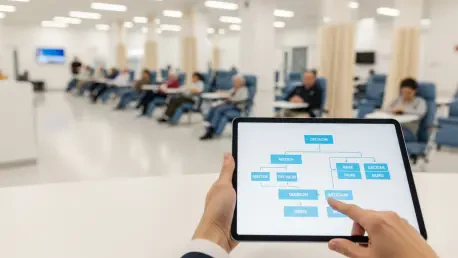
The research employed a multi-stage approach, beginning with a machine learning analysis of nearly 50,000 patient visits at Mayo Clinic Arizona to identify key predictors of bed utilization. Researchers then used mathematical optimization to determine the most efficient routing strategies for patient flow. To ensure practical application in high-stress environments, these complex computational models were distilled into a simplified, analog decision tree. This allowed triage nurses to implement the Vertical Patient Streaming protocol instantly without requiring specialized IT infrastructure or extensive software training.
The development of the decision tree was a critical step in making the research applicable to the real world. Triage nurses are often the most overworked individuals in a hospital, and asking them to navigate complex software while patients are lining up is a recipe for failure. By converting the findings of high-level machine learning into a series of simple, intuitive questions, the researchers ensured that the protocol could be followed even during the busiest shifts. The methodology prioritized human factors, recognizing that the best theoretical model is useless if the frontline staff cannot or will not use it in practice.
Findings
A 13-week prospective field trial involving over 11,000 patients demonstrated that the protocol significantly enhanced operational efficiency. The study recorded a 4.2% reduction in the total length of stay and a 4.5% decrease in the time required to reach a clinical disposition. Notably, these efficiency gains did not compromise patient safety, as evidenced by the lack of any increase in 72-hour return visits. The results proved that a data-driven vertical pathway is a safe and effective alternative for a specific demographic of emergency patients.
The reduction in wait times and processing speed had a compounding effect on the overall department. By clearing lower-acuity patients out of the horizontal beds faster, the staff was able to move critically ill patients from the waiting room into specialized treatment areas much more quickly. This improvement in throughput meant that the entire department functioned more like a synchronized machine rather than a series of disconnected hurdles. The safety data was particularly reassuring, as it showed that the increased speed did not lead to rushed diagnoses or premature discharges, which is a common fear when discussing efficiency in medicine.
Implications
The findings suggest that a medium-sized hospital could recover approximately 6,800 bed-hours annually, allowing for the treatment of 2,000 additional patients without physical expansion. Financially, this efficiency could generate an estimated $3 million in additional reimbursement for a typical institution. Beyond the financial impact, the protocol has the potential to mitigate clinician burnout and improve patient satisfaction by reducing wait times. It provides a scalable blueprint for hospitals of various sizes to maximize their current resources through intelligent decision-making.
When a hospital recovers thousands of bed-hours, it essentially creates a virtual expansion of the facility. This allows the institution to serve a larger portion of the community without the environmental or financial footprint of a new building. Furthermore, the reduction in clinician burnout cannot be overstated. When nurses and doctors see the waiting room clearing and patients moving through the system efficiently, it reduces the moral injury associated with being unable to provide timely care. The protocol transforms the emergency department from a place of chronic frustration into an environment of organized, effective medical delivery.
Reflection and Future Directions
Reflection
The development of the protocol highlights the importance of bridging the gap between sophisticated data science and the practical realities of frontline medicine. One of the primary challenges was translating complex machine learning outputs into a tool that healthcare providers could use in real-time. By prioritizing a simplified decision tree, the researchers overcame the common hurdle of technology fatigue in clinical settings. The success of the trial reflects how operational research can solve long-standing healthcare issues by focusing on process rather than just physical capacity.
Often, the most advanced mathematical models fail to gain traction in healthcare because they are designed in a vacuum, away from the chaos of the emergency room. This research succeeded because it respected the expertise and the constraints of the people who would actually be using the tool. It proved that sometimes the most effective way to implement high-tech insights is through low-tech delivery. This balance between digital intelligence and physical practicality is a model for how all future healthcare innovations should be approached to ensure they actually reach the bedside.
Future Directions
Future research should explore the scalability of the protocol across diverse clinical environments, such as urban trauma centers or rural community hospitals with different patient demographics. There is also an opportunity to investigate how real-time data integration could further refine the decision tree as hospital conditions fluctuate. Additionally, studies could examine the long-term impact of vertical streaming on staff retention and patient outcomes in more varied healthcare systems globally.
Expansion into different types of facilities will be essential to see if the success at a major clinic can be replicated in smaller, resource-poor settings. For example, a rural hospital with only a handful of beds might find even greater relative benefits from a vertical streaming model. There is also the potential to integrate this decision-making process into the electronic health record systems of the future, providing automated suggestions to triage staff based on the current occupancy of the entire hospital. This would allow for a dynamic response to overcrowding that changes hour by hour.
Reshaping the Paradigm of Emergency Capacity
The implementation of the vertical streaming protocol demonstrated that operational intelligence was a superior alternative to traditional physical expansion in many contexts. Hospital administrators identified key departments where sedentary care zones were established almost immediately, proving that the horizontal bias was a habit rather than a necessity. The data showed that a significant portion of the patient population felt more comfortable and less “sick” when they were allowed to remain upright, which suggested that the psychological benefits of vertical care were as significant as the operational ones.
Medical teams found that the simplified decision tree allowed for a level of consistency in triage that had been previously missing from their daily routines. By removing the guesswork from the initial patient assessment, the protocol ensured that every individual was placed in the most appropriate care environment based on objective data rather than subjective intuition. This standardization reduced variability in care delivery and helped the staff manage high-volume periods with much less secondary stress.
Ultimately, the research paved the way for a more flexible and responsive healthcare infrastructure that prioritized the efficient use of space and time. Institutions that adopted these methods discovered that they could increase their patient capacity without the need for massive capital investments or the disruption of long-term construction projects. The shift toward vertical streaming represented a fundamental change in the philosophy of emergency medicine, emphasizing that the most critical tool in the fight against overcrowding was not a hammer or a brick, but a smarter way to think about the patient journey.