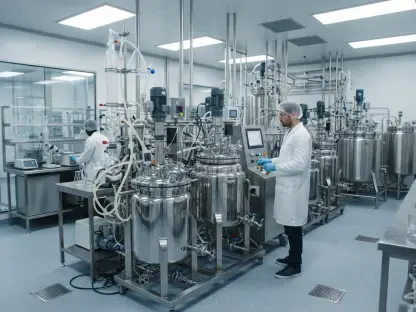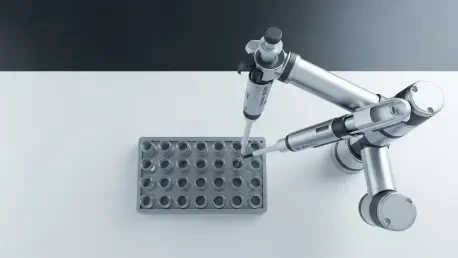

The traditional pharmaceutical development cycle has long been hindered by a frustratingly slow pace of manual experimentation and a historical tendency to discard failed experimental data. This bottleneck is now being addressed by Medra, a San Francisco-based startup that is fundamentally transforming the landscape of drug discovery through the integration of autonomous robotics and generative artificial intelligence. By securing fifty-two million dollars in recent funding, which brings its total capital to sixty-three million, the company has established a massive thirty-eight-thousand-square-foot facility known as Medra Lab 001. This sophisticated laboratory houses hundreds of robotic arms that are specifically engineered to conduct complex biological experiments twenty-four hours a day, seven days a week. The scale of this operation represents a departure from the artisanal nature of traditional lab work, providing a high-throughput environment where the speed of discovery is no longer limited by human availability or physical endurance.
Bridging the Biological Data Gap
A significant hurdle in the evolution of scientific AI has been the persistent lack of high-quality data, a problem often referred to as the data gap in experimental biology. While AI models in other sectors benefit from massive datasets consisting of trillions of tokens, the field of drug discovery has historically been slow to generate such a volume of information. Most pharmaceutical research focuses exclusively on documenting successful outcomes, which leaves the vast majority of experimental nuances unrecorded and untapped. This selective reporting creates a biased environment where machine learning models cannot learn from the granular details of why an experiment did not go as planned. To solve this, Medra’s robotic systems are designed to log every single micro-action with extreme precision, capturing the subtle variables that human researchers might overlook. By documenting every movement, the system transforms the laboratory into a data-generating engine that treats every trial as a valuable learning opportunity.
The granularity of the data collected by these autonomous systems is what truly distinguishes this approach from traditional lab automation setups. Instead of just recording a final result, the robots track specific physical parameters such as the exact angle of a pipette tip, the precise rotational speed during mixing, and the temperature fluctuations throughout a procedure. This high-fidelity dataset allows the underlying generative AI to perform deep reasoning about experimental results, enabling it to suggest specific adjustments for subsequent iterations. When both successes and failures are integrated into a single cohesive model, the AI gains a comprehensive understanding of the causal relationships within biological systems. This holistic view ensures that the iterative process of drug discovery becomes increasingly efficient over time, as the system identifies patterns that would be invisible to human eyes. Consequently, the transition from data collection to actionable insight is shortened from months to days, creating a feedback loop that accelerates scientific progress.
Empowering Scientists through Natural Language Interfaces
One of the most innovative aspects of this technological shift is the utilization of a specialized vision-language-lab-action model that simplifies how scientists interact with hardware. Historically, laboratory automation required rigid, complex programming that often necessitated specialized engineering knowledge, creating a barrier between the researcher and the machine. Medra has eliminated this friction by allowing scientists to direct sophisticated robotic arms using standard English instructions, much like interacting with a modern chatbot. This intuitive interface enables researchers to describe complex experimental protocols without having to write a single line of code. By translating natural language into precise physical actions, the software bridges the gap between digital intent and physical execution. This accessibility democratizes the use of high-tech robotics within the scientific community, allowing biologists and chemists to focus on high-level hypothesis generation rather than the minutiae of technical troubleshooting.
The versatility of the software platform is further evidenced by its support for over seventy-five percent of standard laboratory instruments currently used in the industry. This broad compatibility ensures that the robotic systems can be seamlessly integrated into existing workflows, performing diverse tasks across gene editing, protein engineering, and immunology. Rather than being confined to a single specialized function, these robots act as flexible agents capable of switching between different experimental domains with minimal reconfiguration. This flexibility is essential for modern biotechnology firms that must pivot quickly between different therapeutic areas or research methodologies. Furthermore, the integration of vision-based feedback allows the robots to monitor their environment in real time, ensuring that they can handle delicate biological samples with the necessary precision and care. As these systems continue to evolve, their ability to master increasingly complex laboratory procedures will likely expand the scope of autonomous discovery to include nearly every facet of the early-stage process.
Strategic Implementation in Pre-Clinical Research
Led by Chief Executive Officer Michelle Lee, a robotics expert from Stanford, the initiative has already progressed beyond the prototype phase with the deployment of five active systems. These units are currently being utilized by prominent industry partners, including Genentech and Addition Therapeutics, to streamline their internal research operations. By focusing primarily on early-stage discovery, the company strategically operates outside of direct regulatory oversight from the Food and Drug Administration, which allows for a much faster pace of iteration and technological refinement. This choice enables the rapid testing of new AI models and robotic configurations without the delays typically associated with clinical-grade validation. The deployment of these physical AI agents marks a significant transition from digital assistants that merely process information to tangible systems that interact with the physical world. This shift is part of a broader trend where automation is being leveraged to handle the most repetitive and labor-intensive aspects of scientific research.
The transition toward fully autonomous laboratories required a fundamental shift in how research organizations approached their long-term infrastructure and data management strategies. To maximize the benefits of these systems, it became necessary for pharmaceutical companies to prioritize the integration of standardized data pipelines that could absorb the massive influx of robotic experimental logs. Decision-makers recognized that the value was not just in the hardware itself, but in the proprietary datasets generated by continuous, twenty-four-hour operations. This evolution moved the industry toward a model where the physical laboratory functioned as a real-time extension of the digital discovery environment. By adopting these autonomous agents, organizations effectively reduced the time required to identify viable drug candidates, ensuring that human ingenuity was supported by a robust, tireless mechanical backbone. This synthesis of generative AI and physical robotics provided a clear pathway for overcoming the traditional stagnation of biological research and development cycles.