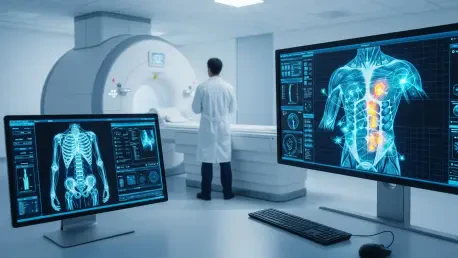

The traditional reliance on Body Mass Index as a primary indicator of metabolic health is rapidly being eclipsed by advanced diagnostic tools capable of peering into the microscopic composition of human tissue. While weight and height provide a rough estimate of physical status, they fail to account for the hidden distribution of fat within the musculoskeletal system, which serves as a silent harbinger of chronic disease. Recent breakthroughs in medical imaging, led by Dr. Sebastian Ziegelmayer, have introduced a paradigm shift where the quality of muscle tissue, rather than just the quantity of body mass, becomes the focal point of clinical assessment. By utilizing deep-learning algorithms to scrutinize the paraspinal muscle, researchers can now identify intermuscular adipose tissue and lean muscle mass with unprecedented precision. This transition toward high-resolution, automated analysis allows healthcare providers to detect systemic risks that often remain invisible during a standard physical examination or routine blood work.
Transforming Imaging into Predictive Data
Deep-Learning Models: Automated Phenotyping
The integration of sophisticated deep-learning segmentation algorithms has revolutionized the way radiologists interpret whole-body MRI data at a population-wide scale. Historically, the process of quantifying muscle quality and fat infiltration was an incredibly labor-intensive endeavor, requiring highly skilled specialists to manually annotate thousands of individual image slices. This manual bottleneck effectively prevented the execution of large-scale epidemiological studies and limited the clinical utility of body composition analysis to niche research settings. By automating what is known as “computational phenotyping,” the AI framework converts millions of raw pixels into structured, quantitative biomarkers that can be analyzed statistically. This approach provides a level of objectivity that was previously unattainable, ensuring that muscle health assessments are no longer subject to the variance of human interpretation or the subjective “eye-balling” of complex scans.
Beyond the sheer speed of processing, these AI models establish a reproducible standard that can be deployed across diverse clinical environments regardless of the local expertise available. By creating a unified digital signature of muscle health, the technology allows for the comparison of patients across different health systems and longitudinal timelines. This structural consistency is vital for moving radiology toward a data-driven discipline where imaging serves as a source of hard numbers rather than descriptive adjectives. As these algorithms become more refined, they provide a blueprint for how artificial intelligence can handle massive datasets, turning static images into dynamic tools for risk stratification. The shift from qualitative observation to automated quantification represents a fundamental change in the diagnostic pipeline, enabling a more granular understanding of how internal anatomical structures reflect the broader metabolic state of the human body.
Uncovering Conditions: Asymptomatic Cardiometabolic Risks
The most startling revelation from recent large-scale studies is the high prevalence of undiagnosed cardiometabolic conditions among individuals who consider themselves perfectly healthy. In a cohort of over 11,000 participants who had no known pre-existing diseases, clinical evaluations revealed that nearly half exhibited unhealthy lipid patterns, while significant percentages suffered from hypertension and abnormal glucose levels. This discrepancy underscores a dangerous gap in current diagnostic practices, where individuals are often cleared of health concerns based on the absence of symptoms. AI-driven muscle analysis bridges this gap by identifying fat infiltration within the muscle, known as intermuscular adipose tissue, which serves as a potent indicator of underlying vascular and metabolic dysfunction. Research indicates that elevated levels of this specific fat type are associated with a 67% increase in the odds of having hypertension, even in patients who appear fit on the surface.
This predictive capability suggests that MRI-derived biomarkers can serve as a sophisticated early warning system, capturing the onset of disease years before it manifests clinically. By identifying these “invisible” markers, healthcare providers can intervene with targeted lifestyle or pharmacological strategies long before a major cardiovascular event occurs. The ability of AI to detect these correlations across a massive population highlights the limitations of traditional diagnostic tools like the blood pressure cuff or the weighing scale. In the current medical landscape, the focus is shifting toward identifying these silent risk factors as early as possible. As AI continues to uncover these hidden relationships, it empowers clinicians to rethink the definition of a “healthy” patient, moving toward a more proactive model of care that prioritizes the early detection of metabolic irregularities that would otherwise go unnoticed until they reach a critical stage.
The Impact of Muscle Composition on Long-Term Health
Metabolic Efficiency: Lean Muscle Mass
While the presence of fat within the muscle signals potential danger, the density of lean muscle mass serves as a powerful protective shield against the development of metabolic disorders. Muscle tissue is far more than a simple mechanism for movement; it functions as a critical endocrine-like organ that plays a central role in the regulation of systemic metabolism through glucose uptake and lipid oxidation. In male participants especially, high lean muscle mass has been strongly correlated with a significantly reduced risk of hypertension and lipid imbalances. The metabolic efficiency of healthy muscle ensures that the body can process energy effectively, preventing the buildup of toxins and the development of insulin resistance. When muscle fibers are dense and clear of fat, they act as a massive sink for circulating blood sugar, thereby maintaining vascular health and reducing the overall strain on the cardiovascular system.
Conversely, when the structural integrity of muscle is compromised by “marbling” or fat infiltration, its ability to regulate these vital energy processes diminishes rapidly. This decline in metabolic efficiency is a primary driver of the chronic inflammation and vascular stiffening associated with type 2 diabetes and heart disease. Understanding muscle as a dynamic metabolic regulator allows researchers to view physical fitness through the lens of internal chemistry rather than just external appearance. The protective power of muscle density highlights why maintaining strength is a fundamental component of metabolic longevity, rather than just an aesthetic pursuit. As we move from 2026 into the coming years, the focus on skeletal muscle quality will likely become a cornerstone of preventative health strategies, providing a more nuanced understanding of how our physical structures dictate our long-term metabolic trajectory.
Standardizing Tools: Clinical Practice Implementation
The transition of these AI-driven insights from the laboratory to the local hospital requires the industry to overcome significant technical hurdles regarding the standardization of imaging platforms. For muscle biomarkers to be clinically useful, the AI models must deliver consistent and accurate results regardless of whether the MRI machine is manufactured by GE, Siemens, or Philips. This necessitates the development of harmonized preprocessing techniques and rigorous cross-platform validation to ensure that a patient’s risk score does not fluctuate based on the hardware used for the scan. Industry observers are calling for a unified framework that allows these algorithms to be integrated seamlessly into existing hospital informatics systems. Only when these tools are proven to be robust across diverse patient populations and imaging centers will they be ready for widespread adoption as a standard of care.
Looking toward the future, the next critical phase of development involves longitudinal research to prove the prospective predictive value of these muscle biomarkers. While current data establishes a clear link between muscle fat and existing health status, researchers must demonstrate that high levels of intermuscular adipose tissue today can accurately predict major events like heart attacks or strokes five to ten years in the future. If these imaging markers can outperform conventional risk scores, they will likely become a staple of executive health physicals and routine preventative screenings. The goal is to create a personalized healthcare journey where a single MRI scan can provide a comprehensive roadmap of a patient’s metabolic future. By refining these AI tools, the medical community can move toward a future where diagnostics are not just reactive responses to illness, but proactive evaluations of the body’s fundamental health.
The clinical validation of muscle analysis through artificial intelligence has redefined the way we assess the risk of chronic metabolic conditions. By moving away from superficial metrics and toward a granular understanding of tissue quality, the medical community has gained a powerful tool for early intervention. The evidence suggests that muscle composition is a vital indicator of vascular health, and the ability to automate this analysis makes it scalable for entire populations. In the past, these diagnostic insights were limited by the manual nature of radiological review, but the current technological landscape allows for a more comprehensive and objective approach. Healthcare organizations should now prioritize the integration of AI-driven body composition tools into their routine screening protocols to better identify at-risk patients who may appear healthy. Future developments will likely focus on refining these algorithms for diverse demographic groups and expanding their predictive capabilities to include a wider range of systemic diseases. The integration of muscle health into the broader picture of metabolic medicine represents a significant advancement that will undoubtedly shape the future of preventative care for years to come.