
Data filtering initiatives, such as excluding eukaryotic viruses from training sets, represent the first steps in preventing AI models from learning how to design human pathogens. This protective measure is increasingly vital as the intersection of artificial intelligence and the life sciences enters a transformative era, moving beyond the mere analysis of existing biological structures toward the intentional design of novel biological entities. This paradigm shift, often referred to as the emergence of the “AI-Bio Pipeline,” represents a convergence of generative AI, synthetic biology, and automated laboratory infrastructure. This evolution offers unprecedented opportunities for medical innovation—particularly in addressing the global crisis of antimicrobial resistance—while simultaneously introducing complex biosecurity risks that challenge existing regulatory frameworks. Historically, AI in biology was primarily used to interpret complex data, such as mapping genomes or predicting protein folding. However, recent breakthroughs demonstrate that AI can now function as an architect of life, allowing researchers to program genetic code much like software. The centerpiece of this shift is the development of specialized genomic language models like Evo 2, which are trained on trillions of DNA base pairs across a vast spectrum of life to generate entirely new genetic instructions for functional, living entities.
Transforming Phage Therapy through Generative Biology
Breakthroughs: Viral Engineering
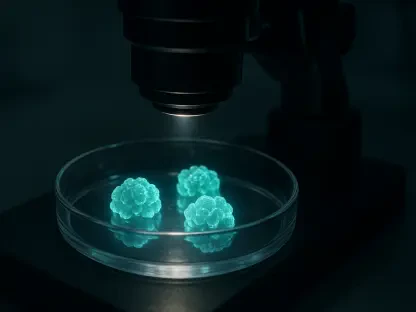
A landmark study recently illustrated the practical application of generative biology by using the Evo 2 model to design bacteriophages—viruses that specifically target and infect bacteria. Researchers successfully synthesized 285 AI-designed phage candidates in a laboratory setting, finding that 16 were immediately effective against virulent strains of E. coli. Most importantly, these designed phages were able to overcome the immunity that the bacteria had developed against original, non-modified phages, proving that AI can rapidly out-evolve bacterial resistance mechanisms. This capability marks a significant departure from traditional drug discovery, where humans attempt to find existing molecules that work; instead, we are now creating bespoke biological machines designed for a singular, destructive purpose against pathogens. The precision of these models allows for the adjustment of viral tail fibers and capsid structures with mathematical accuracy, ensuring that the engineered virus can penetrate the protective membranes of even the most stubborn “superbugs” that have plagued hospitals for the last decade.
The success of these AI-generated phages suggests that the biological arms race between humans and bacteria has entered a new phase. In the past, bacteria had the upper hand because of their rapid mutation rates and ability to share resistance genes through horizontal gene transfer. By utilizing generative models trained on the vast diversity of the global virome, scientists can now anticipate these mutations and design phages that target multiple entry points simultaneously. This multi-pronged approach makes it statistically improbable for a bacterial colony to develop a comprehensive defense before being eradicated. Furthermore, because these phages are designed from the ground up, they can be engineered to be incredibly host-specific, minimizing the risk of collateral damage to the human microbiome. This specificity is a major advantage over broad-spectrum antibiotics, which often wipe out beneficial gut bacteria, leading to secondary health issues. The ability to design life with such high fidelity represents the ultimate realization of precision medicine in the fight against infectious diseases.
Efficiency: Accelerating the Design-Build-Test Cycle
The application of AI to phage therapy is particularly timely as antimicrobial resistance renders conventional antibiotics increasingly ineffective across the globe. While phage therapy has existed for decades, it has remained largely experimental and difficult to scale due to the labor-intensive process of isolating specific phages for specific infections from environmental sources like soil or sewage. By utilizing the AI-Bio Pipeline, the timeline for developing therapeutic phages is drastically compressed, moving from months of trial-and-error discovery to mere days of digital design. This allows for the creation of customized “phage cocktails” tailored to a patient’s specific bacterial strain through a high-speed, data-driven engineering task. In a clinical setting, this means a doctor could sequence a patient’s infection in the morning and have a personalized viral treatment ready for administration within the week, a pace that was previously unthinkable under the traditional pharmaceutical manufacturing model.
This acceleration is not just about speed; it is about the fundamental scalability of biological solutions. When the design process becomes a computational task rather than an observational one, the throughput of potential treatments increases exponentially. Between 2026 and 2030, the integration of these models into routine clinical workflows is expected to revolutionize how we handle localized outbreaks of resistant bacteria. Instead of relying on a dwindling stockpile of chemical compounds, healthcare systems will transition toward a library of digital genetic templates that can be printed and activated on demand. This shift also addresses the economic challenges of antibiotic development, where the high cost of R&D often discourages private investment. By lowering the barrier to entry for designing effective treatments, the AI-Bio Pipeline enables a more agile response to emerging threats, ensuring that our medical interventions can keep pace with the natural evolution of microbial pathogens in real-time.
The Erosion of Physical Laboratory Barriers
Automation: Cost Reduction and Cloud Laboratories
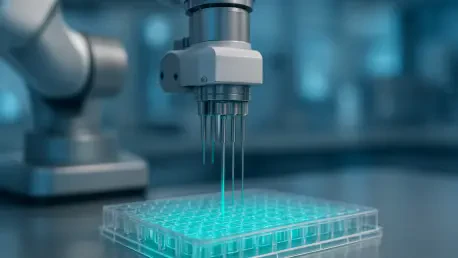
While some research focuses on the design phase, other advancements have successfully integrated advanced AI models with automated “cloud laboratories.” These facilities use sophisticated robotics and specialized software to execute biological experiments remotely, significantly reducing the need for hands-on human labor and geographical proximity to high-end equipment. Recent experiments in cell-free protein synthesis have shown that connecting AI reasoning directly to laboratory automation can reduce operational costs by as much as 40 percent. This highlights a growing trend where the physical bottleneck of biological research is beginning to weaken, allowing a researcher with a laptop in one country to run a complex genetic synthesis in a facility thousands of miles away. This democratization of hardware means that the high capital expenditure traditionally required to build a world-class laboratory is no longer the absolute gatekeeper of biological innovation.
The rise of these automated systems also introduces a level of reproducibility that has long eluded the life sciences. Human error in pipetting, temperature control, and timing often leads to inconsistent results in traditional labs, but a robotic arm controlled by an AI supervisor executes instructions with sub-microliter precision every single time. This reliability is crucial for the AI-Bio Pipeline, as the generative models require high-quality feedback loops to refine their designs. When a cloud lab synthesizes an AI-designed phage and tests it against a bacterial culture, the results are instantly fed back into the model to improve the next iteration. This closed-loop system creates a compounding effect on the speed of discovery, where each failed experiment is just as valuable as a success because it provides the data necessary to calibrate the underlying algorithms. As these facilities become more common, the distance between a digital concept and a physical biological agent will continue to shrink.
Knowledge: The Diminishing Need for Tacit Expertise
When AI can design a genome and a robot can synthesize and test it with minimal human oversight, the barrier between a digital concept and a physical biological agent becomes dangerously thin. In the past, creating or modifying a pathogen required deep “tacit knowledge”—experimental skills and subtle techniques gained through years of hands-on practice in a physical lab. Today, AI provides the instructional manual for design while cloud labs provide the factory for production, making the transition from digital code to physical entity faster and cheaper than ever before. This shift means that a user no longer needs to be a PhD-level virologist to engineer a functional virus; they simply need to know how to prompt a specialized model and provide the necessary parameters for the automated synthesis hardware. The expertise is being offloaded from the human mind to the silicon and steel of the AI-Bio Pipeline.
This transition has profound implications for the future of scientific training and the workforce. As the “how-to” of biology becomes digitized, the focus of human researchers is shifting from technical execution to high-level strategy and ethical oversight. However, this also means that the inherent safety check provided by the difficulty of the work is disappearing. Historically, if a malicious actor wanted to create a dangerous biological agent, they would have to spend years mastering complex laboratory protocols, which provided many opportunities for intervention or detection. With the advent of generative AI and remote automation, that period of vulnerability is shortened. The democratization of biological power is a double-edged sword; while it enables a brilliant student to design a cure for a rare disease from their dorm room, it also removes the traditional friction that prevented the misuse of powerful biological tools by those without formal institutional affiliation.
Biosecurity Risks and Future Governance
Risk Assessment: The Challenge of Novel Pathogens
The same technologies that promise to cure infections also pose significant “dual-use” risks, where tools are used for both beneficial and harmful purposes. A primary concern is that AI can generate novel genetic sequences that do not exist in nature, potentially “flying under the radar” of traditional DNA synthesis screening. Current security protocols often rely on watchlists of known dangerous sequences, such as those from Ebola or anthrax. However, an AI could design a novel protein or toxin with the same functional lethality as a known pathogen while using a completely different genetic code that shares no similarity with existing databases. This “black box” biology makes it difficult for regulators to identify a threat until it is already synthesized and potentially released, creating a massive gap in our current biodefense infrastructure.
This capability for “de novo” pathogen design necessitates a complete rethink of how we monitor biological activity. If the threat is no longer limited to a set list of known organisms, then our detection systems must move toward identifying the intent and potential function of a genetic sequence rather than just its identity. For instance, an AI model could be used to optimize a benign virus to better evade the human immune system or to increase its stability in the environment. These subtle changes might not trigger traditional alarms, yet they could fundamentally change the risk profile of a biological agent. The challenge for the next few years will be developing a “functional radar” that can predict the phenotype of a sequence—what it actually does—based solely on its digital code. Without this capability, the speed of AI-driven design will continue to outpace our ability to secure the biological landscape.
Governance: Implementing Proactive Safeguards
In response to these emerging risks, the scientific community is attempting to build safeguards directly into the AI-Bio Pipeline, such as the aforementioned data filtering to prevent models from learning how to design human pathogens. However, experts suggest that governance must evolve beyond voluntary measures to include mandated DNA screening for all synthesis orders and a shift toward “function-based screening.” This involves using specialized AI to predict whether a designed protein or virus will be harmful based on its predicted behavior in a biological system rather than just its similarity to known sequences. International cooperation is essential here, as biological data and synthesis capabilities are global; a loophole in one country’s regulations could be exploited to develop a threat that affects the entire world. Stronger oversight of “compute” resources—the massive GPU clusters needed to train these models—is also being discussed as a potential point of intervention.
The path forward requires a unified perspective on biological innovation that balances progress with safety. By 2026, the industry moved toward a “safety-by-design” framework where biosecurity is not an afterthought but a core component of the development process. This included the implementation of digital “watermarks” in synthesized DNA, allowing authorities to track the origin of any engineered sequence back to its designer and the specific AI model used. Furthermore, the establishment of international monitoring bodies helped standardize the criteria for “high-risk” research, ensuring that the most powerful generative tools were only accessible to verified institutions with rigorous ethical oversight. These steps were not meant to stifle the incredible potential of AI-designed viruses to solve antibiotic resistance but rather to ensure that the tools of our salvation did not accidentally become the instruments of a global catastrophe.
Strategic Directions for Biological Security
The evolution of the AI-Bio Pipeline transformed the biological sciences from a descriptive field into a prescriptive one, making whole-genome design a practical reality for modern medicine. Researchers successfully harnessed these tools to create precise, effective alternatives to traditional antibiotics, offering a lifeline in the fight against resistant bacteria. This progress was not without its challenges, as the democratization of genetic engineering required a fundamental shift in how the world approached biosecurity and laboratory oversight. The scientific community recognized that the speed of innovation had to be matched by the robustness of its safeguards, leading to the development of function-based screening and international DNA synthesis standards.
The successful integration of AI into biotechnology proved that the most effective way to manage biological risk was through the technology itself. Automated screening algorithms became the primary defense against the misuse of generative models, while cloud laboratories adopted transparent, traceable workflows that ensured accountability. Moving forward, the priority must remain on fostering an ecosystem where medical breakthroughs are accelerated while the barriers to harmful applications are strengthened. By maintaining this balance, the international community ensured that the power of AI-designed viruses was directed toward healing and the eradication of infectious diseases, rather than the creation of new threats. The era of programmable biology is here, and its legacy was defined by the proactive choices made to secure its immense potential.