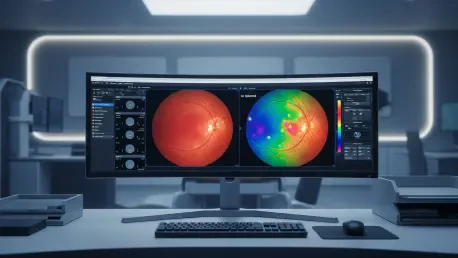

A patient suffering from an undiagnosed visual impairment often spends more than half a decade circulating through various clinical settings before finally receiving a definitive genetic answer for their condition. This prolonged period of uncertainty, frequently referred to as a diagnostic odyssey, creates a significant burden on the healthcare system and inflicts profound psychological distress on those seeking clarity. However, a landmark shift in medical diagnostics has recently emerged, moving away from static human interpretation toward a more dynamic model of AI-augmented decision-making. Recent evidence suggests that AI-based software can finally provide the necessary clinical utility to significantly reduce wait times for rare disease identification. This transition represents a fundamental change in how the medical community evaluates technology, moving from laboratory-controlled performance metrics to measuring the actual improvement in a physician’s performance within the frantic environment of a high-volume clinic.
The landscape of retinal care is particularly ripe for this transformation because of the intricate nature of the diseases involved and the specialized expertise required for accurate identification. For individuals living with Inherited Retinal Diseases, the path to a correct diagnosis is often characterized by multiple misdiagnoses and a revolving door of specialists who may not possess the niche expertise required to identify rare genetic variations. These conditions are rare enough that they frequently elude the diagnostic capabilities of general practitioners and even many comprehensive ophthalmologists, yet they are common enough collectively to create a massive referral bottleneck for the few retinal experts available. The introduction of AI-augmented care offers a critical bridge across this gap, ensuring that sight-saving treatments reach patients before their conditions progress to irreversible damage.
The Diagnostic Challenge: Inherited Retinal Diseases
Genetic Complexity: Navigating Rare Eye Conditions
Inherited Retinal Diseases represent a broad spectrum of conditions that collectively affect millions of people worldwide, yet they remain among the most difficult illnesses to categorize accurately. The primary challenge lies in the sheer volume of causative factors; researchers have identified over 280 distinct genes and dozens of subtypes that can manifest with nearly identical clinical presentations during a standard eye examination. For instance, early-stage retinitis pigmentosa is frequently mistaken for other forms of macular or retinal dystrophy, leading to years of misdirected care and unnecessary patient anxiety. Because the phenotypic expression of these genes varies so widely between individuals, even seasoned specialists can find it difficult to pinpoint the exact condition without the aid of sophisticated computational tools that can analyze subtle patterns in retinal imaging that are often invisible to the naked eye.
This persistent delay in reaching a definitive diagnosis is far more than a simple administrative hurdle; it represents a genuine clinical catastrophe for patients who may be eligible for modern genetic therapies. The successful rollout of treatments like Luxturna has shifted the priority of diagnosis from academic interest to a matter of critical timing, particularly for pediatric patients whose visual development is at a decisive stage. If a patient is identified too late in the progression of their disease, the biological window for effective intervention may close, resulting in permanent vision loss that could have been prevented with a more efficient screening process. By the time many patients reach a specialized center capable of performing genetic testing, the window for therapy has often narrowed considerably, underscoring the urgent need for diagnostic tools that can be deployed at the primary care level to flag high-risk cases much earlier than current protocols allow.
Clinical Progression: The Urgency of Early Detection
The rapid evolution of gene-based medicine between 2026 and 2028 has fundamentally altered the expectations for diagnostic speed in ophthalmology. In previous eras, a slow-moving diagnosis was perhaps acceptable because few treatments existed, but the modern landscape demands a rapid transition from symptom onset to genetic confirmation. When a patient presents with night blindness or a loss of peripheral vision, the traditional referral ladder often takes months or years to climb. During this time, photoreceptor cells may continue to degenerate at an accelerated rate, making it imperative that the initial point of contact—the general optometrist or family physician—has access to diagnostic aids that can accurately differentiate between benign age-related changes and the early markers of a progressive genetic disorder. This is where AI-driven screening protocols have begun to demonstrate their most profound impact, acting as a sentinel system that identifies potential IRDs during routine checkups.
Beyond the biological implications of delayed treatment, the socioeconomic costs of the diagnostic odyssey are staggering, often involving dozens of redundant tests and travel to multiple out-of-state facilities. Patients and their families often report a sense of “medical gaslighting” when practitioners suggest that their symptoms are psychosomatic or merely a part of normal aging because the standard tools fail to capture the underlying pathology. By integrating AI models that have been trained on vast repositories of rare disease data, clinics can provide a higher level of certainty during the initial consultation. This not only streamlines the path to a specialist but also reduces the overall financial burden on the healthcare system by eliminating the “trial and error” approach to diagnostics that has dominated the field for decades. The goal is to transform the diagnostic odyssey into a direct, efficient pathway that prioritizes the patient’s long-term visual health.
Clinical Environment: Evaluating the Impact of Artificial Intelligence
Human Augmentation: Measuring the Performance of the Physician
A significant shift in clinical research has occurred recently, moving away from retrospective studies that focus solely on how well an algorithm can identify patterns in pre-labeled datasets. Instead, modern trials have begun to prioritize the concept of the “augmented human,” measuring the actual diagnostic performance of a clinician when they are paired with an AI co-pilot. This approach recognizes that in a busy medical practice, the goal is not to replace the doctor but to enhance their ability to process complex information under time pressure. By randomizing the clinicians themselves rather than the patients, researchers have been able to demonstrate that AI tools significantly narrow the gap between generalists and specialists. This evidence suggests that an AI-supported practitioner can achieve a level of diagnostic accuracy that was previously reserved only for those with decades of sub-specialized experience.
The distinction between raw algorithmic accuracy and real-world clinical utility is a critical factor that the medical industry is finally beginning to standardize. While an AI model might achieve high scores in a controlled lab environment, its true value is determined by whether it leads to better patient outcomes or more accurate decision-making in the chaotic environment of a real-world clinic. The current consensus among healthcare leaders is that proving utility—showing that the tool actually changes the course of care for the better—is the most necessary hurdle for widespread adoption across the healthcare system. The emergence of prospective studies that track the entire patient journey from the first AI-assisted screening to the final treatment outcome has provided the data needed to convince skeptical insurers and regulatory bodies that these tools are essential components of modern medical practice rather than mere digital novelties.
Operational Integration: Live Workflow and Behavioral Change
Evidence for the effectiveness of AI-augmented care is mounting globally, with randomized studies in diverse clinical settings demonstrating the power of real-time diagnostic support. These investigations treat artificial intelligence as a medical intervention delivered directly to the healthcare provider, allowing researchers to measure the tangible changes in diagnostic behavior and referral patterns. In many cases, the presence of an AI tool has been shown to increase the confidence of physicians when dealing with rare conditions, leading to more appropriate and timely referrals to tertiary care centers. This shift in behavior is essential for decompressing the current specialist bottleneck, as it ensures that the patients who are referred to experts are those who truly require high-level intervention, while those with more common conditions are managed effectively at the primary level.
Furthermore, the integration of these systems into the live workflow of a medical professional ensures that the technology does not become a distraction or an additional administrative burden. Effective AI tools are designed to work seamlessly within existing imaging software, providing subtle prompts or risk scores that the clinician can choose to investigate further. This collaborative model preserves the physician’s autonomy while providing a safety net that catches rare anomalies that might otherwise be overlooked during a routine examination. As these systems become more deeply embedded in clinical practice throughout 2026 and 2027, the focus has shifted toward refining the user interface and ensuring that the AI’s suggestions are transparent and explainable. This transparency is vital for building trust between the technology and the medical professionals who rely on it to make life-altering decisions for their patients.
Future Adoption: Strategic and Regulatory Paths
Regulatory Frameworks: Addressing the Gap in Guidance
Despite the undeniable technological progress observed in recent years, the regulatory pathway for AI-enabled medical devices remains a complex and somewhat underspecified landscape. While the FDA has introduced modern plans to allow for minor algorithm updates without the need for constant re-submissions, the agency has yet to provide a clear, standardized template for prospective clinical utility trials. Most current authorizations still rely heavily on retrospective data, which creates a significant gap between what the technology can prove in a simulation and what the agency officially requires for high-level clinical approval. This regulatory inertia has hindered the deployment of more advanced systems that could potentially save sight for thousands of patients if they were allowed to enter the market under a more predictable approval framework.
This lack of clear regulatory guidance creates a paradox where sponsors who choose to conduct more rigorous, randomized prospective trials may actually find the approval process more challenging than those who take a simpler path. Because there is no established format for this level of evidence, early adopters are essentially forced to set a new precedent for the entire industry, often at a high financial and administrative cost. This uncertainty creates a significant risk for developers who are trying to bring the next generation of diagnostic tools to market, as they must navigate a shifting landscape of expectations without a definitive roadmap. To ensure that innovation does not stall, there is a pressing need for regulatory bodies to collaborate with industry experts to define exactly what constitutes “clinical utility” and how it should be measured in the context of rapidly evolving machine learning models.
Strategic Recommendations: Success for Sponsors and Stakeholders
To overcome these significant hurdles, developers and sponsors must be proactive in their engagement with regulatory agencies during the earliest stages of product design and protocol development. Securing early agreements on what constitutes the “ground truth” and the reference standards for success is essential in genetically complex fields like ophthalmology. By establishing these benchmarks before finishing trial protocols, sponsors can avoid costly delays and ensure that their data will be viewed as robust and actionable by both regulators and clinical end-users. Utilizing high-quality clinical evidence as a competitive differentiator can also help sponsors distinguish their products from competitors who may only offer limited retrospective performance data, positioning their tools as the gold standard for AI-augmented care.
The impact of these advancements extends far beyond the individual doctor’s office, affecting the entire ecosystem of vendors who support clinical trials and patient identification. The market is increasingly demanding proof that digital tools actually change site behavior and improve operational efficiency, rather than simply flagging potential issues in a database that clinicians may or may not check. As the technology matures toward 2028, the success of AI in retinal medicine will depend on the ability of stakeholders to align high-level clinical evidence with a more sophisticated and predictable regulatory framework. This alignment will be the key to moving AI from an experimental tool to a standard component of the diagnostic toolkit, finally ending the long and painful odyssey that has characterized rare disease diagnosis for so long.
Collaborative Evolution: The Path Toward Integrated Care
The diagnostic odyssey for retinal patients was eventually shortened by the widespread adoption of AI-augmented systems that prioritized human-AI collaboration over simple automation. By shifting the focus of clinical trials toward the “augmented physician,” the medical community established a new standard for evaluating digital health interventions based on real-world utility and patient outcomes. This shift required a fundamental reassessment of how regulatory bodies like the FDA approached algorithmic software, leading to more flexible yet rigorous pathways for prospective validation. Sponsors who embraced early engagement with regulators and focused on high-quality clinical evidence successfully differentiated their technologies in an increasingly crowded marketplace, proving that the most effective tools were those that integrated seamlessly into the lived experience of the practitioner.
Moving forward, the focus must remain on the development of explainable AI and the creation of standardized datasets that reflect the true genetic diversity of the global population. Healthcare organizations should prioritize the integration of these tools into their broader digital ecosystems, ensuring that diagnostic insights are shared across the continuum of care to prevent fragmentation. By treating artificial intelligence as a collaborative partner rather than a replacement for clinical judgment, the industry took the necessary steps to ensure that genetic therapies reached those who needed them at the optimal time. The lessons learned from the successful deployment of AI in retinal care now serve as a blueprint for other rare disease specialties, demonstrating that a commitment to clinical utility and regulatory transparency is the most effective way to improve the lives of patients worldwide.