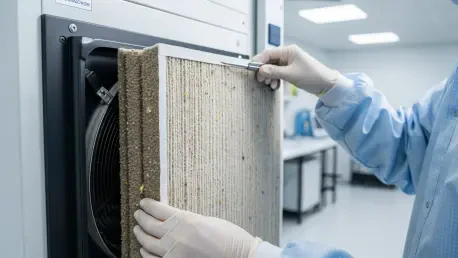

The microscopic particles drifting through the global atmosphere carry a vast repository of biological information that was once considered impossible to access without direct physical contact or invasive sampling methods. Modern research has revealed that standard air filters, like those found in commercial HVAC systems and environmental monitoring stations, act as sophisticated biological sponges capable of trapping the environmental DNA (eDNA) of every living thing in their vicinity. This breakthrough means that by simply analyzing the dust and microscopic debris caught in a standard ventilation system, scientists can now reconstruct a high-resolution map of local biodiversity, track the movement of invasive species, and identify emerging public health threats long before they manifest in a hospital setting. The shift from targeted, species-specific sampling to wide-scale airborne genomic surveillance represents a fundamental change in how humanity interacts with the invisible biological world, turning every breath of wind into a potential data point for scientific inquiry, forensic analysis, and national security.
The Evolution of Atmospheric Genetic Monitoring
Transitioning from Aquatic: The Legacy of Environmental DNA
Before researchers turned their attention to the atmosphere, the field of environmental DNA analysis was primarily rooted in the study of aquatic ecosystems. For several years leading up to 2026, ecologists focused on filtering water from rivers, lakes, and oceans to identify the presence of specific fish, amphibians, and invertebrates without the need for invasive trapping. This method relied on the fact that animals constantly shed cells, scales, and waste into their surroundings, leaving behind a genetic fingerprint that persists in the environment for a limited time. While effective in water, many scientists remained skeptical that DNA could remain stable or detectable in the air, where it is exposed to harsh ultraviolet radiation and rapid dispersal. However, advancements in molecular biology proved that atmospheric genetic material is surprisingly resilient, floating as part of microscopic aerosols or clinging to larger dust particles. The realization that the same principles applied to water could be adapted to the sky opened a new frontier for ecological monitoring, allowing for the surveillance of terrestrial life over vast and often inaccessible geographic areas.
This transition from a liquid medium to a gaseous one required more than just a change in equipment; it necessitated a complete rethink of how genetic sequences are identified and classified. In the early stages of this transition, researchers utilized targeted sequencing, a process that looks for specific, known genetic markers associated with a particular species. This approach was useful for verifying the presence of a specific invasive beetle or a rare bird, but it failed to capture the broader picture of the entire ecosystem. As the field matured into 2026, the adoption of shotgun long-read sequencing became the gold standard, enabling the simultaneous identification of bacteria, fungi, plants, and mammals from a single air sample. This unbiased method does not require prior knowledge of what might be in the air, making it an incredibly powerful tool for discovering unexpected biological entities. By sequencing every fragment of DNA captured by a filter, scientists can now observe the intricate web of life in real-time, providing a holistic view of biological health that was previously impossible to achieve through traditional observation methods.
Shotgun Sequencing: A Technical Leap in Genomic Mapping
The transition to shotgun sequencing has fundamentally altered the economics and efficiency of biological monitoring by removing the need for specialized reagents for every individual species of interest. Unlike older techniques that required a library of primers for each target organism, current long-read sequencing technologies allow for the assembly of large, complex genomes from fragmented pieces caught in the wind. This means that a single filter from a forest or a city street can yield the genetic code of thousands of different organisms, ranging from microscopic viruses to large apex predators. The technical challenge shifted from the physical collection of samples to the computational processing of massive datasets, where bioinformatics algorithms must sift through millions of base pairs to match them against global genomic databases. This high-throughput approach ensures that no biological signal is missed, turning a simple air filter into a multi-purpose sensor that can identify a bobcat, a spider, and a rare orchid simultaneously without the researcher ever stepping foot into the deep wilderness.
Moreover, the precision of these modern sequencing tools allows for phylogenetic placement, a technique that determines the specific lineage and geographic origin of an individual animal based solely on its airborne DNA. In recent trials conducted in the diverse ecosystems of the Florida Everglades, researchers were able to distinguish between different populations of wildlife, providing insights into migration patterns and genetic diversity within species. This level of detail is critical for conservation efforts, as it allows scientists to monitor the health of isolated populations and detect the arrival of invasive species before they become established. By analyzing the subtle variations in the genetic code, researchers can even identify individual animals, effectively turning the air into a forensic archive of animal movement. This technology has effectively bridged the gap between macro-level ecological surveys and micro-level genetic analysis, offering a seamless way to track the pulse of the planet’s biodiversity from the comfort of a laboratory.
Practical Applications in Wildlife and Public Health
Wildlife Conservation: Monitoring without Contact
One of the most significant impacts of airborne DNA monitoring is the ability to conduct non-invasive wildlife surveys in environments where traditional trapping is either too expensive or too disruptive. For species that are naturally elusive or reside in rugged terrain, such as mountain lions or rare forest-dwelling insects, physical observation is often a matter of chance and luck. By deploying air sampling stations, conservationists can collect data over weeks or months, capturing the genetic signatures of animals as they pass by or as wind currents carry their DNA from deeper within the habitat. This zero-touch approach minimizes the stress on the animals and reduces the risk of human-introduced diseases, which is a growing concern for endangered populations. In 2026, several international conservation groups have begun integrating these sensors into remote protected areas, creating a permanent, invisible guard that monitors the presence of protected species and alerts rangers to the movement of poachers or unauthorized domestic livestock.
The sensitivity of these air-based genomic tools is so high that they can detect the presence of rare plants and fungi that are often overlooked by even the most experienced field biologists. In many cases, the genetic signal of a plant associated with specific insects or birds can serve as a proxy for the entire food web, allowing researchers to infer the presence of a healthy ecosystem without needing to see every component. For instance, the detection of specific pollen or leaf fragments can indicate the flowering cycles of rare orchids, which in turn suggests the presence of their specific pollinators. This interconnected data provides a more nuanced understanding of how climate change is shifting biological schedules, such as earlier blooming or altered migration routes. As environmental pressures mount, the ability to gather this data rapidly and accurately becomes essential for developing adaptive management strategies that protect the most vulnerable links in the biological chain, ensuring that conservation resources are directed where they are most needed.
Public Health: Urban Pathogen Surveillance
Beyond the wilderness, the application of airborne eDNA in metropolitan areas has proven to be a game-changer for public health and infectious disease management. In cities like Dublin and New York, researchers have demonstrated that urban air contains a staggering variety of human pathogens, including seasonal influenza, various respiratory viruses, and even the genetic traces of antibiotic-resistant bacteria. By monitoring the air in high-traffic areas like transit hubs and office buildings, health officials can track the arrival and spread of new viral variants in real-time, often detecting a surge in genetic material days or weeks before patients begin appearing in clinics. This early-warning system is particularly effective for variant calling, where the specific genetic mutations of a virus are identified, allowing for a proactive response that includes targeted vaccination campaigns or localized hygiene measures. The shift from reactive medicine to proactive environmental surveillance represents a new era in bio-security, where the air we breathe is treated as a vital indicator of community health.
Furthermore, the detection of antimicrobial resistance genes in the atmosphere has revealed a hidden dimension of the global health crisis that was previously difficult to quantify. These genetic markers, which indicate that certain bacteria have evolved to survive common antibiotics, can be transported over long distances by wind and dust, potentially spreading resistance across borders and ecosystems. By mapping the resistome of urban air, scientists can identify hotspots where resistance is most prevalent, such as near hospitals or intensive livestock farming operations, and implement strategies to contain the spread. This genomic transparency also extends to the monitoring of botanical sources for illicit substances; for example, air filters can detect the DNA of cannabis or poppies grown in enclosed spaces. While these sensors capture genetic material rather than the chemicals themselves, the forensic utility of knowing where specific plants are being cultivated is immense for law enforcement and regulatory agencies, providing a new layer of surveillance that is difficult to circumvent.
Future Implications and Ethical Governance
Historical Archives: Tapping into Decades of Biological History
Perhaps the most surprising discovery in this field is that the infrastructure for a global biological monitoring network has already been in place for decades, disguised as air quality and radiation monitoring stations. Facilities such as those in the International Monitoring System, designed to detect radionuclide particles from nuclear tests, have been archiving their filters for years, unknowingly preserving a genetic record of the planet’s atmosphere. Researchers have found that these historical filters contain viable DNA that can be sequenced to reconstruct the biodiversity of thirty or forty years ago, offering a literal time machine for ecological research. By comparing the DNA found on these old filters with current samples, scientists can track the decline of specific species or the rise of invasive ones with a level of precision that was previously unattainable. This retrospective analysis allows for the creation of a baseline of biological health, helping us understand the true impact of industrialization and climate change on the natural world over the last several decades.
The speed at which this data can now be processed further enhances its value for immediate biological response. Utilizing portable, hand-held sequencing devices and cloud-based analysis platforms, a researcher can collect a sample and have a complete genomic report within 48 hours. This rapid turnaround is essential during a potential pandemic outbreak, where every hour counts in identifying the source and scale of a biological threat. In 2026, the integration of automated sequencing hardware directly into HVAC systems is becoming a reality for high-security environments, such as airports and government buildings. These autonomous bio-sensors can run continuous cycles of collection and analysis, alerting authorities the moment a dangerous pathogen is detected in the air. This convergence of historical data and real-time processing creates a comprehensive surveillance framework that protects both the environment and human populations, turning the atmosphere into an active participant in global security and ecological stewardship.
Privacy Concerns: The Crisis of Passive Genetic Collection
Despite the clear scientific and medical benefits of airborne eDNA, the passive collection of human genetic material presents a profound and unprecedented challenge to individual privacy and civil liberties. Because shotgun sequencing is indiscriminate, it inevitably captures the DNA shed by every person who passes through a monitored space, whether through skin cells, hair, or breath. Unlike traditional genetic testing, which requires a person to provide a physical sample and sign a consent form, airborne collection is invisible and completely passive. This means that a person’s genetic information, including their ancestry, predispositions to certain diseases, and even their approximate age, could be collected and analyzed without their knowledge. As the technology becomes more widespread in 2026, the lack of a clear legal framework regarding abandoned DNA in the atmosphere has created a vacuum where private companies or government agencies could theoretically track individuals based on their genetic trail through a city.
The ethical implications of this surveillance are vast, as it introduces the possibility of genetic discrimination or the deanonymization of individuals in public spaces. If a person’s genetic profile is already on file in a commercial ancestry database, it would be technically possible to link their identity to the DNA found in a specific air filter at a specific time. This level of granular tracking exceeds the capabilities of facial recognition, as genetic material cannot be easily masked or altered. Policy experts and bioethicists are now calling for international standards to govern how environmental DNA is handled, suggesting that human DNA should be filtered out during the bioinformatic analysis phase to protect privacy. However, the technical challenge of separating human noise from biological signals remains a hurdle. The conversation around genomic transparency must evolve as quickly as the technology itself, ensuring that the same tools used to protect our health and environment are not repurposed to infringe upon the fundamental right to biological anonymity.
Beyond the Filter: The Future of Genomic Transparency
The development of airborne DNA surveillance reached a critical turning point as researchers moved from theoretical experiments to practical, wide-scale deployments across urban and rural landscapes. By leveraging existing filtration infrastructure and advancing the speed of long-read sequencing, the scientific community successfully unlocked a previously invisible layer of environmental data. This transition demonstrated that the air is not just a medium for breathing, but a complex repository of biological history and real-time health information. However, the rapid adoption of these tools also highlighted the urgent need for a cohesive regulatory framework to address the inevitable collision between public safety and personal privacy. Moving forward, the focus shifted toward implementing privacy-by-design protocols in genomic software, ensuring that human sequences are automatically discarded while ecological and pathogenic data are preserved for public benefit. Societies that embraced this balance found themselves better prepared for the next zoonotic spillover, while those that ignored the ethical risks faced growing public distrust in biological monitoring. The era of the genomic atmosphere was defined by a shared responsibility to use this unprecedented insight for the collective good, rather than as a tool for unconsented surveillance.