
The human retina offers a rare and startlingly clear view into the complex landscape of the body’s internal health, serving as an accessible map of both neural and vascular integrity. Recent breakthroughs in artificial intelligence have transformed this anatomical feature into a sophisticated diagnostic tool, allowing clinicians to estimate a person’s biological age with remarkable precision. Unlike chronological age, which merely tracks time, biological age reveals the true state of physiological wear-and-tear, often uncovering hidden vulnerabilities before symptoms emerge. By analyzing fundus photographs—the standard images used in eye exams—researchers have identified a metric known as the “retinal age gap,” which acts as a primary indicator of systemic health risks and accelerated aging.
Quantifying Biological Aging Through Ocular Imaging
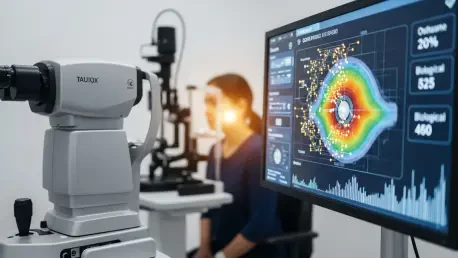
The development of high-accuracy AI models has shifted the paradigm of ocular imaging from vision assessment toward systemic health monitoring. These models utilize deep learning to scrutinize thousands of data points within a fundus image, identifying subtle structural changes that escape the human eye. By establishing a baseline of what a healthy retina looks like at various life stages, the AI can pinpoint exactly where an individual sits on the spectrum of biological aging. This process effectively turns the retina into a non-invasive proxy for the body’s overall condition, reflecting the impact of lifestyle, genetics, and environment on the internal organs.
Identifying the “retinal age gap”—the discrepancy between an individual’s actual age and their AI-predicted ocular age—has emerged as a vital breakthrough in longevity science. When a person’s retina appears significantly older than their chronological years, it suggests that their internal systems are under stress or experiencing premature decline. This gap serves as an early warning system, highlighting hidden health risks that might otherwise go unnoticed during a standard physical examination. Consequently, the ability to quantify this gap provides a tangible metric for health professionals to track, moving the focus of care from reactive treatment to proactive age management.
The Eye as a Diagnostic Window into Systemic Health
The biological link between the retinal microvasculature and the rest of the body’s health is deeply rooted in human anatomy. Because the retina is an extension of the central nervous system and shares similar vascular structures with the brain and heart, it serves as a reliable mirror for systemic conditions. Changes in the tiny blood vessels of the eye often reflect broader issues like hypertension or metabolic dysfunction, making the eye a unique diagnostic window. Understanding this connection allows researchers to move beyond traditional diagnostics, using the eye to gain insights into the aging of the entire cardiovascular and neurological systems.
This technological advancement signals a significant shift in personalized preventative medicine, where the emphasis is on biological rather than chronological metrics. Instead of applying general health guidelines based on a patient’s birth year, doctors can now tailor interventions based on the actual physiological state of the individual. This transition is made possible by the integration of “frictionless” diagnostic tools into existing clinical workflows. Since fundus photography is already a staple of routine optometry, adding an AI analysis layer requires no additional invasive procedures or expensive new equipment, making it a highly scalable solution for population health.
Research Methodology, Findings, and Implications
Methodology
The integrity of the AI model rests on a rigorous training process involving a massive dataset of 50,595 high-quality fundus images obtained from healthy participants. This extensive database provided the foundation necessary for the machine to recognize the standard trajectory of ocular aging across a wide demographic. To refine the model’s predictive power, researchers implemented multitask learning, a process that incorporates external biomarkers like HbA1c blood sugar levels. By teaching the AI to associate specific retinal patterns with glucose regulation, the team enhanced the model’s ability to distinguish between normal aging and damage caused by metabolic stress.
Reliability was further ensured through a two-stage validation process that tested the AI against thousands of additional images from both internal and external sources. These validation sets included diverse populations to confirm that the AI’s findings were consistent regardless of the patient’s background. By subjecting the model to such high standards of scrutiny, the research team was able to demonstrate that the AI could maintain its accuracy in real-world clinical settings. This methodological rigor was essential for establishing the tool as a credible instrument for systemic health assessment.
Findings
The results of the study revealed an impressive level of precision, with the AI achieving a chronological age prediction error margin of only three years. This high degree of accuracy allowed the researchers to confidently identify the “retinal age gap” in participants with various health profiles. A major discovery was that individuals suffering from chronic diseases consistently showed retinas that appeared much older than their actual age. This confirmed that the AI was not just guessing age, but was actually detecting the biological signatures of disease-related wear on the retinal tissue.
Specific correlations were found between accelerated retinal aging and major life-threatening conditions, including cardiovascular disease, diabetes, and stroke. In cases where patients had a history of these ailments, the AI-predicted age was significantly higher than the chronological age, often by several years. This discovery validated the hypothesis that systemic illness leaves a visible footprint on the eye’s microvasculature. Furthermore, the data showed that even in seemingly healthy individuals, a large retinal age gap could serve as a precursor to future health complications, marking it as a powerful tool for early detection.
Implications
The primary implication of this research is the potential transformation of standard eye exams into comprehensive systemic health screenings. In the near future, a trip to the optometrist could provide as much information about heart and brain health as a visit to a specialist. This capability allows for the identification of high-risk patients without the need for invasive procedures, expensive imaging like MRIs, or even simple blood draws. By reducing the barriers to health data, the AI model democratizes access to advanced diagnostic insights, particularly in primary care settings.
Moreover, the ability to visualize “invisible” biological markers opens the door for early intervention and meaningful lifestyle modifications. When patients are presented with evidence that their eyes look a decade older than they should, it provides a compelling motivation to address diet, exercise, and blood pressure. This shift toward proactive care could significantly reduce the burden on healthcare systems by preventing the progression of chronic diseases. The retinal age gap thus becomes more than just a number; it becomes a catalyst for behavioral change and targeted medical treatment.
Reflection and Future Directions
Reflection
Evaluating the AI’s performance reveals that it significantly outpaced previous benchmarking models in the burgeoning field of oculomics. Its success lies in its ability to synthesize complex neural and vascular data into a single, actionable metric that clinicians can easily interpret. However, current limitations must be acknowledged, such as the reliance on cross-sectional data, which provides a snapshot in time rather than a continuous view of a patient’s health journey. While the correlation between retinal age and disease is clear, establishing definitive causation remains a challenge that requires more time and varied data.
Despite these hurdles, the study represents a monumental achievement in medical AI, proving that the eye is indeed a reliable barometer for systemic physiological health. The model’s ability to process vast amounts of visual information and extract relevant biological markers is a testament to the power of deep learning in modern medicine. By focusing on the “frictionless” nature of the tool, the researchers have ensured that their findings have immediate practical applications. The study has successfully laid the groundwork for a new era where ocular health is seen as inseparable from general well-being.
Future Directions
The next phase of this research involves the initiation of prospective longitudinal studies, tracking a cohort of 10,000 individuals to test the model’s true predictive power over time. By monitoring these participants for several years, researchers hope to determine if the retinal age gap can forecast the onset of systemic diseases before any clinical symptoms appear. This would move the AI from a diagnostic aid to a predictive powerhouse, capable of identifying disease risks years in advance. Such studies are crucial for confirming that the ocular changes detected by the AI are indeed early signs of systemic decline.
Beyond cardiovascular and metabolic health, there is significant interest in expanding the AI’s application to other areas of neurology and vascular health. Researchers are exploring whether retinal patterns can predict neurodegenerative conditions like Alzheimer’s or Parkinson’s disease, which are known to involve early changes in the central nervous system tissue of the eye. As the technology evolves, the goal is to create a multi-purpose screening tool that provides a holistic view of human health. This expanded scope will likely solidify the retina’s role as the premier site for non-invasive biological monitoring.
A New Frontier in Longevity and Preventative Care
The introduction of high-accuracy AI models for retinal analysis has successfully bridged the gap between routine optometry and complex systemic diagnosis. By distilling the complexities of biological aging into the “retinal age gap,” the technology has provided a clear and accessible way for both doctors and patients to understand internal health. The retina has officially moved beyond its role as a simple organ of vision, becoming a critical barometer for human longevity and physiological stability. This breakthrough ensures that the eye will remain at the forefront of the quest to extend human healthspan and improve quality of life.
Ultimately, the integration of AI-driven ocular analysis into standard healthcare practices defined a new era of proactive and personalized medicine. Practitioners utilized these non-invasive insights to guide early interventions, effectively shifting the focus from treating advanced disease to maintaining long-term wellness. The research successfully demonstrated that the most profound insights into our health were hidden in plain sight within the delicate structures of the eye. By leveraging the power of artificial intelligence, the medical community took a decisive step toward a future where hidden health risks were identified and addressed long before they could cause systemic harm.