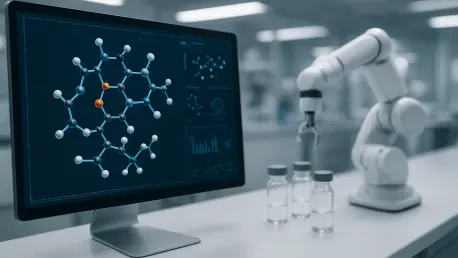

The technological ability to decode the complex molecular signatures of human aging and intervene with precision-engineered molecules has shifted from theoretical biology toward a measurable clinical reality. This evolution is driven by the sophisticated integration of generative artificial intelligence and geroscience, creating a new class of therapeutics known as geroprotectors. Unlike the traditional approach of repurposing existing metabolic drugs, modern efforts prioritize the de novo design of molecules that address both specific clinical pathologies and the underlying drivers of systemic biological decline. The emergence of these technologies represents a pivotal shift in the biopharmaceutical industry, moving the focus from reactive symptom management to the proactive modulation of the aging process itself. This review examines the current state of AI-driven geroprotection, the platforms facilitating these breakthroughs, and the clinical evidence suggesting that biological age reversal is now an achievable outcome.
The Convergence of Generative AI and Geroscience
The core principle of AI-driven geroprotection involves the use of deep learning architectures to navigate the astronomical complexity of human biology. Traditional drug discovery has long been plagued by a high failure rate and an inability to account for the multi-systemic impact of aging. By contrast, generative AI platforms can model thousands of biological variables simultaneously, identifying targets that influence both specific diseases and the general hallmarks of aging. This dual-purpose engineering is what distinguishes this field from conventional medicine; a single molecule is designed to treat a visible ailment, such as lung fibrosis, while concurrently repairing the molecular markers that indicate biological age.
These technologies emerged as a necessary response to the inefficiencies of manual research, evolving into autonomous systems capable of predicting how a compound will interact with cellular pathways over time. In the broader technological landscape, these AI systems represent the pinnacle of computational biology, where deep learning does not just assist human researchers but actively proposes novel chemical structures that have never existed in nature. The result is a streamlined pipeline that bridges the gap between digital data and clinical application, effectively turning biological time into a variable that can be influenced by precision chemistry.
The synergy between these two fields is best exemplified by the move toward “intelligent” target identification. Rather than looking for a protein that merely stops a symptom, AI models seek out nodes in the biological network where disease and aging intersect. This allows for the development of therapeutics that possess systemic benefits, potentially reducing the risk of multiple age-related comorbidities through a single intervention. As these models become more refined, the ability to predict long-term safety and efficacy increases, lowering the barriers to entry for complex longevity trials that were previously considered too risky or expensive to pursue.
Core Platforms and Validating Biomarkers
Generative Discovery Engines: PandaOmics and Chemistry42
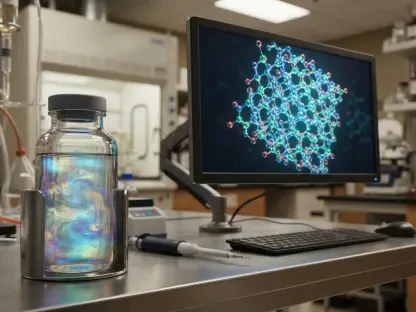
PandaOmics serves as the primary engine for target identification, utilizing vast repositories of omics data to pinpoint biological pathways that drive cellular decline. By analyzing transcriptomic, proteomic, and clinical data, the platform identified kinases such as TNIK that play a pivotal role in both tissue scarring and cellular senescence. This identification process is unique because it ranks targets based on their association with the hallmarks of aging, ensuring that any drug developed will have broad geroprotective potential. The depth of this analysis allows researchers to see beyond the obvious, finding hidden connections within the human interactome that human observation might miss.
Once a target is confirmed, Chemistry42 functions as the generative chemistry component, designing novel small molecules from scratch. This platform utilizes a suite of generative models and reinforcement learning to optimize compounds for specific parameters, including potency, metabolic stability, and safety. By running millions of virtual experiments, the system can bypass the “trial and error” phase that typically consumes years of preclinical research. This integrated approach dramatically accelerated the timeline from the initial discovery of a target to the nomination of a drug candidate to a mere 18 months, a feat that would be impossible using conventional methods.
The relationship between these two platforms creates a closed-loop system where data from one stage informs the design in the next. Chemistry42 does not just produce a list of chemicals; it generates structures that are specifically tailored to the biological environment defined by PandaOmics. This level of precision ensures that the resulting molecules have a higher probability of success in clinical trials, as they are engineered with a comprehensive understanding of the target’s role in both health and disease. The efficiency of this process is setting a new standard for the industry, emphasizing speed without compromising the rigor of the scientific inquiry.
Proteomic Aging Clocks and Biological Age Quantification
The technological validation of these new geroprotectors relies on advanced proteomic aging clocks, which provide a data-driven metric for rejuvenation. Traditional clinical trials often rely on survival rates or symptom relief, but longevity research requires a way to measure the “rate” of aging itself. Clocks like ProtAge and OrganAge analyze thousands of proteins in the blood to determine an individual’s biological age, which may differ significantly from their chronological age. These models are trained on massive datasets, such as the UK Biobank, allowing them to detect subtle shifts in the body’s molecular signature that indicate a slowing or reversal of the aging process.
By utilizing longitudinal Olink proteomic data, these models offer a high-resolution view of how a therapeutic agent affects the body over several weeks or months. This is significant because it provides a standardized language for discussing rejuvenation, moving it from a speculative concept to a quantifiable clinical outcome. When a drug like Rentosertib is tested, these clocks can determine if the patient’s protein profile has shifted toward a younger state, providing immediate feedback on the drug’s systemic impact. This methodology allows for shorter, more efficient trials that can demonstrate anti-aging effects long before a patient would naturally show signs of age-related disease.
These clocks also serve as a critical tool for comparative analysis, enabling researchers to see how different dosages affect the aging rate. Because they are based on diverse machine learning architectures—ranging from simple regression to complex neural networks—the consistency of their results adds a layer of robustness to the findings. If multiple independent clocks agree that a patient has “lost” three years of biological age, the evidence becomes much harder to dismiss as a statistical anomaly. This transition toward objective, proteomic-based metrics is essential for the future of the field, providing the empirical foundation needed for regulatory acceptance and broader clinical use.
Emerging Trends in Longevity Therapeutics
Recent innovations in the sector have shifted the focus from senolytics, which aim to kill aging cells, toward senomorphics, which instead modify the behavior of these cells. Senescent cells often remain in the body and secrete inflammatory signals that damage surrounding tissue, a phenomenon known as the senescence-associated secretory phenotype. Senomorphic agents aim to “silence” these signals without destroying the cells, which can be a safer and more targeted approach for chronic conditions. This trend reflects a growing understanding that aging is not just about the accumulation of “bad” cells, but about the dysfunctional communication between all cells in a biological system.
There is also an increasing adoption of “dual-purpose” therapeutic strategies, where drugs are developed for traditional regulatory approval while being monitored for systemic anti-aging benefits. This approach solves the commercial problem of longevity research by providing a clear path to market through existing disease categories, such as respiratory or metabolic health. By targeting diseases that share common pathways with aging, companies can justify the high cost of development while building a library of geroprotective agents. This dual-pathway model is becoming the blueprint for the next generation of biotech firms, as it balances the need for immediate clinical impact with the long-term goal of lifespan extension.
Furthermore, the industry is moving toward more transparent and open-source frameworks to ensure that AI-generated results are reproducible. As the complexity of these models grows, there is a risk of model-specific biases that could lead to false positives in drug discovery. To counter this, researchers are increasingly utilizing multi-clock parallel analysis and publishing their code on public repositories. This collaborative approach not only validates the findings of individual companies but also accelerates the growth of the entire ecosystem by allowing different teams to build upon the same data-driven foundations.
Real-World Applications and Clinical Impact
The primary application of this technology is currently seen in the treatment of Idiopathic Pulmonary Fibrosis (IPF), a devastating lung disease where AI-designed candidates have shown remarkable efficacy. Rentosertib, an AI-discovered small molecule, demonstrated the ability to not only stop the decline of lung function but potentially improve it, which is a rare outcome in chronic respiratory care. This success serves as a powerful proof of concept for the “dual-purpose” model, showing that a drug designed to target a specific pathology can also have broader regenerative effects on the organ system it treats.
Beyond respiratory health, clinical data from recent trials suggest that these therapeutics can induce a systemic biological age reversal of three to six years in participants. This reversal is measured through the proteomic clocks mentioned earlier, providing evidence that the drug’s impact extends far beyond the lungs. Such findings indicate that the systemic inflammatory markers and metabolic pathways associated with aging are being actively modulated. This has profound implications for preventative medicine, as it suggests that short-term pharmacological interventions could potentially “reset” an individual’s biological clock, reducing the long-term risk of multiple age-related conditions.
Sector-wide implementations are also expanding, with global pharmaceutical giants integrating these AI-driven discovery engines into their own pipelines. Partnerships between AI firms and traditional drug makers are now focusing on oncology, metabolic health, and neurodegeneration, searching for the “TNIK” of other diseases. This integration is transforming the industry into a data-first environment where the focus is on the underlying biology of time. As more AI-designed drugs enter Phase II and Phase III trials from 2026 to 2028, the clinical impact of this technology will likely become the dominant narrative in modern medicine.
Technical Hurdles and Regulatory Obstacles
Despite the rapid progress, a primary technical challenge remains the “black box” nature of many deep learning models. While an AI can identify a target and design a molecule with high efficiency, it does not always provide a clear mechanistic explanation for why that specific target is effective. This lack of interpretability can make it difficult to satisfy the rigorous requirements of clinical peer review and regulatory scrutiny. Researchers are currently working on “explainable AI” frameworks that can bridge this gap, providing a narrative for the machine’s decisions and ensuring that the biological pathways are fully understood before large-scale human testing.
Regulatory hurdles also remain a significant barrier, as the FDA and other global agencies do not currently recognize aging itself as a treatable disease. This forces companies to find specific “indications,” such as IPF or kidney disease, to gain approval for their drugs. While the dual-purpose strategy provides a workaround, it limits the ability of doctors to prescribe these medications solely for the purpose of healthspan extension. To address this, the industry is actively participating in the Biomarker Qualification Program, which aims to establish composite endpoints that could eventually allow for the direct approval of geroprotectors based on their ability to slow molecular aging.
Furthermore, there is the challenge of ensuring that these high-tech interventions are accessible and affordable for the general population. The initial development of AI-driven drugs is expensive, and there is a risk that the benefits of biological age reversal will only be available to the wealthy. However, the efficiency of the AI discovery process actually has the potential to lower drug prices in the long run by reducing the cost of R&D failure. The focus must remain on creating scalable platforms that can produce a variety of geroprotectors, ensuring that the technology benefits the global aging population rather than a select few.
Future Outlook and Global Longevity
The future of the field is heading toward “Precision Geroprotection,” where AI models will design personalized therapeutic regimens based on an individual’s specific proteomic profile. Just as oncology has moved toward personalized medicine, longevity science will eventually account for the fact that every person ages differently. By analyzing a patient’s biological age clock, doctors of the future may be able to prescribe a specific “cocktail” of AI-designed senomorphics tailored to that individual’s unique molecular needs. This would maximize the efficacy of the treatment while minimizing the risk of adverse reactions.
Potential breakthroughs also include the development of state-of-the-art foundation models that can predict the long-term impact of a drug on human lifespan without waiting decades for longitudinal results. These models could simulate the aging process in a virtual environment, allowing researchers to see how a molecule affects mortality risk over thirty or forty years in a matter of hours. This would fundamentally change the way we approach clinical trials, moving from observation-based science to predictive modeling. Such a shift would allow for the rapid iteration of anti-aging strategies and the potential discovery of “universal” geroprotectors.
The long-term societal impact of these technologies is profound, as extending the healthy human lifespan could redefine the global economy. By reducing the burden of chronic age-related disease, societies could save trillions of dollars in healthcare costs and maintain a more productive, engaged workforce. This is not just about living longer; it is about living better, ensuring that the later years of life are spent in good health rather than in a state of gradual decline. As these AI systems continue to mature, they are poised to become the most important tool in the history of medicine, shifting the focus of human health from the management of decay to the maintenance of vitality.
Summary of AI-Driven Therapeutic Progress
The review demonstrated how AI-driven platforms successfully transitioned from theoretical concepts to practical engines for drug discovery, as evidenced by the clinical validation of Rentosertib. The researchers utilized generative models to bypass traditional bottlenecks, achieving a speed of development that once seemed impossible within the pharmaceutical industry. By aligning target discovery with the fundamental hallmarks of aging, the field established a new paradigm for “dual-purpose” therapeutics that addressed both immediate disease and long-term biological decline. The evidence showed that proteomic aging clocks provided a reliable and standardized metric for measuring the success of these interventions, making biological age reversal a quantifiable reality in human subjects.
The analysis further clarified that the success of these platforms depended on the integration of diverse AI architectures, which worked in concert to design, validate, and monitor novel chemical entities. The move toward senomorphic agents and precision longevity indicated a sophisticated shift in the industry’s approach to cellular health. However, the study also identified that the regulatory landscape and the “black box” nature of AI remained significant hurdles that required ongoing technical and legal innovation. Ultimately, the progress made from 2026 to the present day suggested that the industry moved closer to a future where the biology of time was no longer an unalterable constant but a manageable clinical variable. The next steps involved the continued standardization of biomarkers and the expansion of clinical trials to broader populations to ensure global accessibility.