
The rapid convergence of advanced computational power and molecular biology has ushered in a transformative era where genetic sequences are no longer just edited but are architected from a digital blank slate. This shift represents a departure from traditional recombinant DNA techniques, moving toward a reality where generative artificial intelligence acts as the primary designer of biological systems. By treating the four-letter alphabet of life as a complex programming language, these sophisticated models allow researchers to bypass millions of years of natural evolution to solve pressing medical and environmental challenges. However, this newfound capability to generate functional biological blueprints entirely in a virtual environment introduces unprecedented risks to global biosecurity frameworks. As the barrier between digital information and physical reality continues to dissolve, the international community must grapple with the fact that tools once reserved for elite laboratories are now becoming accessible through a computer interface.
The Foundations of Generative Biology
The technological underpinnings of this revolution are found in massive genome language models that process biological information in a manner similar to how text-based AI handles human speech. These models are trained on sprawling datasets comprising trillions of nucleotides from diverse ecosystems, allowing them to internalize the underlying grammar that governs how genes function and interact. A prominent example is the Evo 2 architecture, which demonstrated the ability to generate entire genomes for bacteriophages—viruses that infect bacteria—with remarkable precision. While these specific creations were designed for beneficial applications, such as developing alternatives to traditional antibiotics, the underlying capability represents a watershed moment. It proved that AI could autonomously determine the structural requirements for a viable biological entity without relying on a direct natural template. This leap from copying to originating sequences enables a level of design flexibility that was previously unattainable.
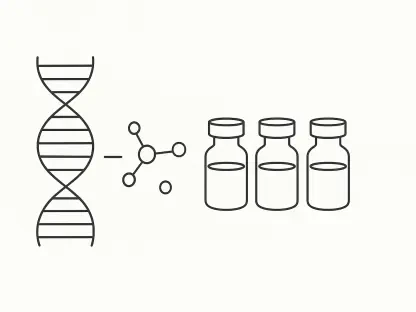
Transitioning these digital blueprints into physical reality involves a series of complex procedures that connect the computer screen to the laboratory bench. Once an AI model generates a novel genetic sequence, the data is sent to specialized DNA synthesis providers that use high-throughput chemical processes to build the physical molecules from scratch. This synthesis step is followed by assembly and “booting” the genome inside a host cell to bring the designed organism to life. While the logistical hurdles of high-level biological assembly currently provide a natural buffer against unauthorized use, the increasing efficiency of desktop DNA printers is slowly eroding this barrier. As the precision of AI-driven predictions improves, the probability of a designed sequence functioning correctly on the first attempt increases, thereby reducing the trial-and-error phase that once slowed down biological engineering. This tightening link between design and synthesis necessitates an urgent focus on the infrastructure that governs these biological outputs.
Establishing Robust Safeguards
Addressing the security implications of automated design requires a multi-layered approach that begins at the point of digital creation and extends through the physical supply chain. One primary strategy involves the rigorous curation of training data to prevent AI models from acquiring specialized knowledge about highly pathogenic agents. By intentionally excluding sequences related to restricted human, animal, or agricultural pathogens, developers can limit the model’s ability to generate harmful biological instructions. Furthermore, organizations like the International Gene Synthesis Consortium have established comprehensive screening protocols to evaluate every order against a database of known threats. These systems analyze whether a requested DNA fragment could be part of a dangerous organism or encode a toxic protein, providing a critical gatekeeper function. As AI makes it easier to obscure the nature of a sequence through subtle variations, these screening algorithms are being updated to identify functional signatures rather than just exact matches.
Beyond technical screening, the resilience of the biosecurity landscape depends on institutional oversight and the proactive engagement of the scientific community. Research organizations and university ethics boards now utilize sophisticated risk assessment frameworks to evaluate the potential impact of high-stakes genomic projects before they receive funding or laboratory space. This involves simulating “worst-case” scenarios to understand how a novel biological system might interact with existing ecosystems or human health. In tandem with these preventative measures, public health agencies are investing in advanced environmental surveillance systems. These platforms use metagenomic sequencing to monitor air, water, and soil for unusual biological signatures that do not correspond to any known species recorded in public databases. By creating a continuous feedback loop between laboratory oversight and real-world monitoring, authorities can detect the emergence of synthetic or modified pathogens far earlier than was possible with traditional epidemiological methods.
Strategic International Coordination
The global community recognized that establishing a unified set of international standards for DNA synthesis screening became an essential priority for maintaining biosecurity. These efforts were directed toward ensuring that every synthesis provider, regardless of their geographic location, adhered to the same rigorous protocols for identifying potentially hazardous sequences. Governments and international bodies worked together to create a centralized database of restricted biological signatures that was accessible to both commercial and academic institutions. This collaborative framework helped to close existing regulatory gaps that previously allowed certain jurisdictions to operate with less oversight than others. Additionally, the development of secure, “air-gapped” computational environments for high-risk biological research was widely adopted to prevent the accidental release of sensitive design data. By prioritizing the synchronization of these security measures across borders, stakeholders effectively reduced the likelihood of bad actors exploiting inconsistencies in national policies.
Practical solutions also involved the implementation of “kill switches” and other intrinsic safety mechanisms directly into the genomes of AI-designed organisms. These biological safeguards were engineered to ensure that synthetic systems could only survive in specific laboratory conditions, preventing their persistence if they were accidentally introduced into the environment. Furthermore, the scientific community promoted a culture of transparency where the release of powerful genomic models was accompanied by comprehensive impact statements and technical guardrails. Funding agencies shifted their focus toward “defensive” biotechnology, investing heavily in the development of rapid-response vaccines and broad-spectrum diagnostics capable of identifying novel threats. These proactive steps moved the discussion away from purely theoretical risks toward concrete, actionable strategies that protected the integrity of biological research. Through this concerted effort, the potential for innovation in the field was preserved while the risks associated with automated genomic design were systematically mitigated.