
The difference between survival and fatality in sudden cardiac arrest (SCA) is often measured in seconds, yet the medical community has historically lacked the tools to see the storm gathering before it breaks. For decades, the unpredictability of SCA has been its most lethal characteristic, frequently striking individuals who appear healthy or lack a known history of heart disease. This systemic vulnerability is now being addressed by a sophisticated integration of artificial intelligence and clinical diagnostics. By moving beyond traditional risk assessments, which often rely on broad demographic categories, new AI-driven models are beginning to identify the subtle precursors of electrical failure in the heart long before a physical collapse occurs.
The Evolution of AI in Preventive Cardiology
Preventive cardiology has traditionally operated on a reactive basis, focusing on cholesterol levels and blood pressure while often missing the complex electrical instability that triggers cardiac arrest. The emergence of AI in this space represents a fundamental shift from statistical probability to algorithmic precision. These technologies do not merely analyze data; they seek out non-linear relationships between disparate clinical signals that would be impossible for a human clinician to synthesize during a standard consultation.
As global healthcare systems face an increasing burden from cardiovascular diseases, the relevance of this technology cannot be overstated. By automating the screening process through existing medical infrastructure, AI provides a scalable solution to a problem that has long plagued emergency medicine. The goal is to transform the standard 12-lead EKG from a snapshot of current heart health into a predictive map of future stability, effectively bridging the gap between routine checkups and emergency intervention.
Core Modeling Approaches and Data Integration
Integrated Electronic Health Record Analysis
The most robust AI systems today rely on a deep scrutiny of Electronic Health Records (EHR) to build a multidimensional risk profile. By analyzing over 150 discrete clinical features—including previous laboratory results, historical diagnoses, and even subtle changes in medication adherence—the AI can detect a pattern of decline that is often invisible in a single appointment. This approach is unique because it considers the patient as a moving target, tracking how different comorbidities interact over time to increase vulnerability.
Unlike traditional scoring systems that weigh every factor equally, these deep learning models assign dynamic importance to variables based on the individual’s unique history. For instance, a slight electrolyte imbalance might be ignored in a healthy athlete but flagged as a critical warning sign in a patient with a specific pharmaceutical profile. This level of nuance allows for a highly personalized risk assessment, moving the industry away from the “one size fits all” approach that has historically failed to catch outliers.
Deep Learning for Electrocardiogram Interpretation
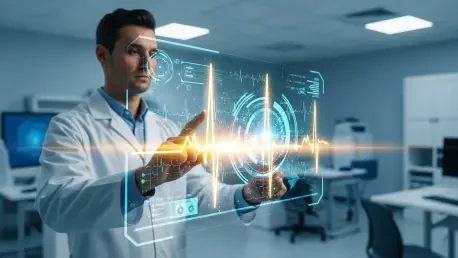
While EHR data provides the context, deep learning for EKG interpretation provides the raw signal analysis necessary for high-accuracy predictions. These models are trained to identify “electrical signatures”—microscopic deviations in the heart’s rhythm and wave patterns—that are entirely invisible to the human eye. By processing millions of historical EKGs, the AI recognizes the specific morphology associated with imminent cardiac failure, even when the heart appears to be beating normally to a trained cardiologist.
This technology is a significant departure from standard automated EKG interpretations, which typically focus on rhythm classification like atrial fibrillation. Instead, the AI looks for “silent” markers of structural heart disease or repolarization abnormalities. The power of this implementation lies in its efficiency; it can turn a standard, inexpensive test into a high-level diagnostic tool, making advanced cardiac screening accessible without the need for costly imaging like an MRI or CT scan.
Recent Innovations in Risk Stratification Precision
Recent breakthroughs have significantly narrowed the margin of error in risk stratification, shifting the needle from population-level statistics to individual risk ratios. While older models might suggest a patient has a “high” risk compared to the general public, recent research has demonstrated the ability to quantify that risk with startling specificity, such as identifying a 1-in-100 chance of an event within a specific timeframe. This transition toward high-precision ratios is crucial because it provides clinicians with a concrete threshold for intervention.
These innovations are driven by the use of “combined models” that merge the electrical data of an EKG with the clinical data of the EHR. By synthesizing these two data streams, the AI can filter out false positives that might arise from EKG artifacts or temporary physiological stress. The result is a more reliable metric that empowers doctors to make life-saving decisions, such as recommending an implantable cardioverter-defibrillator (ICD) or adjusting high-risk medications, with far greater confidence than was possible just a few years ago.
Real-World Clinical Applications and Implementations
The deployment of these AI tools is already manifesting in hospital systems and outpatient clinics, where they serve as a digital “second opinion.” In practice, when a patient undergoes a routine EKG, the AI silently audits the results and cross-references them with the patient’s medical history. If a high-risk threshold is met, the system triggers an alert for the primary care physician or cardiologist. This workflow ensures that high-risk individuals do not slip through the cracks of a busy healthcare environment.
Beyond simple alerts, the technology is being used to identify modifiable risk factors that were previously overlooked. For example, the AI might highlight how a specific combination of an antibiotic and a diuretic is causing a subtle QT-interval prolongation in a specific patient. By catching these medication interactions or electrolyte imbalances early, healthcare providers can proactively resolve the issue. This application effectively moves the technology from a purely diagnostic role into a therapeutic one, preventing the cardiac arrest from ever occurring.
Technical Hurdles and Implementation Obstacles
Despite the impressive performance of these models, the path to universal adoption is fraught with technical and regulatory hurdles. One of the primary concerns is data generalizability; a model trained on a specific population in a metropolitan area may not perform with the same accuracy in a rural or demographically different setting. Validating these tools across diverse ethnicities and age groups remains a critical priority to ensure that the AI does not inherit or amplify existing healthcare biases.
Furthermore, integrating these sophisticated algorithms into legacy healthcare infrastructures presents a logistical challenge. Many hospital systems utilize disparate EHR platforms that do not always communicate seamlessly, making it difficult to feed the AI the comprehensive data it needs. There is also the “black box” problem, where clinicians may be hesitant to act on an AI’s recommendation if they cannot clearly see the logic behind the risk score. Ongoing development is currently focused on “explainable AI,” which aims to provide physicians with the specific data points that triggered a high-risk alert.
The Future of Proactive Cardiac Care
Looking toward the horizon, the integration of predictive AI into wearable technology stands as the next major frontier in cardiac care. While current medical-grade models rely on 12-lead EKGs, future iterations are expected to utilize the continuous data streams provided by smartwatches and portable monitors. This would allow for real-time, 24/7 monitoring of at-risk individuals, moving the diagnostic window from a single point in time at a clinic to a constant, protective presence in the patient’s daily life.
The long-term impact on public health could be transformative, potentially slashing the mortality rates of sudden cardiac arrest by enabling preemptive treatments on a massive scale. As these models become more refined and easier to deploy, they may become a standard part of every physical examination. We are moving toward a reality where “sudden” cardiac arrest is no longer a surprise, but rather a preventable event that was flagged weeks or months in advance.
Final Assessment of AI Predictive Tools
The implementation of artificial intelligence in cardiac arrest prediction demonstrated a clear ability to outperform traditional diagnostic methods by identifying subtle, non-linear risk factors. The technology successfully bridge the gap between reactive emergency care and proactive risk management, proving that the integration of EKG data and electronic health records provided a far more accurate assessment than either source could offer alone. While hurdles regarding data diversity and system integration remained, the transition toward high-precision individual risk ratios marked a definitive turning point in clinical cardiology.
Ultimately, these tools offered a viable solution to the long-standing challenge of identifying asymptomatic patients at risk of sudden death. The shift toward automated, algorithmic screening reduced the reliance on human intuition and broadened the scope of preventive care. As the medical community moved toward a more data-centric approach, the impact of AI on cardiac health became undeniable, setting a new standard for how clinicians predicted, managed, and ultimately prevented life-threatening electrical events in the heart.