
The current landscape of pharmaceutical innovation is defined by a paradox where technological potential is at an all-time high, yet the economic reality of drug discovery remains perilously unstable. Bringing a single molecule from the laboratory bench to the patient bedside now frequently exceeds a capital investment of $2 billion, while the clinical success rate for candidates remains stubbornly low at approximately 10 percent. Most of these failures are not the result of poor initial science but rather a failure to account for the immense biological variability found in human populations. Consequently, the industry is witnessing a strategic pivot toward computational pathology and artificial intelligence as essential tools for de-risking these massive investments. By transforming subjective tissue analysis into a standardized, quantitative science, developers are now able to identify successful therapeutic signals much earlier in the clinical lifecycle, effectively pruning the pipeline of non-viable candidates before they consume excessive resources. This transition represents a shift from a “fail fast” mentality to a “succeed by design” strategy, where precision medicine is no longer a goal but the foundational operating standard.
Optimizing Clinical Trials Through Precision Quantification
Overcoming Biological and Operational Noise: The Standardization Challenge
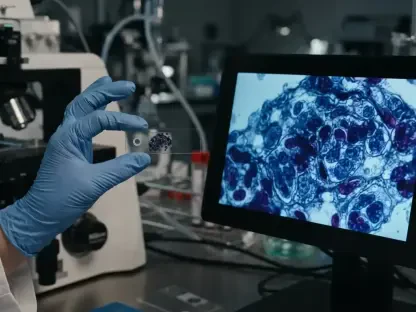
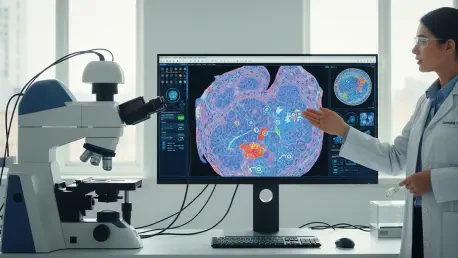
Traditional pathology has long been hampered by significant variability across global clinical sites, where differences in tissue staining and preparation protocols can obscure critical data. Even when using standardized reagents, the subtle nuances in laboratory environments can lead to “noise” that complicates the interpretation of clinical results. AI-driven tissue quantification addresses this by utilizing whole-slide imaging to provide a scalable and objective method for reading tissue samples. By digitizing the entire glass slide, researchers can apply automated algorithms that maintain a consistent standard of analysis regardless of where the sample was collected. This technological intervention acts as a second set of eyes, ensuring that subtle morphological features are not missed due to human fatigue or environmental inconsistency. Reducing this operational noise is critical for maintaining the integrity of clinical trials, as it prevents the misinterpretation of data that could otherwise lead to the premature termination of a promising drug candidate.
The impact of high-fidelity imaging extends beyond mere consistency; it provides a framework for the long-term preservation of irreplaceable patient tissue. In trials involving critically ill populations, such as those in late-stage oncology, the amount of available tissue is often extremely limited. Traditional methods that require multiple physical sections can quickly exhaust these samples, leaving no material for retrospective analysis or secondary testing. By moving to a digital-first approach, a single high-quality scan can be analyzed by multiple AI models simultaneously without damaging the physical specimen. This conservation of material allows for a more comprehensive investigation of the biological response to a drug, enabling researchers to look back at earlier phases of a trial with new questions as scientific understanding evolves. This capability transforms the clinical trial from a static event into a dynamic data resource, maximizing the information extracted from every patient interaction while minimizing the physical burden on the participants themselves.
Implementing Quantitative Biomarkers for Early Detection: Moving Beyond Observation
Modern AI models, particularly those leveraging Multiple-Instance Learning, are currently revolutionizing the way researchers identify and utilize biomarkers. Unlike traditional biomarkers that often rely on a binary “positive or negative” result, AI-enabled quantitative biomarkers provide a continuous spectrum of data that reflects the complexity of human biology. These tools analyze standard hematoxylin and eosin (H&E) tissue sections to infer complex characteristics of the tumor microenvironment that were previously invisible to the naked eye. By identifying specific morphologic patterns that correlate with therapeutic response, developers can enrich their clinical trials with patients most likely to benefit from the intervention. This predictive power allows for a more focused development path, reducing the sample sizes required for clinical trials and accelerating the time it takes to reach a definitive conclusion regarding a drug’s efficacy and safety profile.
In the specialized field of oncology, these quantitative tools are becoming indispensable for navigating the intricacies of immuno-oncology. While traditional markers like PD-L1 have provided a baseline for patient selection, they often fail to capture the full picture of how a tumor interacts with the immune system. AI models can now quantify the spatial relationships between different cell types, such as the proximity of T-cells to tumor cells, providing a much more nuanced understanding of the drug’s mechanism of action. This depth of analysis allows researchers to detect early signals of efficacy long before traditional clinical endpoints, such as tumor shrinkage or overall survival, can be measured. By bridging the gap between raw histology and clinical success, these computational models provide a roadmap for optimizing treatment regimens and identifying potential resistance mechanisms early in the development process, thereby significantly reducing the financial risk associated with late-stage trial failures.
Ensuring Global Scalability and Regulatory Compliance
Bridging the Gap: Research to Real-World Application
A major risk for any diagnostic tool is the phenomenon known as “domain shift,” where an AI model’s performance degrades when it encounters samples from a new laboratory with different equipment or protocols. In a research setting, variables are tightly controlled, but the real world is far more chaotic. To mitigate this, developers are now implementing advanced stain-normalization techniques that allow AI models to generalize across various laboratory environments. These techniques, which often involve generative adversarial networks or hybrid stain-aware models, mathematically adjust the digital image to a standardized reference point. This ensures that the diagnostic tool remains accurate whether the tissue was processed in a premier academic medical center or a local community hospital. This technical resilience is a prerequisite for any companion diagnostic aiming for global regulatory approval, as it proves that the tool is robust enough to provide reliable results in diverse clinical settings.
The successful transition from the laboratory to the clinic also depends on the ability of these tools to integrate seamlessly into existing healthcare workflows. If a diagnostic requires significant changes to how a lab operates, its adoption will be slow, regardless of its clinical value. AI models that can work with standard-of-care tissue preparations, such as the ubiquitous H&E slide, have a significant advantage in this regard. By extracting high-level insights from the most basic and common tissue stains, these tools reduce the need for expensive and specialized secondary testing. This not only lowers the overall cost of the diagnostic process but also ensures that the benefits of precision medicine are accessible to a wider range of patients. Scaling these technologies globally requires this focus on technical adaptability, ensuring that the geographic location of a patient does not determine the quality of the diagnostic insights available to their clinical team.
Building Cloud-Native and Regulatory-Aligned Infrastructure: The Digital Backbone
Implementing advanced AI in pathology requires a sophisticated, cloud-native infrastructure that can handle the massive data volumes generated by whole-slide imaging. A single digital slide can be several gigabytes in size, and a global clinical trial can generate thousands of such images. Modern infrastructure must not only provide the storage and compute power necessary for these analyses but also meet strict global security and audit standards. By aligning with Good Machine Learning Practices and utilizing clinically validated scanning hardware, pharmaceutical companies can ensure data integrity throughout the drug development lifecycle. Features like role-based access control, end-to-end encryption, and comprehensive audit trails are now standard requirements to satisfy international data privacy regulations like HIPAA and GDPR. This digital backbone allows for real-time collaboration between global research teams, ensuring that data is analyzed consistently and securely across borders.
Beyond data security, the move toward cloud-native systems facilitates a level of transparency and reproducibility that was previously impossible. Every step of the analysis, from the initial scan to the final AI-generated report, is documented and traceable. This level of detail is essential for regulatory submissions, where agencies require proof that the results are not just accurate but also reproducible. Furthermore, cloud environments allow for the continuous monitoring of AI model performance, enabling developers to detect and address any “model drift” that may occur over time. This proactive approach to maintenance ensures that the diagnostic tool remains valid throughout its entire clinical life. By investing in this regulatory-aligned infrastructure, companies are not just managing data; they are building a foundation of trust with regulatory bodies and the broader medical community, which is essential for the long-term success of AI-driven diagnostics.
Navigating the Complex Global Regulatory Landscape: Strategy and Execution
The regulatory environment for diagnostics has become increasingly challenging as requirements in the United States and Europe have begun to diverge significantly. While the United States Food and Drug Administration offers relatively clear co-development pathways and specific programs for oncology diagnostics, the European Union’s In Vitro Diagnostic Regulation (IVDR) has introduced a new era of stringent oversight. Under IVDR, many companion diagnostics have been reclassified into higher-risk categories, requiring more extensive clinical evidence and review by notified bodies. This shift has extended development timelines and increased the workload for regulatory affairs teams. Consequently, early and coordinated regulatory planning is no longer just an operational task; it is a critical strategic necessity. Companies must align their therapeutic and diagnostic development timelines from the earliest stages to avoid costly delays and the risk of significant rework during global deployment.
To navigate this complexity, many pharmaceutical entities are adopting a more proactive engagement model with regulatory agencies. This includes participating in pilot programs and seeking early scientific advice to ensure that the clinical trial design will meet the evidentiary requirements of multiple jurisdictions simultaneously. This global perspective is vital because a drug’s commercial success often depends on its availability in all major markets. If a companion diagnostic is approved in the United States but delayed in Europe due to IVDR complications, it can severely limit the drug’s market penetration and patient impact. By integrating regulatory strategy into the core of the development process, companies can anticipate potential hurdles and build the necessary flexibility into their clinical programs. This foresight allows them to manage the risks associated with a changing legal landscape, ensuring that patients around the world can benefit from new therapies as soon as they are proven safe and effective.
The Future of Integrated Diagnostic Frameworks
Enhancing Human Expertise Through Augmentation: The Collaborative Model
The integration of AI into pathology is fundamentally designed to augment the role of the pathologist rather than replace the human expert. Clinical judgment, which incorporates a patient’s entire medical history and the nuances of disease presentation, remains the exclusive domain of the human clinician. However, AI can transform the pathologist’s daily workflow by taking over repetitive and time-consuming tasks that are prone to human error. For example, AI algorithms can count thousands of inflammatory cells or enumerate mitotic figures with a level of precision and speed that is simply impossible for a human to match. By automating these “low-value” tasks, the technology frees pathologists to focus their energy on integrative reasoning and complex diagnostic synthesis. This “clinician-in-the-loop” approach ensures that every AI-generated output is scrutinized by human oversight, maintaining the highest possible standard for patient safety and diagnostic accuracy.
This collaborative model also addresses the growing global shortage of trained pathologists, which has become a significant bottleneck in many healthcare systems. By increasing the efficiency of each individual pathologist, AI helps labs keep pace with the increasing volume and complexity of diagnostic testing. Furthermore, AI can serve as a powerful educational and quality assurance tool, providing a standardized “second opinion” that can help less experienced clinicians navigate difficult cases. In 2026, the value of AI is seen not just in its raw computational power, but in its ability to empower human experts to work at the top of their licenses. This synergy between human intuition and machine precision is creating a more resilient diagnostic framework, where the strengths of both are utilized to overcome the inherent limitations of each. The result is a more robust, efficient, and reliable diagnostic process that directly benefits patient outcomes across all medical specialties.
Advancing Toward Multimodal Data and Global Equity: A Holistic View
The next generation of AI models is moving beyond histology alone to embrace a multimodal approach that integrates tissue morphology with genomics, proteomics, and clinical records. By combining these different layers of biological information, researchers can gain a much more holistic view of disease progression and treatment response. For instance, an AI model might find that a specific morphological pattern in a tumor biopsy, when combined with a particular genetic mutation, predicts a 90 percent likelihood of response to a new targeted therapy. This level of integrated insight promises to significantly improve survival predictions and allow for more personalized treatment plans. As these multimodal models become more sophisticated, they will enable a deeper understanding of the biological drivers of disease, paving the way for the discovery of entirely new classes of therapeutic targets that were previously obscured by the siloed nature of medical data.
Beyond its technical capabilities, AI-driven digital pathology has the potential to democratize access to high-quality healthcare on a global scale. By providing expert-level diagnostic insights through cloud-based platforms, these technologies can bridge the gap in regions where specialist pathology expertise is scarce. A clinic in a low-resource setting can upload a digital scan and receive a quantitative analysis that would otherwise require a trip to a major urban medical center. This trend toward equitable AI is a major step toward improving global health outcomes and ensuring that the benefits of precision medicine are not restricted to wealthy nations. As the infrastructure for digital pathology becomes more widespread, the ability to provide advanced diagnostics at a lower cost will be a key driver in reducing health disparities. This vision of a more equitable future is driving significant investment in AI tools that are not only powerful but also scalable and adaptable to diverse clinical environments worldwide.
Using Strategic Collaboration as a Competitive Advantage: Speed and Scale
In the high-stakes world of drug development, building comprehensive diagnostic capabilities from the ground up is often inefficient and prohibitively expensive. Strategic collaboration has emerged as a vital competitive advantage, allowing pharmaceutical companies to leverage pre-validated datasets and existing antibody libraries held by specialized diagnostic partners. These partnerships enable therapeutic and diagnostic development to occur in parallel, ensuring that the companion diagnostic is ready at the exact moment the drug receives regulatory approval. This alignment on evidence generation and regulatory strategy from the outset significantly reduces late-stage risks and compresses the time-to-market. Collaboration is no longer just an operational choice; it is a way to scale innovation rapidly without sacrificing the scientific rigor required for clinical success. By working together, different entities can pool their resources and expertise to solve complex biological problems that neither could address alone.
Furthermore, these collaborations often extend into the realm of data sharing, where aggregated and anonymized datasets are used to train more robust AI models. This collective approach to data allows for the development of tools that are representative of diverse patient populations, further reducing the risk of model bias. Platform-based models, where multiple companies contribute to and benefit from a shared technological infrastructure, are becoming increasingly common. This ecosystem-wide approach to innovation helps to standardize the industry, making it easier for new technologies to be adopted and integrated into clinical practice. For a drug developer in 2026, the ability to select the right diagnostic partner is just as important as the quality of the molecule itself. These strategic alliances are the engines of modern precision medicine, providing the specialized skills and data necessary to navigate the increasingly complex path from the lab to the patient.
Creating a New Paradigm for Evidence Generation: Real-World Validation
AI serves as a powerful scientific lens that reduces biological uncertainty by harmonizing global variability in clinical data. By integrating clinical trial data with real-world evidence, AI-enabled diagnostics allow for the ongoing validation of biomarkers across diverse populations long after the initial trial has concluded. This creates a continuous feedback loop where data from actual clinical practice is used to refine and improve the predictive power of the diagnostic tool. This ongoing evidence generation strengthens confidence in a drug’s clinical utility and can even help to identify new patient subgroups that might benefit from the therapy. In the traditional model, the evidence for a drug’s efficacy was largely static once it reached the market; in the AI-driven paradigm, the evidence base is dynamic and grows more robust with every patient treated. This shift significantly de-risks the long-term commercial outlook for a therapeutic by providing a constant stream of supportive data.
This new paradigm also changes how researchers approach the concept of “failure” in drug development. When a drug fails to meet its primary endpoint in a traditional trial, it is often abandoned entirely, even if it worked well for a small subset of patients. With AI-driven analysis, researchers can perform deep retrospective investigations to understand exactly why those specific patients responded while others did not. This can lead to the “resurrection” of failed drug candidates for more targeted indications, turning a massive financial loss into a valuable clinical asset. By reducing the biological “fog” that often surrounds clinical trial results, AI allows for a more rational and data-driven approach to pipeline management. The ability to extract meaningful insights from every trial, regardless of the outcome, is a fundamental change that is making the entire pharmaceutical industry more resilient and efficient in its quest to develop new treatments for complex diseases.
Establishing a Foundation for Future Innovation: A Shift in Methodology
The transition to an AI-driven digital pathology model was essential for pharmaceutical entities seeking to manage the immense financial and operational risks inherent in modern medicine. This shift moved the industry beyond the limitations of manual tissue assessment and established a new standard for precision, where data-driven insights replaced subjective interpretation. By successfully implementing these technologies across the development lifecycle, researchers effectively lowered the barriers to entry for complex therapies and ensured that clinical trials were more predictive of real-world success. The move toward standardized, cloud-native infrastructure and global regulatory alignment provided the necessary framework for this evolution, allowing innovation to scale across borders without sacrificing quality or security. This systematic de-risking of the drug development process ultimately resulted in a more efficient path to market for life-saving treatments, directly benefiting patients through faster access to targeted therapies.
Looking back, the integration of computational pathology and machine learning redefined the relationship between diagnostics and therapeutics, treating them as two halves of a single medical solution. This synergy allowed for a more nuanced understanding of patient biology and provided the tools necessary to navigate an increasingly complex regulatory and clinical landscape. The successful adoption of multimodal data and the commitment to global health equity further expanded the impact of these advancements, ensuring that the benefits of the digital revolution were felt worldwide. As the infrastructure matured and industry collaborations deepened, the pharmaceutical sector was able to move away from the high-risk, high-failure models of the past toward a more sustainable and predictable future. The lessons learned during this period of transformation provided the foundation for the next generation of medical breakthroughs, proving that the strategic application of artificial intelligence was the key to unlocking the full potential of precision medicine.