
The silent progression of a viral pathogen often hinges on the moment a clinician first encounters a patient whose symptoms refuse to offer a clear, unambiguous narrative. For the medical community, the visual presentation of Mpox remains a significant hurdle because it frequently masks itself as common afflictions such as chickenpox, measles, or even syphilis. This diagnostic ambiguity creates a dangerous lag time between the first appearance of a lesion and the official confirmation of an infection. During this window, a single undetected case can silently seed a localized outbreak, turning a manageable health incident into a community-wide crisis.
The stakes of this diagnostic uncertainty are particularly high in urban centers and remote villages alike. Clinicians cannot rely on the naked eye to distinguish between the fluid-filled vesicles of various orthopoxviruses without risking significant error. Consequently, the reliance on speed and accuracy has shifted the focus from the hospital ward to the laboratory. However, when those laboratories are located hundreds of miles away, the resulting delay in data becomes a weapon for the virus, allowing it to spread through close contact while patients wait for results that may arrive too late to inform immediate isolation protocols.
Beyond the Blister: The High Stakes of Diagnostic Ambiguity
The challenge of Mpox identification goes beyond the mere physical appearance of skin manifestations. The deceptive nature of the virus is rooted in its clinical trajectory, which often mirrors other febrile illnesses before the characteristic rash even appears. This overlap forces healthcare providers into a position of reactive medicine rather than proactive containment. In the absence of immediate tools, the standard response is often a “wait and see” approach, which is antithetical to the principles of modern infectious disease management.
Furthermore, the psychological and social impact of diagnostic delay cannot be overlooked. For a patient, the period of waiting for a lab result is often marked by anxiety and potential stigma, which may discourage others from seeking care. The lack of an immediate answer undermines public trust in health systems, especially when the solution requires transporting physical samples across vast distances. Solving the problem of the “blister” requires a technological leap that brings the laboratory directly to the patient’s bedside, ensuring that the visual mimicry of the virus no longer dictates the speed of the public health response.
The Evolutionary Pressure on Global Diagnostic Infrastructure
The sudden global expansion of the Mpox virus—highlighted by emergency declarations from the World Health Organization in recent years—exposed a critical vulnerability in how the world monitors zoonotic threats. While the virus was historically associated with specific ecological zones in Africa, its arrival in non-endemic regions signaled a shift in its epidemiological behavior. This shift exerted immense pressure on a global diagnostic infrastructure that was built around the “centralized lab” model. This model, while precise, is inherently fragile because it relies on a perfectly functioning chain of electricity, specialized transport, and high-tech equipment.
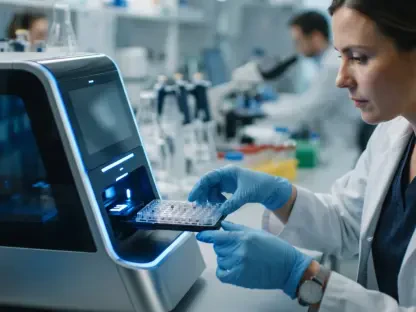
Currently, the gold standard for confirmation remains the Polymerase Chain Reaction (PCR) test. While PCR offers unmatched sensitivity, it is essentially tethered to expensive thermal cyclers and a highly specialized workforce. In many regions, this requirement creates what experts call a “diagnostic desert,” where the most vulnerable populations have the least access to testing. As we look toward the landscape of 2026 and beyond, the necessity of decoupling diagnostic accuracy from centralized infrastructure has become a primary objective for global health security, driving the search for tools that thrive outside of sterile, high-resource environments.
A New Arsenal: From Isothermal Amplification to CRISPR
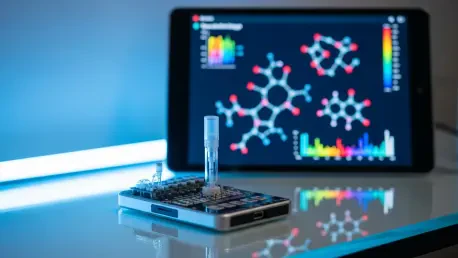
In response to the limitations of traditional testing, a new generation of molecular tools is emerging to bridge the gap between the field and the lab. Isothermal amplification methods, such as Loop-mediated Isothermal Amplification (LAMP) and Recombinase Polymerase Amplification (RPA), are at the forefront of this movement. These technologies are revolutionary because they operate at a single, constant temperature, removing the need for the complex heating and cooling cycles required by PCR. This allows a health worker to perform a high-sensitivity molecular test using nothing more than a simple, battery-operated heat block or even a chemically heated sleeve.
Beyond these thermal innovations, the integration of CRISPR/Cas systems has introduced a level of programmable precision that was previously unimaginable in a portable format. By using “molecular scissors” to identify specific genetic sequences, these assays can distinguish between different viral clades with extreme accuracy. Additionally, the development of “Lab-on-a-Chip” microfluidics and paper-based assays is miniaturizing complex chemistry into handheld, disposable devices. These platforms function with the simplicity of a common pregnancy test but provide the sophisticated data of a genomic laboratory, turning the tide against the virus in real-time.
The REASSURED Framework: Expert Perspectives on Connectivity
The development of these technologies is guided by a rigorous set of standards known as the REASSURED framework. A multidisciplinary research team at Koç University, led by Dr. Defne Yiğci and Prof. Dr. Savaş Taşoğlu, has argued that the success of any new diagnostic tool depends on its ability to satisfy these specific criteria. To be truly effective, a test must not only be sensitive and specific but also equipment-free and capable of real-time connectivity. This means the diagnostic process is not complete until the result is recorded and shared with public health authorities to facilitate contact tracing and resource allocation.
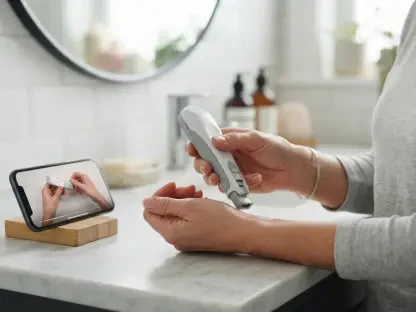
According to the team’s research, the smartphone is the most critical component in this new diagnostic ecosystem. By utilizing the high-resolution cameras and processing power already present in the pockets of billions, researchers have developed ways to use mobile devices as both the reader for molecular assays and the modem for data transmission. This approach moves the medical community toward a decentralized model where the location of the patient no longer limits the quality of care. The fusion of biological assays with digital connectivity ensures that a diagnosis in a remote village is just as actionable as one in a major metropolitan hospital.
Strategies for Deploying Decentralized Diagnostic Systems
Successfully implementing these decentralized systems requires a strategic departure from the “one-size-fits-all” approach to viral surveillance. A practical framework for the future involves a hybrid diagnostic model that begins with digital triage. In this scenario, Artificial Intelligence applications analyze images of skin lesions to provide an immediate preliminary risk assessment. This initial step serves as a filter, ensuring that limited physical testing supplies are directed toward the individuals most likely to be infected. Following this digital screening, clinical confirmation is performed on-site using stabilized reagents that do not require a cold chain, ensuring viability in tropical or high-heat environments.
To maintain this momentum, stakeholders focused on the large-scale manufacturing of low-cost microfluidic chips and the stabilization of chemical reagents for long-term storage. By investing in these areas, health systems ensured that the technological advancements of the past few years translated into tangible clinical outcomes. The goal was to create a resilient network where data flowed seamlessly from the point of care to global databases. Ultimately, the transition to these advanced point-of-care technologies provided the necessary tools to close the diagnostic gap, ensuring that rapid detection remained the cornerstone of any effective infectious disease response strategy.