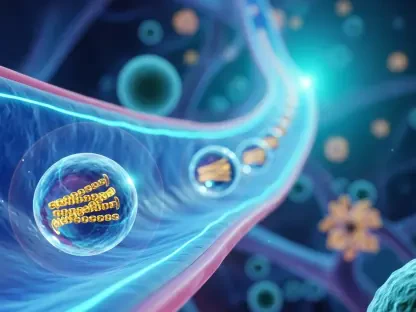

In a major breakthrough in the field of drug development, revolutionary nanotechnology known as Facilitated Self-Assembling Technology (FAST) has been unveiled, promising to drastically transform drug solubility. Spearheaded by Stephen Hsu, PhD, a professor at the Dental College of Georgia, FAST

Ivan Kairatov is an esteemed biopharma expert with extensive knowledge in technological innovation within the industry, particularly in research and development. Today, we'll delve into the recent FDA approval of Regeneron's Lynozyfic for multiple myeloma and its implications for patients and

The unforeseen impact of the COVID-19 pandemic initiated a global rush not only to discover vaccines but also to explore effective antiviral drugs capable of counteracting multiple coronaviruses. This effort has evolved beyond traditional scientific methods, incorporating surprising and innovative

The process of drug discovery and development, often stretching over decades, is one of the most demanding and expensive tasks faced by the pharmaceutical industry. Recently, Artificial Intelligence (AI) has emerged as a promising tool to streamline this process, promising dramatic reductions in

The ever-evolving battle against bowel cancer has encountered a formidable challenge: drug resistance. Bowel cancer, one of the most common cancers in the U.K., affects over 44,000 individuals annually, pushing scientists to devise new tools for predicting how this cancer can evolve against

In the rapidly progressing world of biomedical science, imaging technologies play a pivotal role in unlocking the mysteries of human health. Over the last few years, lipid imaging mass spectrometry has emerged as a groundbreaking tool, offering unprecedented insights into the complex nature of