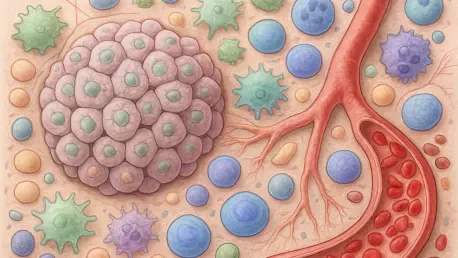

The biological success of ovarian cancer within the human body depends less on its internal genetic code than on the protective biochemical soup found in the abdominal cavity. For decades, the primary focus of oncology remained fixed on the “seed”—the individual cancer cell—while largely ignoring the “soil” in which it grows. However, current research suggests that the fluid surrounding the tumor is the very factor that allows ovarian cancer to thrive against all odds. Understanding this microenvironment is no longer a secondary area of study but an essential requirement for improving survival rates in one of the most lethal gynecological malignancies. This shift from genetic-centric research to environmental biology explores how malignant ascites prevents cell death and how repurposed medications might dismantle this protective shield.
The Evolution of Microenvironment Research: Beyond Genetic Mutations
Shifting Paradigms from Cellular Genetics to Fluid Dynamics
Recent data indicates a rising trend in studying the “peritoneal soup” rather than focusing solely on isolated tumor cells. Adoption statistics show a significant increase in federally funded research targeting the tumor microenvironment, acknowledging that the fluid surrounding tumors often dictates metastatic success. This evolution in thought marks a departure from the traditional model that viewed the abdominal fluid, or ascites, as a mere symptom. Evidence now suggests that metastatic cells, which should naturally succumb to the stress of detaching from the primary tumor, gain an unnatural resilience through specific biochemical signals found in these abdominal fluids.
This resilience allows the cancer to spread throughout the peritoneal cavity with alarming efficiency. The fluid acts as a sophisticated communication hub, providing the nutrients and signaling molecules necessary for the cancer to evade the body’s natural immune responses. By shifting the focus toward these fluid dynamics, researchers are uncovering the mechanisms that make ovarian cancer so difficult to treat with conventional methods. The goal is to move beyond the limitations of cellular genetics and address the external factors that foster tumor growth and survival.
Real-World Applications of Environmental Targeting: Lessons from Duke University
Researchers at the Duke University School of Medicine have demonstrated that even a 2% concentration of ascites fluid can make cancer cells nearly immune to programmed cell death. By isolating lipids within this fluid, scientists identified the specific biochemical shield that prevents ferroptosis, a process of cellular oxidation often described as “cellular rusting.” This discovery is being applied to other peritoneal malignancies, including pancreatic and colorectal cancers, where fluid buildup acts as a similar biological driver. The ability of these lipids to alter how cancer cells store nutrients and manage iron levels effectively neutralizes the oxidative stress that would otherwise lead to their destruction.
The implications of these findings extend far beyond the laboratory. By identifying the specific components within the ascites that provide protection, the medical community can develop targeted therapies that strip the cancer of its armor. This research highlights that the “soup” in which tumors exist is just as important as the tumors themselves. In many clinical cases, metastatic ovarian cancer cells are completely submerged in this fluid, making the environment the primary barrier to effective treatment. Dismantling this lipid-based shield is now a top priority for researchers seeking to enhance the efficacy of existing therapies.
Expert Perspectives on Environmental Vulnerability and Ferroptosis
Senior researchers emphasize that the medical community must stop viewing ascites merely as a debilitating symptom to be drained and start viewing it as a therapeutic target. Leading oncologists suggest that the lipid-driven protection found in the microenvironment explains why traditional chemotherapies often fail in advanced stages. The focus is now on altering the environment to make current drugs more effective, rather than solely finding new toxic chemicals to kill the cells. This perspective represents a fundamental change in how clinicians approach late-stage disease management.
Thought leaders highlight the significance of repurposing existing drugs to address these environmental vulnerabilities. The challenge lies in identifying compounds that can interfere with the protective signals sent by the ascites. By targeting the metabolic pathways that the cancer cells use to process these protective lipids, doctors can “prime” the tumors for destruction. This approach not only offers a more strategic way to fight the disease but also utilizes medications that are already known to be safe for human use, potentially accelerating the transition from research to clinical application.
Future Directions in Peritoneal Malignancy Treatment
The future of ovarian cancer care likely involves sensitizing agents like bezafibrate—a cholesterol medication—that can strip away the cancer’s lipid-based defenses before chemotherapy begins. Emerging clinical strategies will focus on the metabolic reprogramming of the tumor microenvironment to ensure cancer cells remain susceptible to ferroptosis. This method aims to turn the cancer’s survival mechanism against itself. However, potential challenges include the complexity of individual patient lipid profiles, which may require personalized environmental therapies rather than a one-size-fits-all approach.
The broader implication is a shift toward combination environments, where the fluid surrounding the tumor is treated as aggressively as the tumor itself to prevent recurrence. This dual-front strategy addresses both the internal mutations of the cell and the external factors that allow it to persist. As the medical field moves toward this integrated model, the focus will increasingly fall on the interaction between the patient’s unique biochemistry and the tumor’s needs. This holistic view of the cancer landscape is expected to lead to more durable remissions and a higher quality of life for those facing advanced-stage malignancies.
Conclusion: Redefining the Fight Against Ovarian Cancer
The shift from treating ovarian cancer as a purely genetic disease toward managing it as a product of its environment provided a clear roadmap for future intervention. Researchers established that neutralizing protective lipids in the abdominal cavity could make advanced-stage tumors vulnerable again. This paradigm prioritized the development of protocols that targeted both the tumor and its surrounding fluid to achieve long-term remission. Integrating environmental science into oncology became the next frontier for securing better outcomes for patients facing metastatic disease. Clinical focus moved toward sensitizing the tumor microenvironment, ensuring that traditional treatments regained their potency. This evolution in strategy marked a decisive step in dismantling the biological shields that once made these cancers insurmountable.