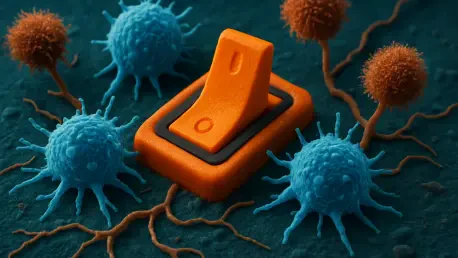

Beneath the rhythmic expansion and contraction of the human chest lies a silent battlefield where microscopic intruders are met with an incredibly precise biological response. Every day, the average person inhales hundreds of invisible fungal spores, yet the majority of people never develop an infection because their internal security forces are constantly on patrol. These defenders, known as macrophages, act as the body’s first responders, identifying and disposing of pathogens before they can establish a foothold. However, recent research has unveiled that this defense mechanism relies on a sophisticated molecular “traffic controller” to function correctly. Without this specific protein, the immune system’s efforts become a chaotic display of uncoordinated aggression that leaves the body vulnerable to lethal invaders.
The Precision of Internal Biological Choreography
The human immune system is often compared to a standing army, but its success depends less on raw numbers and more on the exquisite timing of its maneuvers. When a macrophage encounters a foreign spore, it performs a highly coordinated engulfing action, trapping the invader within a specialized internal compartment called a phagosome. This is not merely a holding cell; it is an execution chamber where the pathogen must be neutralized through a sequence of chemical and biological strikes. An international team of scientists has now identified that a protein called RAB5c acts as the essential foreman of this entire operation. This protein ensures that the various components of the “killing machinery” arrive at the right place at exactly the right time to finish the job.
The choreography within these cells is remarkably delicate. If the timing is off by even a fraction, the pathogen can survive and eventually break free to colonize the lungs. RAB5c is the molecular switch that dictates whether the macrophage successfully navigates the transition from capturing an invader to destroying it. By understanding how this protein regulates the internal traffic of the cell, researchers have finally peered into the black box of why some immune responses are efficient while others fall apart under pressure. This discovery reframes our understanding of immunity from a simple search-and-destroy mission to a complex logistical puzzle where organization is the primary determinant of victory.
Aspergillus Fumigatus and the Hidden Crisis of Fungal Infection
While modern medicine has made massive strides in combating bacterial and viral threats, the shadow of Aspergillus fumigatus continues to loom large over global healthcare systems. This common fungus is ubiquitous in the environment, found in soil and decaying organic matter, making exposure nearly impossible to avoid. For the general population, it is a harmless passenger, but for those with compromised immune systems, it is a relentless and often fatal opportunistic pathogen. Tens of thousands of lives are lost each year to invasive aspergillosis, particularly among patients undergoing chemotherapy, organ transplant recipients, and those suffering from chronic respiratory conditions.
The crisis of fungal infection is compounded by the fact that these pathogens are often resistant to the limited range of available antifungal medications. Once the fungus infiltrates the lung tissue, it can enter the bloodstream and spread to vital organs, causing systemic failure. This vulnerability highlights a critical gap in our current medical arsenal. The recent breakthrough regarding the RAB5c protein provides a potential answer to why certain patients remain at high risk despite having immune cells that appear to be active. It is not necessarily a lack of defenders that causes the failure, but rather a breakdown in the internal communication that allows the fungus to survive within the very cells meant to kill it.
The RAB5c Protein as a Master Regulator of Macrophage Efficiency
To successfully neutralize a fungal threat, a macrophage must execute a precise three-step protocol: it must acidify the phagosome, deploy a barrage of toxic enzymes, and activate a process known as LC3-associated phagocytosis, or LAP. Research led by the University of East Anglia has confirmed that RAB5c is the linchpin of this entire sequence. Without this protein, the macrophage remains in a state of perpetual hesitation. It may swallow the fungal spore, but it fails to deliver the lethal blow, essentially turning the immune cell into a protective nursery for the pathogen rather than a graveyard.
This level of regulation is vital because the chemicals used to kill fungi are incredibly potent and could easily damage the host cell if not handled correctly. RAB5c manages the delivery of these “biological weapons” with surgical precision. It ensures that the acid pumps and enzymes are integrated into the phagosome membrane only when the compartment is fully sealed and ready. This discovery sheds light on the fundamental mechanics of cellular biology, demonstrating that the immune system’s effectiveness is tied to its ability to compartmentalize and manage high-stakes chemical reactions within the microscopic confines of a single white blood cell.
A Scientific Paradox: When High Aggression Fails to Protect
In a surprising turn of events, the research revealed that immune cells lacking the RAB5c switch are not passive; in fact, they can be hyper-aggressive. In laboratory models, macrophages without this protein produced a significantly higher volume of toxic oxygen molecules—essentially the immune system’s equivalent of heavy artillery—compared to healthy cells. Paradoxically, this increase in firepower did nothing to stop the fungus. The pathogens remained untouched because the cells lacked the “acid pump” known as V-ATPase, which is required to make those toxins effective. Instead of destroying the invader, these chemicals leaked into the surrounding lung tissue, causing severe inflammation and collateral damage.
This finding challenges the long-held belief that a stronger or more active immune response is always better. In the absence of RAB5c-led organization, the immune system essentially turns its weapons on itself. The inflammation caused by the “misfiring” cells can be just as deadly as the infection, leading to rapid lung failure and systemic distress. This reveals that the success of the human defense system depends more on the structural integrity and coordination of its response than on the sheer volume of chemical toxins it can produce. It is a stark reminder that in biology, as in warfare, uncoordinated aggression often leads to self-inflicted disaster.
Implementing Host-Directed Therapies for Future Treatments
The identification of the RAB5c pathway has opened the door to a revolutionary approach known as “Host-Directed Therapy.” Instead of developing new drugs to attack the fungus directly—a process that often leads to further drug resistance—scientists are now looking at ways to repair or enhance the patient’s own cellular machinery. Potential treatments could involve pharmacological agents that boost the assembly of the V-ATPase acid pump or stabilize the RAB5c signaling pathway. By focusing on the efficiency of the macrophage, clinicians could help vulnerable patients clear infections naturally while minimizing the inflammatory damage that typically accompanies severe illness.
Looking ahead, the implications of this discovery reached far beyond the realm of mycology. Because the LAP pathway is a fundamental mechanism used to defend against various bacteria and viruses, as well as in the management of autoimmune disorders, these findings provided a blueprint for fine-tuning the immune response across a broad medical spectrum. Future researchers might utilize these insights to develop therapies for conditions where the immune system is either too sluggish or dangerously overactive. By prioritizing the logistical precision of the cell over its raw destructive power, medical science took a significant step toward managing complex infectious diseases with a level of control that was previously thought impossible. Scientists then began to explore how these same pathways could be manipulated to treat chronic inflammatory diseases that had long plagued human health.