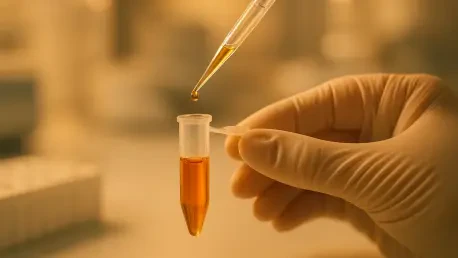

High-abundance proteins like albumin often mask rare signaling molecules, requiring a sophisticated depletion step to reveal the true regenerative potential of blood. This analytical challenge has long obscured the precise molecular mechanisms of platelet-rich plasma (PRP), a therapeutic concentrate used to treat everything from sports injuries to age-related degenerative conditions. As the global medical community in 2026 shifts its focus toward more precise geriatric care, understanding the biological potency of blood in older populations has become a priority. A pioneering study conducted by researchers in Catalonia, Spain, recently provided a comprehensive proteomic map of PRP derived exclusively from elderly donors. By examining the “amber-colored liquid” that has been both praised for its healing potential and criticized for its inconsistent results, the research team aimed to determine if the blood of seniors still contains the necessary molecular instructions for effective tissue repair. Their findings, published in the journal Clinical Proteomics, offer a definitive look at the regenerative toolkit available to the aging body, challenging the assumption that the biological slowing associated with senior years renders autologous therapies ineffective.
Technical Methodology: The Secretome Pipeline
To capture an accurate snapshot of the bioactive molecules involved in healing, the research team implemented a rigorous technical pipeline designed to isolate the platelet secretome. Blood samples from thirty-two elderly donors underwent sequential centrifugation to concentrate the platelets while removing extraneous cellular debris. Following this concentration phase, the researchers introduced calcium gluconate and heparin to trigger platelet activation. This specific step is vital because it simulates the physiological response that occurs when platelets encounter an injury site, causing them to degranulate and release their internal cargo into the surrounding medium. The resulting liquid, known as the secretome, contains the actual therapeutic payload that interacts with damaged tissues. By centrifuging the activated samples once more to remove the empty platelet bodies, the team was left with a pure concentrate of the proteins responsible for orchestrating the repair process in a clinical setting.
Advanced Analytical Steps: Overcoming the Masking Effect
The core of the study involved liquid chromatography coupled with tandem mass spectrometry (LC-MS/MS), a powerful analytical technique capable of identifying thousands of distinct proteins. However, blood proteomics is notoriously difficult because a few dominant proteins, primarily albumin and immunoglobulins, can account for over ninety percent of the total protein mass. These high-abundance components often drown out the smaller signaling molecules, such as growth factors and cytokines, which are the primary drivers of regeneration. To address this, the researchers utilized a specialized depletion step that selectively removed these masking proteins before enzymatic digestion. This allowed the mass spectrometer to detect much lower concentrations of rare proteins that would have otherwise remained invisible. The resulting data was then processed through bioinformatic pipelines, mapping the identified molecules to established biological pathways to understand their functional roles in tissue maintenance.
Architectural Mapping: Defining the Molecular Repair Network
The investigation successfully identified a total of 1,378 proteins across the various blood fractions analyzed. A standout discovery was that 324 of these proteins were found exclusively in the platelet-rich plasma and were entirely absent from the control plasma samples. This distinction is crucial because it confirms that the process of preparing PRP does not merely concentrate standard blood components but creates a unique biological environment with a specialized proteomic signature. The existence of these exclusive proteins suggests that the preparation of the concentrate triggers a specific “repair program” that is not active in circulating blood. For the elderly participants in this study, these results prove that their platelets still harbor a vast and complex library of proteins dedicated to structural remodeling and inflammatory regulation, providing a scientific foundation for the use of autologous therapies in patients who are often excluded from high-intensity regenerative protocols.
Functional Dynamics: Vesicles and Cellular Signaling
Beyond a simple inventory of molecules, the functional analysis revealed several key biological themes that define the regenerative capacity of senior-derived PRP. One of the most prominent findings was a heavy enrichment of proteins associated with vesicle transport and exosome signaling. This indicates that platelets do not just release individual proteins in isolation; instead, they deliver complex “information packages” that facilitate sophisticated communication between cells at the site of an injury. Additionally, the study highlighted a significant presence of proteins involved in cytoskeleton organization, which are essential for enabling repair cells to migrate through the extracellular matrix and rebuild the physical framework of damaged tendons or joints. By confirming the presence of these mechanisms, the study demonstrated that the elderly blood remains capable of orchestrating the complex choreography of wound healing, from initial cell signaling to the final stages of structural restoration.
Biological Individuality: The Variable Nature of Regenerative Blood
One of the most consequential insights gained from the proteomic mapping was the significant level of inter-individual variability among the study participants. While the overall biological program for repair was consistent across the cohort, the specific concentrations and types of proteins varied markedly from one donor to another. The researchers noted that the proteins showing the greatest degree of variation were those most directly linked to tissue regeneration and growth factor signaling. This discovery provides a long-sought explanation for the inconsistent clinical outcomes observed in PRP therapy over the last decade. It suggests that the success of a treatment may depend less on the procedural technique and more on the unique molecular “quality” of the patient’s own blood. This shift in understanding emphasizes that “elderly blood” is not a monolithic category but a spectrum of biological potential that varies based on genetics, lifestyle, and overall health status.
Clinical Implications: Explaining Inconsistent Trial Results
The high variability found in the senior cohort addresses a persistent frustration within the orthopedic and sports medicine communities regarding the unpredictability of PRP. For years, clinicians have struggled to explain why some patients experience near-miraculous recoveries from conditions like osteoarthritis while others see no improvement whatsoever. By quantifying the differences in the proteomic secretome, the Catalan study suggests that these discrepancies are rooted in the biological diversity of the donors themselves. If a patient’s platelet concentrate lacks specific signaling molecules found in a high-responding peer, the clinical outcome will naturally be less favorable. This realization moves the discourse away from questioning the validity of the therapy and toward a more nuanced discussion about donor optimization. It highlights the need for standardized characterization of the PRP payload before it is administered, ensuring that both the clinician and the patient have a realistic expectation of the regenerative outcome.
Strategic Integration: Advancing Toward Personalized Models
The discovery of distinct proteomic signatures offers a clear pathway toward a more personalized approach to regenerative medicine. In the near future, clinicians could utilize rapid, point-of-care screening tools to assess the protein profile of a patient’s blood before proceeding with a treatment series. This would allow for a transition from the current “one-size-fits-all” model to a strategy of precision dosing. For instance, if a patient’s PRP is found to be low in specific anti-inflammatory cytokines, the frequency of injections could be increased, or the concentration process could be adjusted to compensate. Furthermore, identifying the specific protein markers associated with high-quality repair could lead to the development of “potency assays” similar to those used in other areas of biological medicine. Such advancements would increase the reliability of PRP and help establish it as a standardized, evidence-based intervention rather than an experimental option.
Physiological Context: The Significance of Natural Activation
The methodological choice to use calcium gluconate for platelet activation was a critical factor in making the study results relevant to real-world medical practice. Unlike some laboratory experiments that use harsh chemical lysis to break open platelets and release their entire contents, calcium activation triggers a natural physiological discharge. This mimics what happens in a human joint or wound where platelets encounter collagen and other triggers. Consequently, the proteins identified in the secretome represent the molecules that are actually “available” for tissue repair during therapy. This distinction is important because the internal contents of a resting platelet do not always reflect what is actually secreted upon activation. By focusing on the released payload, the researchers ensured that their proteomic map accurately reflects the therapeutic reality of what a patient receives, providing a more functional and practical understanding of the secretome’s potential in the elderly.
Geriatric Applications: Validating Repair in Aging Tissues
For the senior population, the findings of this study offer a significant measure of medical reassurance. As life expectancy continues to rise, the prevalence of chronic wounds, tendon tears, and degenerative joint diseases has increased the demand for effective, low-risk treatments. The validation that elderly blood still contains a potent arsenal of regenerative proteins suggests that age alone should not be a disqualifying factor for autologous therapies. While the aging process may slow down certain metabolic functions, the molecular “raw materials” for repair appear to remain largely intact and accessible. This is particularly relevant for patients who may not be ideal candidates for invasive surgeries or those who prefer a natural approach to healing. The study provides the necessary evidence to support the continued use and refinement of PRP in geriatric medicine, ensuring that seniors have access to the same technological advancements in regeneration as younger populations.
Scientific Benchmarks: Establishing Transparent Data Standards
By documenting their rigorous methodology and depositing their findings in the PRIDE proteomics repository, the research team established a new benchmark for transparency in the field. This commitment to open science allows other researchers to compare their findings and build upon the data, which is essential for the long-term maturation of regenerative medicine. The use of strict false discovery rate controls and high-resolution mass spectrometry ensures that the data is both reliable and reproducible. This level of scientific rigor is what the field of PRP therapy has often lacked, as many previous studies suffered from small sample sizes or poorly defined preparation protocols. The Catalan study serves as a model for how future investigations into autologous products should be conducted, providing a clear roadmap for the molecular characterization of biological treatments that will define the next generation of orthopedic care.
Future Research: Bridging Molecular Data and Clinical Outcomes
The researchers successfully created a foundational atlas that bridged the gap between basic hematology and practical regenerative application. This work established that the molecular machinery for tissue repair remained remarkably robust within the elderly population, even as it exhibited significant variations between individual donors. The team advocated for a new era of “efficacy-graded” protocols, where the proteomic signature of a patient’s blood could guide the entire course of treatment. By providing a clear inventory of the proteins released during platelet activation, the study clarified why some treatments reached their clinical endpoints while others fell short. These results shifted the focus of the industry toward a more scientific, data-driven model of patient care. Ultimately, the study paved the way for future clinical trials to correlate these specific protein profiles with actual healing rates, moving regenerative medicine closer to becoming a predictable and standardized pillar of modern healthcare.