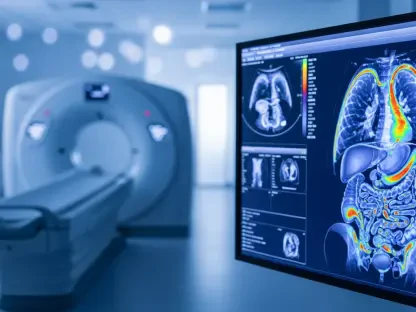

Columbus Regional Health (CRH) has recently joined the Cleveland Clinic Connected program, an esteemed initiative aimed at enhancing healthcare quality by incorporating the expertise and best practices of Cleveland Clinic, a globally recognized healthcare institution. This partnership aims to
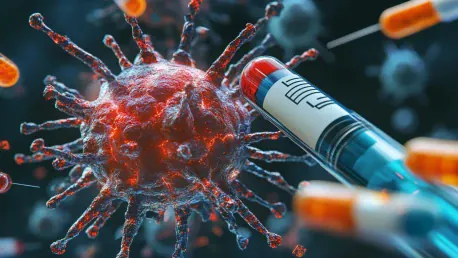
The fight against advanced prostate cancer has taken a promising turn with the development of a new drug, NXP800. This innovative treatment aims to help patients for whom current therapies have become ineffective. By specifically targeting the heat shock factor 1 (HSF1) pathway, NXP800 addresses
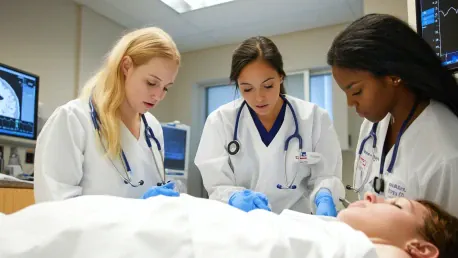
Navigating the complexities of critical care clinical trials, particularly when facing the issue of "truncation due to death," is crucial for obtaining unbiased, clear, and meaningful results. Patient-centered outcomes affected by death before they can be fully measured pose significant challenges,

The intricate relationship between socioeconomic development and the global cancer burden is a critical area of study that warrants thorough exploration. Utilizing data from the GLOBOCAN 2020 report, this article delves into the disparities in cancer incidence, mortality, and healthcare outcomes

Artificial intelligence (AI) has garnered significant attention in recent years, particularly within the medical field for its potential to revolutionize various aspects of healthcare. The integration of AI in breast cancer detection promises not only an increase in accuracy but also a potential

Stanford Medicine researchers have recently introduced an innovative artificial intelligence (AI) model named MUSK (multimodal transformer with unified mask modeling) that significantly improves the accuracy of cancer prognosis predictions. By integrating both visual and textual medical data, this