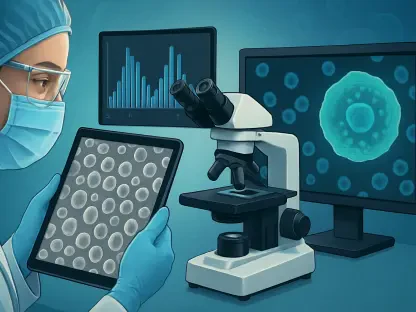

The traditional landscape of oncological drug development is currently undergoing a massive transformation as Oregon Health & Science University launches an ambitious $9.2 million initiative to redefine the accuracy of preclinical testing. By establishing the Knight Cancer Precision Biofabrication Hub, the university is addressing a critical deficiency in modern medicine: the reliance on outdated laboratory models that frequently fail to predict human responses. This major financial injection from the National Institutes of Health signifies a pivotal shift toward sophisticated, engineered environments that can mimic the complex physiology of the human body with unprecedented precision. The project is specifically designed to investigate the most aggressive forms of cancer, particularly those that invade or originate within bone tissue. Instead of relying on static cultures, researchers are now moving toward dynamic systems that can simulate the movement of fluids, the rigidity of bone, and the interaction of diverse cell types. This effort represents a significant step forward in ensuring that promising therapies actually work when they reach patients.
Technical Foundations of Microphysiologic Systems
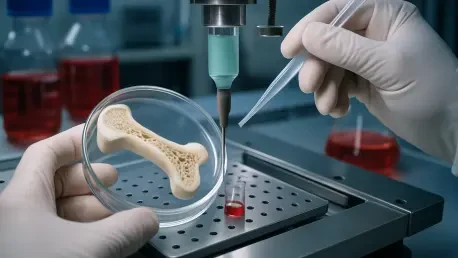
At the center of this technological revolution are microphysiologic systems, which are transparent devices approximately the size of a standard USB drive that function as miniature biological laboratories. These “organs-on-a-chip” are far more than mere containers; they are intricate bioengineered structures that house living human cells in a way that replicates the three-dimensional architecture of real organs. By using microfluidics to simulate blood flow and incorporating specialized scaffolds that mimic the density of human bone, scientists can recreate the exact microenvironment where tumors thrive. This high-fidelity simulation allows for single-cell resolution imaging, providing a level of detail that was previously unattainable in human subjects. The ability to watch a single cancer cell navigate through a simulated blood vessel or latch onto a bone surface in real-time gives researchers a front-row seat to the earliest stages of metastasis. This provides a deep understanding of the disease that is vital for developing targeted interventions.
The transition to using human-derived cells within these chips represents a fundamental departure from the historical reliance on animal testing, which has often led to clinical trial failures. Many compounds that appear successful in murine models do not translate to human efficacy because of fundamental differences in species-specific biology and immune responses. By utilizing patient-derived cells, the Knight Cancer Precision Biofabrication Hub bridges this gap, offering a more reliable platform for predicting how specific drugs will interact with human tissues. This approach not only increases the safety of drug development but also accelerates the timeline for bringing new therapies to market by filtering out ineffective compounds early in the process. Furthermore, the transparency of these devices allows for the integration of advanced sensors that monitor pH levels, oxygen saturation, and metabolic changes. Such a comprehensive data set enables a more nuanced view of tumor biology, leading to the identification of previously unknown vulnerabilities in cancer’s survival strategies.
Targeted Research on Pediatric Osteosarcoma
A significant portion of the new funding is dedicated to a $3.17 million project led by Dr. Alexander Davies, which focuses on the harrowing challenges of pediatric osteosarcoma. This rare bone cancer primarily affects children and adolescents, and for those whose disease spreads to the lungs, survival rates have remained stubbornly stagnant for over four decades. The research team is utilizing the biofabrication hub to create dual-organ models that connect engineered bone tissue with simulated lung environments. This setup allows them to study the “metastatic niche,” or the specific conditions that allow cancer cells to travel from the primary tumor and establish secondary colonies in the lungs. By mimicking the biological “conversation” between these two distant sites, the team can identify the signals that trigger cancer cells to mobilize. This research is critical because it moves the focus from simply killing the primary tumor to preventing the lethal spread that often determines the final prognosis for these young patients.
A central element of this investigation involves the study of the MCL-1 protein, which has been identified as a key factor in helping osteosarcoma cells survive the stressful journey through the bloodstream. Dr. Davies and his colleagues are using their advanced chip models to test how specific MCL-1 inhibitors can be combined with existing chemotherapies, such as cyclophosphamide, to eliminate resistant tumors. The ability to perform these tests in a human-centric model provides essential data on drug synergy and potential toxicity before these combinations are ever administered in a clinical setting. This methodology offers a safer pathway for exploring aggressive treatment regimens that might otherwise be too risky to test directly on pediatric populations. By refining these drug combinations in the laboratory first, the team hopes to develop a more effective protocol that can finally break the cycle of treatment failure in metastatic osteosarcoma. This systematic approach ensures that every new treatment strategy is backed by robust, human-relevant evidence.
Investigating Prostate Cancer and Skeletal Invasion
The second major arm of the initiative, led by Dr. Luiz Bertassoni, focuses on the mechanisms of prostate cancer metastasis, a condition that impacts approximately 80% of patients with advanced disease. When prostate cancer moves to the bone, it causes debilitating complications, including extreme pain, nerve compression, and frequent fractures that severely diminish the quality of life. Dr. Bertassoni’s team has developed a specialized “bone-on-a-chip” that is unique because it incorporates functional blood vessels and living nerves. This allows the researchers to explore how the nervous system and circulatory forces interact with tumor cells to accelerate bone destruction. By recreating the physical environment of the skeletal system, the team can study the mechanical “squeezing” of cancer cells as they move through narrow capillaries. This physical stress is believed to trigger genetic changes that make the cancer more aggressive, and the hub’s technology is the first to allow for the direct observation of this phenomenon in a controlled setting.
The inclusion of nerves in these models represents a significant leap forward in understanding cancer-induced bone pain and tumor progression. There is growing evidence that nerve signals can actually stimulate tumor growth, while the tumor itself damages nerve endings to cause intense suffering. By isolating these neurological pathways within the chip, the researchers can test new classes of drugs designed to disrupt the communication between the cancer and the nervous system. This level of environmental control is impossible to achieve in a living patient and is often absent in simpler laboratory models. The goal of this research is not only to stop the growth of the tumor but also to preserve the structural integrity of the bone and alleviate the pain associated with skeletal invasion. By understanding the bone as an active, sensing environment rather than just a passive landing site for cancer, the team is opening new doors for therapies that address the disease from multiple biological angles, potentially preventing the most catastrophic effects.
Strategic Coordination and Institutional Scaling
The Knight Cancer Precision Biofabrication Hub is designed to function as an interdisciplinary ecosystem where engineers, oncologists, and biologists work side-by-side to solve clinical problems. This collaborative structure ensures that the technological advancements made in the lab are always aligned with the most pressing needs of patients. The hub serves as a central resource for OHSU, providing the specialized equipment and expertise needed to create these complex microphysiologic systems for a wide variety of cancer types. Beyond osteosarcoma and prostate cancer, the hub has already demonstrated success in modeling how head and neck cancers invade bone tissue, proving the versatility of the platform. By centralizing these resources, OHSU is creating a scalable model for precision medicine that can be adapted to almost any form of malignancy. This institutional synergy is vital for moving biofabrication out of the niche world of engineering and into the mainstream of clinical oncology, where it can have the greatest impact.
Looking ahead, the long-term goal of the $9.2 million initiative is to establish these biofabricated models as a standard requirement for all future drug development and regulatory approval processes. As the technology matures, it is expected that these human-on-a-chip systems will become a primary tool for personalized medicine, where a patient’s own cells could be used to test various drug combinations to see which is most effective before treatment begins. This would eliminate the “trial and error” approach that currently characterizes much of cancer therapy, saving valuable time for patients with fast-moving diseases. The commitment from the NIH underscores the national importance of this shift, positioning OHSU as a global leader in the next generation of cancer research. By integrating these models into the standard clinical workflow, the medical community can move toward a future where treatments are more precise, less toxic, and significantly more successful. This hub represents the infrastructure needed to turn that vision of personalized, engineered medicine into a daily reality.
Future Directions for Clinical Transformation
The successful deployment of the Knight Cancer Precision Biofabrication Hub established a new framework for how academic institutions approached the intersection of engineering and medicine. Researchers moved beyond traditional boundaries to create a unified system that prioritized human-relevant data over historical reliance on animal surrogates. This initiative successfully demonstrated that specialized microenvironments could reveal specific drug resistances that were previously invisible in standard clinical screenings. By focusing on the interplay between mechanical forces, nerve signaling, and cellular migration, the program provided a comprehensive map of how cancers navigated the human skeletal system. The data gathered from these experiments provided a foundation for next-generation clinical trials that targeted the metastatic process directly rather than only the primary tumor site. These advancements suggested that the future of oncology would rely heavily on the ability to pre-test complex therapies in realistic, patient-specific environments to ensure maximum efficacy.
Moving forward, the primary focus transitioned toward the integration of these models into the global pharmaceutical supply chain to reduce the high cost of drug failure. Stakeholders recognized that the insights gained from “bone-on-a-chip” systems were applicable to a wide range of degenerative and inflammatory diseases beyond the scope of oncology. This broader application encouraged further investment in biofabrication technologies, leading to the development of even more complex systems that included immune system components and metabolic organs. The practical next step involved the standardization of these devices to ensure they could be manufactured and utilized consistently across different research centers. By refining the manufacturing processes for these microphysiologic systems, the university laid the groundwork for a standardized testing platform that could eventually support regulatory decisions worldwide. This evolution ensured that the discoveries made in the lab were translated into actionable solutions that improved patient outcomes across the healthcare spectrum.