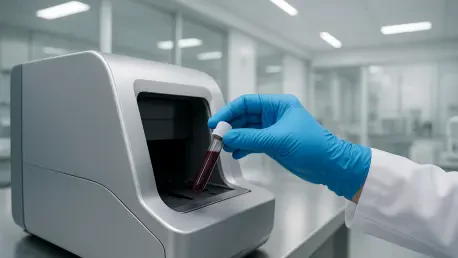

The approval of Guardant360 CDx as a companion diagnostic for AstraZeneca’s camizestrant marks the first time a liquid biopsy has been authorized for continuous monitoring of cancer evolution. This regulatory milestone fundamentally alters the management of advanced breast cancer by allowing clinicians to track genomic changes in real time rather than relying on static snapshots from invasive procedures. For patients with ER-positive, HER2-negative metastatic breast cancer, the development of ESR1 mutations often signals resistance to standard aromatase inhibitors. Traditional diagnostic workflows frequently struggled to capture these emergent resistance patterns early enough to alter the clinical course effectively. By leveraging high-sensitivity circulating tumor DNA analysis, healthcare providers can now identify specific genetic alterations as they arise during the longitudinal journey of care. This shift toward serial testing ensures that the treatment regimen remains aligned with the current biology of the tumor.
Transforming Resistance Detection: The Shift to Liquid Biopsies
Guardant360 CDx utilizes a comprehensive panel to detect single nucleotide variants and other genomic alterations across a wide array of genes, but its integration with camizestrant specifically targets the ESR1 mutation landscape. Camizestrant, a next-generation oral selective estrogen receptor degrader, requires precise patient selection to maximize its therapeutic efficacy in the second-line setting. The liquid biopsy platform analyzes cell-free DNA fragments shed into the bloodstream, offering a non-invasive window into the systemic mutational burden of the disease. Unlike a localized tissue biopsy, which may only reflect the genetics of a single metastatic site, the liquid biopsy provides a more holistic view of the cancer’s heterogeneity. This capability is critical because breast cancer often evolves differently across various organs, and identifying the most aggressive clones is essential for selecting the correct dose and timing for switching therapies during the process.
Beyond mere detection, the consistency and accuracy of the Guardant360 CDx platform provide a standardized metric for monitoring how a patient responds to their ongoing endocrine therapy. When clinicians observe a rise in ESR1 mutant allele frequency, it serves as a molecular warning sign that the current treatment may soon fail, even if imaging results appear stable. This proactive diagnostic window gives oncologists a significant advantage, as they can prepare to transition patients to camizestrant before the physical symptoms of progression become debilitating. Furthermore, the integration of this technology into the standard of care reduces the reliance on repeat surgical interventions, which carry inherent risks and significant costs for the healthcare system. By moving toward a blood-based monitoring strategy, the oncology community is embracing a more patient-centric model that prioritizes quality of life alongside clinical outcomes for individuals fighting advanced stages of the disease.
Strategic Implementation: Advancing the Standard of Clinical Care
Successful implementation of serial liquid biopsies into clinical practice requires a refined coordination between pathology departments, oncology clinics, and diagnostic laboratories. To fully realize the benefits of the FDA’s recent decision, health systems should establish clear protocols for when and how often blood draws should occur during the endocrine therapy cycle. Training nursing staff and phlebotomists on the specific handling requirements for ctDNA samples is paramount to ensuring high-quality results. Moreover, the interpretation of longitudinal data requires specialized expertise, as clinicians must distinguish between transient fluctuations and definitive molecular progression. Integrating these results into electronic health records in a way that visualizes the trend of mutation levels over time can greatly assist in shared decision-making. As diagnostic costs continue to decrease and reimbursement pathways stabilize from 2026 to 2028, the adoption of serial monitoring will likely become the benchmark.
The healthcare industry moved toward a more responsive and data-driven framework following the validation of liquid biopsies for continuous cancer surveillance. This progression necessitated that pharmaceutical companies and diagnostic developers work in closer tandem to ensure that companion diagnostics are available at the exact moment new therapies reach the market. For clinical practitioners, the immediate next step involved auditing existing diagnostic workflows to identify gaps where molecular resistance might be overlooked. Prioritizing the training of oncology teams on the nuances of ESR1 mutation dynamics helped bridge the gap between complex genomic data and actionable clinical choices. Stakeholders also focused on expanding access to these screenings for underserved populations to prevent a widening disparity in cancer survival rates. Ultimately, the transition to serial monitoring established a new standard where treatment is no longer a static choice but a continuous dialogue.