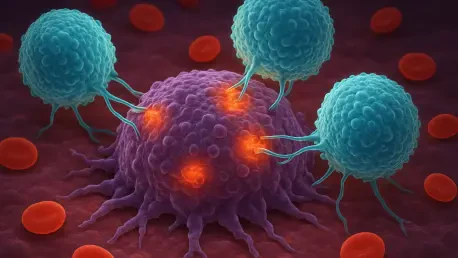

The sophisticated machinery of the human immune system often encounters a catastrophic breakdown when faced with aggressive malignancies that systematically dismantle the body’s natural defense networks. While the immune system is theoretically designed to identify and destroy internal threats, many cancer patients face a structural failure where their primary “coordinator” cells, known as invariant natural killer T (iNKT) cells, are either depleted or entirely non-functional. Traditional therapies frequently fall short because they rely on an immune system that has already been outmaneuvered and exhausted by the tumor’s microenvironment.
The discovery that scientists can now manufacture these critical coordinators in a laboratory using induced pluripotent stem cells (iPSCs) changes the fundamental math of modern oncology. This technological leap is not merely about adding more soldiers to a losing battle; it is about restoring the vital command structure that allows the body to mount a sustained and intelligent defense. By bypassing the patient’s own damaged cells, researchers are providing a fresh blueprint for immune activation that was previously impossible to achieve.
The Supply Crisis: Challenges in Modern Immunotherapy
The effectiveness of current immunotherapy is often strictly limited by the biological reality of the patient’s own physical state. For individuals battling advanced lung, head, or neck cancers, the internal reservoir of iNKT cells—which act as a crucial bridge between innate and adaptive immunity—is typically too low to be medically useful. This inherent deficiency creates a massive bottleneck in treatment, rendering many standard protocols ineffective regardless of how advanced the clinical setting might be.
By leveraging healthy donor cells and reprogramming them into standardized, lab-grown iNKT cells, researchers are attempting to circumvent the genetic and biological limitations of the individual patient. This approach offers a potential way to treat “intractable” cancers that have historically resisted the standard trifecta of surgery, chemotherapy, and radiation. The ability to produce these cells at scale means that a patient’s survival no longer depends solely on the remaining strength of their own compromised immune system.
Immune Architects: Turning Lab-Grown Cells into Catalysts
Recent research indicates that the most effective way to eliminate stubborn tumors is through a synergistic dual-action strategy rather than a single-agent attack. This involves the combination of lab-grown iNKT cells and antigen-presenting cells (APCs) loaded with a specific activating lipid called α-galactosylceramide. When these two components work together, they do more than just attack the tumor; they fundamentally reorganize the entire immune environment to be hostile toward malignant growth.
Unlike traditional chemotherapy, which targets cells indiscriminately and often causes collateral damage, this combined method focuses on “immune orchestration.” The lab-grown cells act as a powerful catalyst, prompting the body to develop “memory-phenotype T cells” that recognize the cancer as a permanent threat. This process effectively creates a biological “wanted poster” that stays in the system long after the initial treatment has ended, ensuring the body remains vigilant against the return of the disease.
Durable Memory: Evidence for a Systemic Response
Findings from studies conducted at Chiba University provide a clear roadmap for how this lasting immunity functions within a living host. In humanized models, the combination therapy showed significantly higher tumor suppression than any single-agent approach. The most striking revelation was that the iNKT cells were not the primary killers themselves; instead, they served as the master instructors for other immune participants. This shift in understanding moves the goalpost from temporary suppression to permanent biological education.
When the resulting memory T cells were removed from the experimental models, the antitumor effects vanished entirely. This confirmed that the true power of lab-grown cells lies in their ability to train a patient’s own immune system to remember and target specific malignant cells. By creating this framework for long-term protection, the therapy addresses the greatest fear in oncology: the hidden recurrence of cancer years after a patient is declared in remission.
Intractable Cancers: A New Protocol for Treatment
The transition from laboratory success to clinical application was prioritized through trials focusing on patients with advanced head and neck malignancies. The strategy involved a shift toward personalized “off-the-shelf” solutions, where standardized iNKT cells were paired with a patient’s own antigen-presenting cells to create a bespoke immune response. To implement this framework, clinicians began focusing on the “memory-phenotype” as the primary metric of success, rather than just immediate tumor shrinkage, ensuring that the treatment offered more than a fleeting benefit.
The development of these protocols signaled a move toward a future where the immune system was fundamentally reprogrammed for lasting vigilance. Medical teams looked beyond the immediate crisis of a tumor and sought to establish a permanent defensive state. This methodology offered a repeatable strategy for aggressive cancers, providing a pathway to treat patients who had exhausted all other options. The integration of lab-grown cells into standard care represented a definitive step toward turning terminal diagnoses into manageable, or even curable, conditions.